
Feature
Exploring Tokyo Snow: A Potent Hybrid's Unique Menthol-Driven Profile
Tokyo Snow, often listed as Tokyo Sno, stands out because its public profile is unusually specific. Instead of the standard sweet-gas-or-fruit summary that…
By Mina Kuroda · · 12 min read
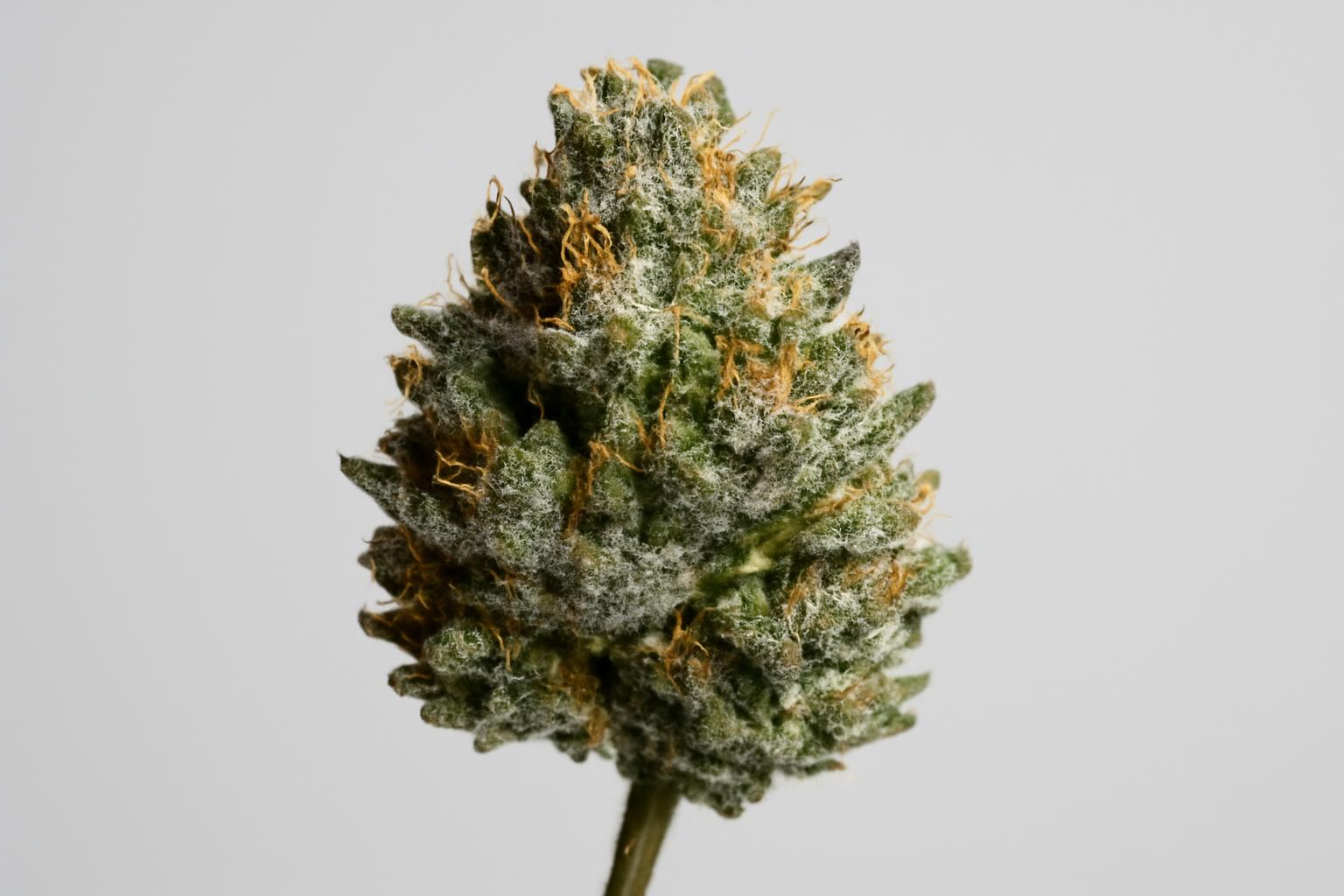
Tokyo Snow, often listed as Tokyo Sno, stands out because its public profile is unusually specific. Instead of the standard sweet-gas-or-fruit summary that fits dozens of modern hybrids, this one keeps getting described with a cooling menthol angle layered over grape, fuel, earth, and cream. That combination makes it memorable, but it also reveals a larger pattern: the core identity of Tokyo Snow is more consistent than the finer details attached to it.
Across breeder-linked databases, strain directories, retailer pages, and user-facing listings, the broad outline is fairly steady. Public sources repeatedly connect Tokyo Snow to Compound Genetics and to the same two parent strains. Where they begin to diverge is in the exact potency figure, which terpene gets called dominant, how energizing the first phase feels, and how heavily the finish lands in the body.
That matters because Tokyo Snow is best read as a recognizable hybrid profile with variable expression, not as a perfectly fixed experience that will present identically from every brand or batch.
What Is the Tokyo Snow Strain?
Tokyo Snow is most commonly presented as a hybrid bred by Compound Genetics from Hibachi Supreme x The Menthol, and one major directory, AllBud, goes further by labeling it an even 50% sativa / 50% indica while also listing it in the 20% to 22% THC range (AllBud).
You will also see the name written as Tokyo Sno. Weedmaps explicitly notes that alias while still treating it as the same hybrid cross, which helps explain why menus and databases can look inconsistent even when they are referring to the same strain family.
The subtype language is not completely uniform. Most public pages place Tokyo Snow in the broad balanced-hybrid bucket, but not every seller emphasizes that balance in the same way. Some descriptions lean toward a cleaner, more upbeat opening. Others put more weight on the body finish.
Detailed Genetics and Lineage
The most reliable part of the Tokyo Snow profile is the top-line cross. SeedFinder identifies it as a Compound Genetics strain, lists it as feminized, and gives the pairing as Hibachi Supreme x The Menthol. That same parent combo is the one detail that stays steady across most public listings, even when other parts of the profile drift.
A single homegrown review provides the fuller lineage that often gets repeated in secondary writeups. In that breakdown, Hibachi Supreme is described as GMO x (Legend OG x Kobe), while The Menthol is listed as Gelato 45 x (White Diesel x (High Octane x Jet Fuel G6)). That deeper family tree is not as broadly corroborated as the main parent pairing, but it is useful as secondary context because it helps make sense of why Tokyo Snow descriptions keep circling back to earth, gas, cream, mint, citrus, and grape in the same breath (Illinois News Joint).
Even without treating every branch of that deeper genealogy as equally confirmed, the parental logic reads clearly. Put together, they form a strain profile that is rarely described as one-note.
For growers, the feminized-seed note is one of the more practical takeaways. For buyers, the key point is simpler: Tokyo Snow’s public identity looks genetically coherent at the cross level, even if the exact batch in front of you may lean more purple, more petrol-heavy, more grape-forward, or more sedating than another version sold under the same name.
THC, CBD, and Potency Profile
Tokyo Snow is consistently presented as a stronger hybrid, but public potency figures are still only listing-level estimates, not a universal lab-verified standard. Leafly posts Tokyo Snow at 23% THC and 0% CBD, which places it squarely in the high-THC, negligible-CBD lane on that directory (Leafly).
GrowDiaries lands in nearly the same place, listing 21% THC and 0.1% CBD for Tokyo Snow. That overlap with other consumer databases is useful because it suggests the strain is usually marketed in the low-20s THC band even when exact numbers differ slightly from site to site (GrowDiaries).
Taken together with the low-20s THC figure noted earlier from AllBud, the most defensible summary is that Tokyo Snow is publicly reported in the low 20s for THC, while CBD is usually described as negligible or very low. That does not mean every jar sold under the name will test the same way. It means the strain is commonly marketed as potent rather than mild.
That distinction matters because the word balanced can be misleading if it gets read as gentle. A strain can be balanced in direction while still feeling strong in magnitude. Tokyo Snow is one of those cases where a hybrid label does not tell you much about intensity by itself.
It also helps to separate directory numbers from batch numbers. Public strain pages are useful for pattern recognition, but they are not substitutes for current lot-specific testing. If potency matters to you in practice, the menu label or certificate for the exact product you are buying matters more than the strain page summary.
Flavors, Aromas, and Bud Appearance
A detailed homegrown review describes Tokyo Snow as producing dark green and purple, dense, spade-shaped buds with a heavy coating of creamy trichomes. The same review gives one of the fuller sensory descriptions in the evidence set, with aroma notes of earthy soil, kush, mint, gas, cream, sweet pine, and grape, and a flavor that carries earth, diesel, creamy mint, peppery citrus, pine, and sour grape (Illinois News Joint).
Retail copy compresses that profile but points in the same direction. CommCan’s retired Tokyo Snow page describes the flavor as sweet earthy hash with a crisp minty finish and the aroma as dank earth with spicy mint undertones, which supports the idea that earth and cooling herbal freshness are central to the strain even when the language gets simplified for menus.
Set those descriptions next to one another and the recurring flavor family becomes fairly clear. Tokyo Snow is not usually presented as a pure candy-mint strain. Instead, the public profile clusters around menthol or spicy mint, grape or berry sweetness, diesel or petrol, and an earthy, sometimes citrusy or piney backbone. What changes most from source to source is emphasis. Some versions sound creamier and more dessert-like. Others sound louder on gas, soil, herbal spice, or sourness.
That variation is probably part of why Tokyo Snow has drawn interest from different kinds of smokers. People who like novelty get the menthol hook. People who dislike flat mint profiles still get enough grape, earth, and fuel to keep the flavor from reading as one-dimensional. In that sense, Tokyo Snow’s appeal is less about a single dominant note and more about the way the cooling top layer sits over a heavier, more savory base.
In visual terms, the safest expectation is dense, frosty flower with strong resin coverage and a real chance of darker coloration, including purple-leaning expressions. In flavor terms, the simplest working shorthand is menthol over grape, earth, and fuel.
Terpenes and Their Contributions
The most commonly repeated terpene trio attached to Tokyo Snow is limonene, caryophyllene, and myrcene, with Weedmaps listing those three as the primary terpenes for the strain.
That lineup matches the tasting language that keeps appearing across public descriptions.
The terpene picture is not completely fixed, though. Some retailer pages bring in linalool or humulene instead of making myrcene the clear third-place terpene, and some descriptions imply a caryophyllene-led profile while others feel more limonene-forward. That inconsistency is a more useful takeaway than any attempt to crown one permanent dominant terpene stack for all Tokyo Snow flower.
For consumers shopping specifically by terpene profile, that means the strain page is only the starting point. Tokyo Snow appears to live in the overlap of citrus brightness, peppery depth, earthy weight, and cooling herbal freshness, but the exact terpene hierarchy can still move around from one batch to another.
Reported Effects and User Experiences
AllBud summarizes Tokyo Sno as a strain associated with aroused, body high, creative, euphoria, tingly, and uplifting effects, and it shows a 4.7/5 rating from 16 votes, which is positive but still a very small sample by any serious standard (AllBud).
The most useful way to reconcile the broader effect reports is to think of Tokyo Snow as a two-stage hybrid. Public descriptions often suggest a brighter or clearer front end followed by a heavier body phase later. That pattern appears in user-facing directories that highlight energetic or focused qualities at first, and it appears even more clearly in long-form experiential writing that describes the strain becoming more physically weighted as the session develops.
That later-stage heaviness is one reason Tokyo Snow can look contradictory in reviews. One person may use a smaller amount, focus on the happy or functional early window, and remember it as upbeat. Another may take more or wait longer and remember the same strain for its relaxing or mildly sedative finish.
The homegrown review in the evidence set is especially helpful on that point because it describes a progression from uplifting euphoria and initial clearheadedness into heavier head effects, then a slower-arriving body buzz that eventually becomes deeply relaxing and more sedative near the end. That does not prove the strain will behave identically for everyone, but it does give shape to the repeated idea that Tokyo Snow is not a one-note effect profile.
For practical expectations, the most defensible summary is: uplifting first, heavier later, with a good chance of a tingly body component somewhere in the middle.
Cultivation Guide for Tokyo Snow
For growers, the strongest area of agreement is flowering time. SeedFinder lists Tokyo Snow as finishing indoors in about 9 weeks, roughly 63 days, and describes it as capable of 450 to 600 g/m² indoors with outdoor yields ranging from more than 650 g/plant up to roughly 1100 g/plant under favorable conditions. The same entry also notes that the plant can show dark or purple coloration in lower temperatures and is vigorous in soil or hydro (SeedFinder).
Those figures should be read as grow-directory ranges, not guarantees. Even in the public sources that sound bullish on Tokyo Snow’s output, the implied conditions are controlled and competent.
That is where the rest of the cultivation picture becomes important. Other grow-oriented descriptions frame Tokyo Snow as medium to difficult, with medium-tall plants and a need for reasonably tight control over humidity, nutrients, and light.
A realistic grow expectation, then, is an indoor flowering window around 8 to 10 weeks, with many public listings clustering tightly around nine. Yield is the least stable part of the cultivation story because it will depend heavily on phenotype, environment, training, finishing choices, and how close the room gets to the plant’s preferred conditions.
If you are selecting Tokyo Snow for appearance, the purple potential and trichome coverage are part of the attraction. If you are selecting it for production, the better question is not whether a directory lists a high yield number, but whether your setup is consistent enough to make that number plausible.
Availability, Pricing, and Dispensaries
Availability looks limited and region-specific, not broad. Leafly’s Tokyo Snow page describes it as a rare variety bred by Compound Genetics, says it is available at MFUSED in Washington in that listing context, and gives an average price of about $40 to $50 per gram. That should be treated as a source snapshot rather than a stable market rule, especially because menu access and pricing can change quickly (Leafly).
In Massachusetts, CommCan has carried Tokyo Snow but marks the page as retired, which is better read as evidence of past menu presence than as a signal of present-day stock.
There is also a Missouri menu example: Flora Farms Stateline lists a Codes Tokyo Snow 14g product, which supports the idea that the name has appeared outside Washington and Massachusetts as well (Flora Farms).
The practical takeaway is not that Tokyo Snow belongs to one exclusive market forever. It is that the strain appears intermittent rather than ubiquitous, with availability depending on state, brand, and timing. That also means buyers should confirm whether a menu is listing Tokyo Snow or Tokyo Sno, and whether the seller clearly ties the product to the same Hibachi Supreme x The Menthol genetics.
For shopping purposes, strain directories are best used as leads, not guarantees. If terpene order, THC, or specific flavor notes matter to you, the smart move is to verify the current batch rather than relying on an older directory page or retired product description.
Tokyo Snow’s appeal is easy to understand once the public sources are lined up side by side. The cross itself is unusually consistent across listings, the menthol-grape-fuel identity is distinctive, and the effect pattern sounds broad enough to interest people who want more than a one-lane hybrid. At the same time, the strain is a good example of why cannabis research at the retail level has to stay humble: the cross may be steady, but the jar in front of you still matters more than the most confident online summary.
If you like modern menthol-line hybrids, Tokyo Snow looks like a credible strain to watch for. If you need exact predictability, it is better treated as a promising profile family than as an identical experience every time.
Below are quick answers to the questions people ask most often about Tokyo Snow.
Is Tokyo Snow a sativa or indica dominant strain?
Usually neither in a clean, decisive way. Most public listings treat Tokyo Snow as a hybrid rather than a strongly one-sided sativa or indica.
In practice, that matters more than the label debate. The public effect descriptions tend to point to a strain that can open brighter and then finish heavier, which is exactly the kind of profile that resists neat day-versus-night categorization.
What medical symptoms do users report Tokyo Snow helps with?
User-facing strain pages most often associate Tokyo Snow with people seeking relief around stress, migraines, and chronic pain, though those reports are anecdotal and not clinical proof.
That is the right way to read all symptom language around this strain: as consumer-reported use patterns, not verified treatment claims. Public listings also note that experiences can vary and may include unwanted effects in some users.
What are the top terpenes in Tokyo Snow?
The trio repeated most often in public strain listings is limonene, caryophyllene, and myrcene.
The complication is that not every page keeps the same order, and some retailer descriptions swap in terpenes such as linalool or humulene. So if you are shopping Tokyo Snow for a very specific terpene-driven preference, the batch test matters more than the generic strain page.
How long does Tokyo Snow take to flower?
Most public grow writeups cluster Tokyo Snow at roughly 8 to 10 weeks indoors, and one guide specifically places it at 8 to 9 weeks (JointCommerce).
That is one of the more consistent parts of the profile.
What do user reviews say about Tokyo Snow effects?
The recurring pattern is a bright, euphoric, sometimes tingly beginning that can become more physically relaxing and heavier later.
The disagreements are mostly about where the strain lands by the end. Some people emphasize the energetic or functional phase, while others remember the later body drop. That makes Tokyo Snow sound less like a one-note strain and more like a hybrid whose effects can shift as the session unfolds.