
Treat Big Stations as Systems, Not Mysteries
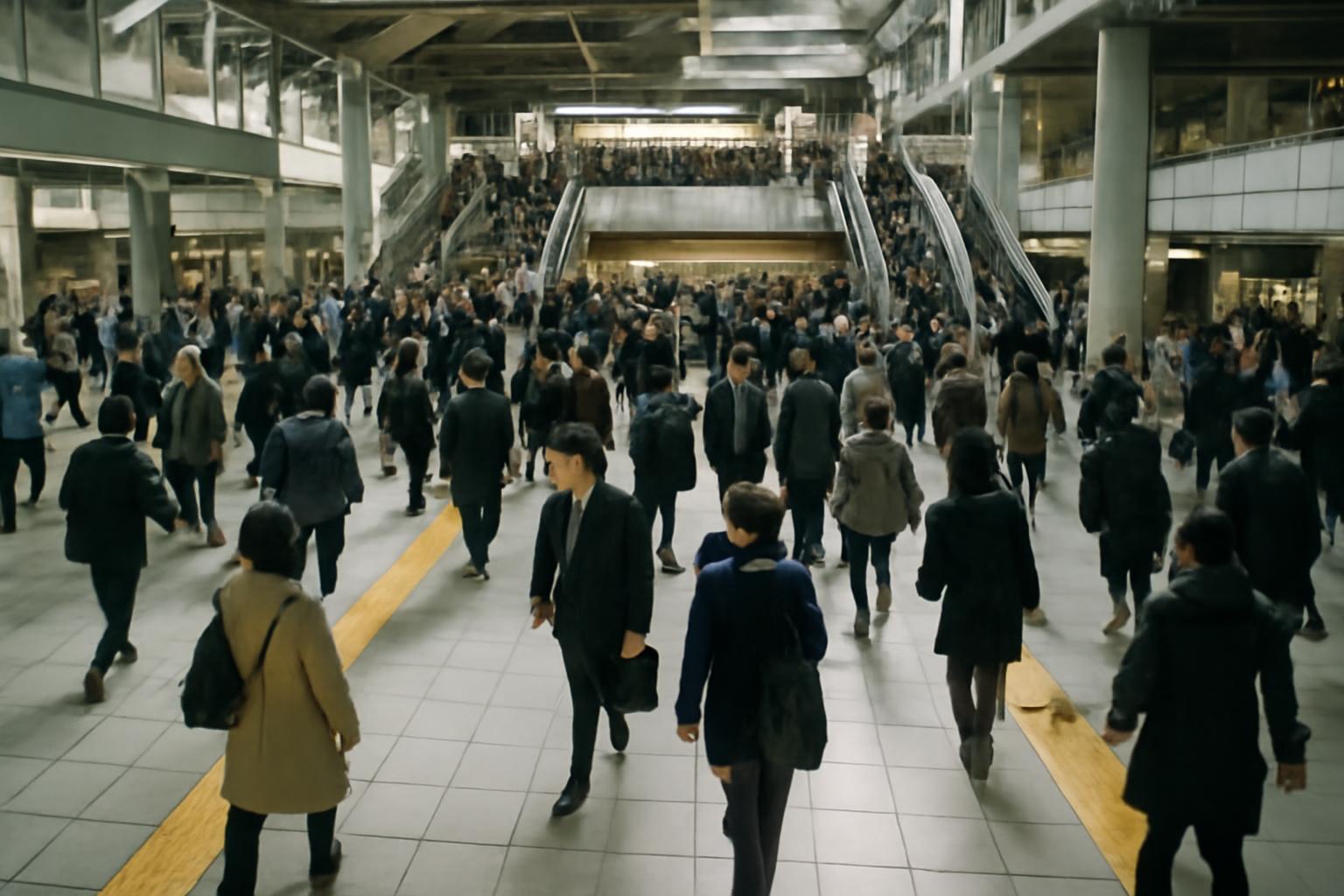
The best route is the one that leads to the correct side of the neighborhood with the fewest turns after you leave the gate.
The easiest way to navigate a large Tokyo station is to stop trying to understand it all at once. Break it into exits, levels, and landmarks, then use the one part that matters for the trip you are making right now. You do not need to master the station. You need to exit it cleanly.
Read the trip before you enter
Before you go into a large station, decide what the station is supposed to do for you. Is it a transfer, a destination, or a place where you need to find one specific exit? That single question tells you how much attention the station deserves.
If you are transferring, follow the route signs first and ignore the rest. If you are arriving for a neighborhood, identify the exit that gets you closest to your actual destination. If you need food or a quick reset, figure out which part of the station has the least confusing path back to the platform you will need later.
This sounds basic, but it prevents the most common mistake: wandering the station as if the station itself were the destination. It is not. It is the machine that gets you where you are really going.
Use exits as landmarks
Big Tokyo stations are easier when you anchor them to exits, not to the whole building. Exits are the parts that matter once you are street-facing. They tell you whether you are leaving toward a quieter street, a commercial block, or the neighborhood side you actually want.
When the station is huge, do not assume the nearest escalator is the right one. The best route is the one that leads to the correct side of the neighborhood with the fewest turns after you leave the gate. If you know that before you enter, the station stops feeling random.
For transfers, the same logic applies inside the station. Follow the path that gets you closest to your next platform instead of trying to cut every possible corner. Slightly longer but clearer is usually faster than a “shortcut” that costs ten minutes of reorientation.
Give yourself a buffer
Large stations punish tight margins. If you think you can make a connection with almost no slack, you are asking for stress. Build enough time to read the signs, choose the exit, and correct once if you miss a turn.
That buffer matters even if you are a confident traveler. Tokyo stations are well signed, but they are still large, and large spaces behave differently when you are tired, carrying luggage, or looking for a specific platform in a hurry.
The goal is not to arrive early everywhere. The goal is to remove the feeling that one confusing corridor can ruin the rest of the day.
Travel light when you can
Stations are much easier when you are not dragging more than you need. A suitcase turns every staircase, gate, and transfer into a judgment call. A smaller bag lets you move with less second-guessing and gives you more freedom to take the exit that is actually best for the trip.
If you do have luggage, look for the path that keeps you on elevators or broad transfer corridors instead of trying to improvise with stairs. There is no prize for choosing the hardest route through the station.
This is also why station navigation and trip packing belong together. If you pack poorly, the station feels harder. If you pack well, the same station becomes manageable.
Know when to ask for help
Station staff are there for a reason. If you are unsure which way to go, ask sooner rather than later. A short question at the right moment is cheaper than ten minutes of wrong turns.
You do not need a complicated explanation. Usually you only need to identify the line, the exit, or the next station. The more specific the question, the easier the answer. The useful skill is not confidence theater; it is knowing when clarity beats pride.
That rule also applies when a station day has gone sideways. If you are tired or the day has become more complicated than planned, simplify the rest of the route instead of forcing the original idea.
A simple station routine
The routine is simple:
- Check the next line or exit before you enter.
- Follow the most explicit sign, not the most hopeful corridor.
- Exit only after you know which street or landmark you want.
- Give yourself one correction if needed.
That routine sounds small, but it removes most of the station anxiety. Once the station is no longer a puzzle, the city becomes much easier to read.
For the bigger trip shape, pair this guide with how to plan Tokyo days by area. And if you are still deciding where your day should start, Shinjuku vs Shibuya vs Ueno for where to stay is the base decision that makes station navigation easier later.