
Choose One Hanami Stop That Fits Your Tokyo Day
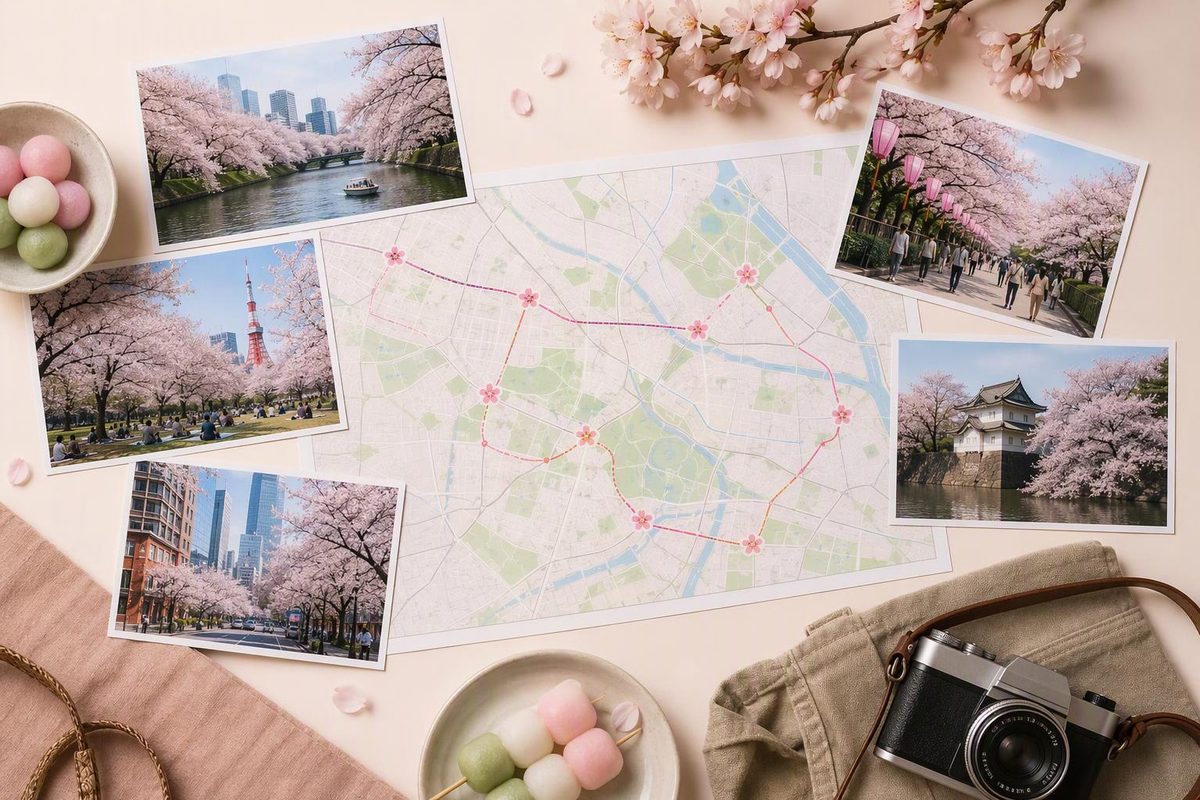
Compare Tokyo cherry blossom spots by atmosphere, neighborhood, station exit and timing, then build a compact hanami route without crossing the city.
For a first Tokyo hanami, choose one blossom area that fits the rest of your day rather than crossing the city between famous parks. Shinjuku Gyoen is the most structured daytime visit; Ueno has a lively festival atmosphere; Chidorigafuchi is the classic moat walk; Nakameguro suits an evening; and Sumida Park fits naturally with Asakusa.
Pick your area and preferred viewing style; the shortlist updates below.
Tokyo Hanami Spot Shortlist
Filter the six locations by the part of Tokyo already in your plan and the kind of visit you want.
| Place | Best Fit | Approach | Catch |
|---|---|---|---|
| Shinjuku Gyoen | Calm daytime picnic | Shinjuku South Exit; ~10 min | ¥500; no alcohol; evening closure |
| Ueno Park | Lively group hanami | Ueno Park Exit | Very busy at peak bloom |
| Chidorigafuchi | Moat-side walk | Kudanshita Exit 2; ~5 min | No picnic lawn or food stalls |
| Nakameguro | Evening river walk | River outside station | Narrow, crowded residential streets |
| Sumida Park | Asakusa and Skytree views | Asakusa; 3–5 min | Event dates vary annually |
| Inokashira Park | Slower Kichijoji day | Inokashira-koen; 1 min | Poor fit with eastern Tokyo |
Source: station approaches, venue rules and figures from the official tourism and venue pages cited in the article.
Tokyo Bloom Dates Are Planning References
Tokyo’s 1991–2020 averages are March 24 for first bloom and March 31 for full bloom. These are planning references, not fixed travel dates. In the standardized series that began in 1953, first bloom has ranged from March 14 to April 11, while full bloom has ranged from March 21 to April 17, according to the Tokyo Regional Headquarters of the Japan Meteorological Agency.
“Tokyo has bloomed” does not mean every park is ready. The Tokyo weather office records first bloom when five or six flowers have opened on its sample tree at Yasukuni Shrine. Full bloom means at least about 80% of that tree’s flowers are open. Conditions vary across the city and among cherry varieties.
Late March through the first days of April is the main planning window, but check current bloom reports and weather shortly before choosing the exact day. Tokyo’s official 2026 guide said the transition from flowering to full bloom normally takes around seven to ten days (GO TOKYO).
Match the Blossom Spot to the Rest of Your Day
| Place | Best For | Station Approach | Practical Catch |
|---|---|---|---|
| Shinjuku Gyoen | Lawns, a daytime picnic and a calmer first hanami | JR Shinjuku Station, South Exit; about 10 minutes on foot | Paid entry; no alcohol; closes in the evening |
| Ueno Park | A lively, crowded hanami atmosphere | JR Ueno Station, Ueno Park Exit | Main avenue becomes extremely busy at peak bloom |
| Chidorigafuchi | The postcard moat view and a compact walk | Kudanshita Station, Exit 2; about five minutes | A walking route, not a picnic lawn |
| Nakameguro | Riverside blossoms and evening lights | Nakameguro Station; river immediately outside | Narrow streets and heavy pedestrian traffic |
| Sumida Park | Blossoms with Asakusa and Tokyo Skytree | Asakusa Station; three minutes from the Ginza or Tobu lines, five from Toei Asakusa | Festival and illumination dates change annually |
| Inokashira Park | A slower Kichijoji neighborhood day | Inokashira-koen Station; one minute on foot | Inefficient with an eastern Tokyo itinerary |
Shinjuku Gyoen Is the All-Purpose Daytime Choice
Choose Shinjuku Gyoen when you want grass, room to pause and fixed operating hours. The garden has about 900 cherry trees, and picnicking is permitted, but alcohol, smoking, sports equipment and musical instruments are prohibited (GO TOKYO).
From March 15 to June 10, published hours are 9:00–17:30, with the gates closing at 18:00. Adult admission is ¥500. The garden normally closes on Mondays but opens daily during its March 25–April 24 spring period (Shinjuku Gyoen). Check seasonal notices before leaving, especially during peak bloom.
If you are staying in Shinjuku, make this the morning anchor and keep the afternoon nearby. It is one of the best parks in Tokyo even when bloom timing is imperfect.
Ueno Park Delivers the Lively Hanami Atmosphere
Use JR Ueno Station’s Ueno Park Exit. The park entrance is across the street, avoiding an unnecessary loop through the Ameyoko side. Ueno Park is free and open from 5:00 to 23:00; its main cherry-tree avenue is the focus, while Shinobazu Pond provides a second loop (GO TOKYO).
Arrive early for a less obstructed walk. Come later if crowds, lanterns and group hanami are part of the appeal. The park pairs neatly with the Tokyo National Museum, but the museum has separate tickets and hours.
Chidorigafuchi Is a Moat Walk, Not a Picnic Stop
Take the Hanzomon, Tozai or Toei Shinjuku line to Kudanshita and use Exit 2. The entrance to the 700-meter Green Way is about five minutes away. Roughly 230 Yoshino and Oshima cherry trees form a canopy beside the Imperial Palace moat (Visit Chiyoda).
On weekends during the seasonal illumination period, the path has operated one-way from the Yasukuni-dori side, and access may be restricted when it is full. There are no food stalls along the Green Way. Boat operations are weather-dependent; advance tickets, prices and dates are announced by season, so check the official boat notice before building a day around a ride.
Nakameguro Works Best as an Evening Walk
Nakameguro works better as a walk than a sit-down picnic. Exit Nakameguro Station and follow the river, where roughly 800 trees line the banks. For a longer route, start near Meguro Station and walk north toward Nakameguro (JNTO).
This is a residential district. Keep moving where paths narrow, do not step into the road for photographs, take rubbish away and keep noise down at night. Illumination and festival hours are seasonal, so do not rely on a previous year’s schedule.
Sumida Park Fits Naturally With Asakusa
The Taito City side of Sumida Park is about three minutes from the Tokyo Metro Ginza or Tobu Skytree lines at Asakusa Station and five minutes from the Toei Asakusa Line. This side of the park has 510 cherry trees, including Somei-yoshino and Oshima varieties, with Tokyo Skytree visible across the river (GO TOKYO).
A compact day is Sensoji in the morning → lunch in Asakusa → Sumida Park in late afternoon → illumination if scheduled. The Sensoji route from Asakusa Station keeps the plan on foot.
Inokashira Park Should Anchor a Kichijoji Day
Inokashira Park is a poor add-on to an Asakusa day but a useful western Tokyo anchor. It is one minute from Inokashira-koen Station, and its central pond has rowboats and blossom-lined banks (GO TOKYO). From Kichijoji Station, combine it with the shopping streets and an evening around Harmonica Yokocho using this Kichijoji neighborhood walk.
Two Pairings Avoid Unnecessary Cross-City Travel
If you have two viewing opportunities, split them by geography and time:
- West: Shinjuku Gyoen in the morning, then Nakameguro in the evening.
- East: Ueno in the morning, then Asakusa and Sumida Park in the afternoon.
Carry a small rubbish bag, avoid touching or pulling branches, and check the individual venue—not just a citywide forecast—on the morning of the visit. During Tokyo’s short peak, the right station exit and an early start matter more than fitting a sixth famous spot into the day.