
Walk Sensoji in One Line, From Kaminarimon to the Main Hall
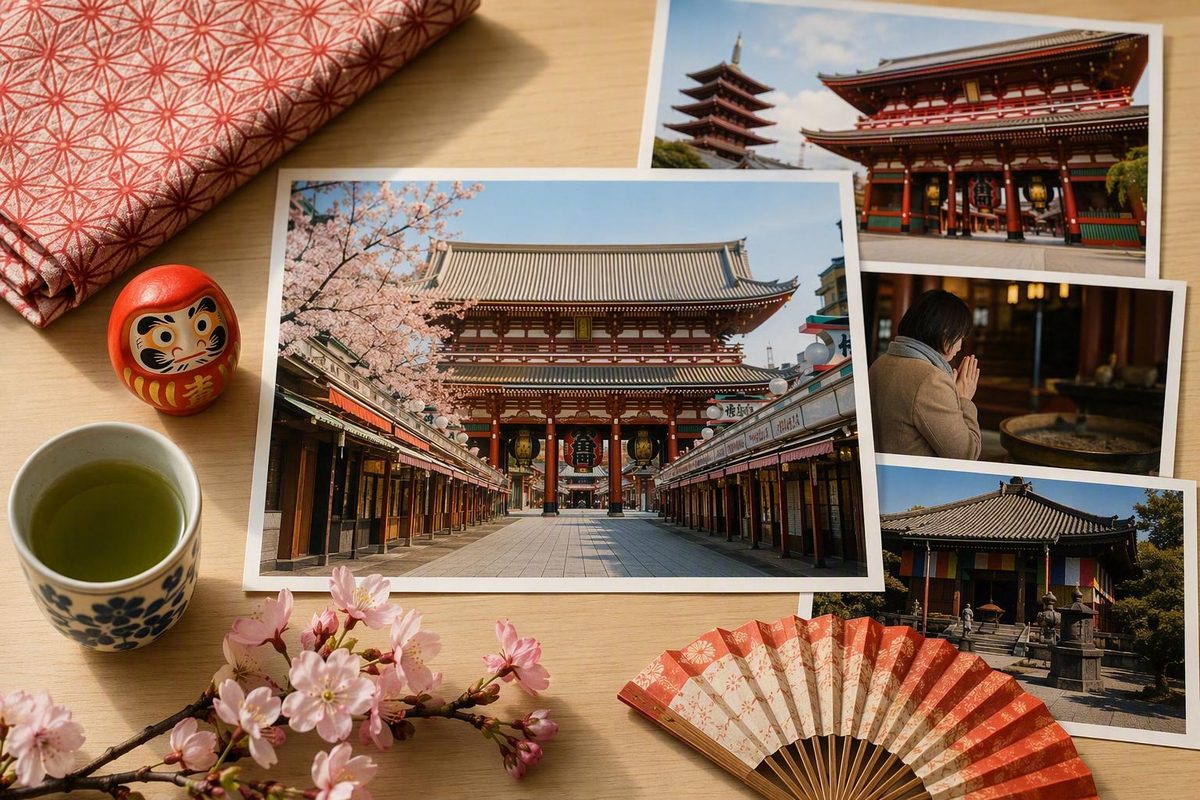
Asakusa Station to the Main Hall in one direction, Buddhist prayer without clapping, post-war rebuild dates, goshuin at Yogodo, and what to check first.
A first visit to Sensoji Temple in Tokyo is one straight line: walk about five minutes from Asakusa Station, enter through Kaminarimon, cross Nakamise, pass through Hozomon and stop at the Main Hall, with the five-story pagoda nearby. Sensoji is a Buddhist temple dedicated to Kannon, the bodhisattva of compassion, so at the Main Hall you put your hands together, pray quietly and bow — no clapping. The shopping street, the pagoda and the neighbouring Asakusa Shrine are optional; the Main Hall is the point of the walk.
Tick off each stop as you pass it; the next step and its etiquette update above the list.
Sensoji Route Checklist
Notes
The ceremonial start, not a destination. Rebuilt 1960. Photography of the gate follows exterior rules; interior rules differ.Notes
Snacks, toys, crafts, fans, yukata, souvenirs. Shops set their own hours; an open shop does not mean the Main Hall is open. Length and shop count: sources disagree (—).Notes
Rebuilt 1964. Purification basin and incense burner may be met near here: wash hands, rinse mouth from your hand, ladle never to the mouth; waft smoke if you wish. Customs, not requirements.Notes
Buddhist: do not clap. Sequence: place offering gently (optional, no fixed amount), hands together, pray quietly, bow. You may chant "Namu Kanzeon Bosatsu". Rebuilt 1958 after the 10 March 1945 air raid. Principal image is kept concealed. Follow interior photography signs.Notes
Rebuilt 1973. A skyline landmark, not a hall to enter.Notes
Temple-identified location for scarlet seals. Hours, procedure and fees can change — ask staff or read current notices.Notes
Important Cultural Property. Part of the extended precinct walk.Notes
Not a Sensoji building. Sanja Matsuri is associated with this shrine. Worship customs differ from the Buddhist temple next door.
Source: Sensoji official English site (route, etiquette, reconstruction years), GO TOKYO spot listing (access). Opening hours not shown — published times conflict; check temple notices on the day.
Arrive at Asakusa Station and Check Which Operator’s Exit You Use
Sensoji, formally Kinryuzan Sensoji, stands at 2-3-1 Asakusa, Taito-ku, Tokyo 111-0032. The temple describes itself as Tokyo’s oldest and as a centre of devotion to Kannon in its official English introduction.
Asakusa Station is the practical arrival point, but the name covers facilities served by three operators: the Tokyo Metro Ginza Line, the Toei Asakusa Line and Tobu Railway. Their exits and street approaches are not identical, so check the map and step-free route for your specific railway operator rather than assuming every “Asakusa Station” puts you on the same pavement. Official destination guidance places the temple about a five-minute walk from the station and lists a wheelchair ramp, elevator, multipurpose toilet and breastfeeding room on site; GO TOKYO carries the destination and facility details.
Do not build the day around an opening time copied from an undated listing. Published hours for Sensoji conflict, and an open Nakamise shop does not mean the Main Hall is open. The grounds, Main Hall, temple offices, goshuin desk and shops can all run on separate arrangements. For wider itinerary research, GO TOKYO keeps an official directory of Tokyo attractions, but for anything temple-specific the temple’s own notices govern.
Walk the Five Core Stops in Order
From Kaminarimon the route runs north through the two principal gates. Side paths exist, but none of them is required on a first visit.
| Stop | What it is | What to do |
|---|---|---|
| Kaminarimon | Outer gate, the recognisable entrance | Pause for the gate, then pass beneath it |
| Nakamise | Shopping street between the gates | Walk toward the temple; browse now or on the way back |
| Hozomon | Inner gate before the Main Hall precinct | Pass through and switch from shopping to worship |
| Main Hall | The religious centre, dedicated to Kannon | Offer if you wish, pray quietly, bow |
| Five-story pagoda | A major part of the temple skyline | View from outside; do not assume you can enter |
Kaminarimon is the ceremonial beginning, not a destination in itself. Nakamise delivers you straight to Hozomon, and beyond that gate the Main Hall takes over as the focus while the pagoda frames the view.
If you want a longer walk, add Yogodo, Nitenmon and the smaller halls around the precinct. Nitenmon is identified as an Important Cultural Property. Asakusa Shrine sits beside the complex and can join the same walk, provided you treat it as a separate Shinto site rather than another Sensoji building.
There is no dependable universal visit length. Shopping, prayer, crowds, event days, mobility needs and side buildings all change the pace, and the draft sources do not give a figure. Follow the sequence instead of forcing the visit into a 30-, 60- or 90-minute slot.
Pray at the Main Hall Without Clapping
Sensoji is Buddhist. At the Main Hall, do not clap the way you might at many Shinto shrines.
The prayer sequence is short:
- Place an offering gently in the box, if you wish.
- Bring your hands together.
- Pray quietly.
- Bow.
The temple tells worshippers they may chant “Namu Kanzeon Bosatsu.” Casual visitors are not required to.
Before the hall you may pass a purification basin. The customary procedure is to wash your hands and rinse your mouth with water poured into your hand; the ladle never touches your mouth. At the large incense burner, visitors commonly waft smoke toward themselves. These are customs, not compulsory performances, and the smoke is not a cure, a health intervention or a guarantee of wisdom. A visitor guide walks through the purification, incense, offering and prayer sequence.
An offering is optional and no fixed amount is required. If you give one, place it rather than throw it.
Omikuji are written fortunes drawn through a numbered process. Follow the instructions displayed at the temple for drawing and handling one, including where to tie a slip if directed. Treat the fortune as part of the custom, not a prediction.
Photography rules can differ between the exterior spaces and sacred interiors. Follow current signs and staff instructions; permission to photograph the gates does not extend automatically to the inside of the Main Hall or any other building.
Tokyo’s Oldest Temple Has Post-War Buildings
“Tokyo’s oldest temple” refers to the age and continuity of the religious institution, not to the structures now standing.
According to temple tradition, two fishermen found an image of Kannon in the Sumida River in 628, and the priest Shokai built a hall for it in 645 and ordered the principal image concealed. That image remains in a closed shrine inside the Main Hall and is not ordinarily shown to the public. These details belong to Sensoji’s origin tradition, presented in the temple’s official history and grounds material, rather than to independently documented proof that the visible complex survives from the seventh century.
War destruction reshaped the complex. The former Main Hall was destroyed in the Tokyo air raid of 10 March 1945, and the best-known present structures were rebuilt afterwards. The temple’s official historical account gives the chronology:
| Structure | Rebuilt |
|---|---|
| Main Hall | 1958 |
| Kaminarimon | 1960 |
| Hozomon | 1964 |
| Five-story pagoda | 1973 |
Reconstruction is part of Sensoji’s modern history and its continued religious life, so the dates do not make the buildings incidental. They simply mean “oldest temple” should not be read as “a surviving set of seventh-century buildings.”
Shop Nakamise on the Way Out, Not the Way In
Nakamise is the commercial approach that links Kaminarimon with Hozomon. It is not a separate market needing a detour; it is the route to the Main Hall.
Expect traditional snacks and cakes, toys, crafts, folding fans, yukata and general souvenirs. Published guides disagree about the street’s exact length and shop count, so those figures matter less than the layout: one shopping corridor between the two principal gates.
Decide before you enter whether to browse on the way in or after the Main Hall. Saving purchases for the return walk keeps the religious sequence intact and stops the temple from becoming a backdrop to shopping. Individual businesses set their own hours, so a busy street tells you nothing about access to the Main Hall or temple offices.
Asakusa Shrine Is a Separate Shinto Site
Sensoji and Asakusa Shrine are neighbours, not one site.
- Sensoji is a Buddhist temple dedicated to Kannon.
- Asakusa Shrine is a separate Shinto shrine beside the temple complex.
You can visit both on the same walk, but the worship customs differ. The no-clapping guidance belongs to Buddhist prayer at Sensoji; do not carry it automatically into the shrine. Sanja Matsuri is associated with Asakusa Shrine, although its processions and crowds spread through the wider Sensoji and Asakusa area.
Confirm Hours and Step-Free Access on the Day
Before leaving for Asakusa, check with the temple and your railway operator:
- Main Hall opening and closing times
- Grounds access, temporary closures and restricted areas
- Current admission or booking requirements
- Event-day changes to pedestrian circulation
- Railway service and station information
- Step-free access from your specific line and station area
- Separate reception details for goshuin or temple offices
The official Sensoji website carries temple notices, annual-event information, transport material, a guide to the grounds and live camera views facing the Main Hall and Kaminarimon. A live view shows conditions at that moment; it cannot tell you how crowded the approach will be later.
If you need step-free access, verify the whole journey. Check the station section with Tokyo Metro, Toei or Tobu as applicable, then confirm the route inside the grounds. A ramp, elevator or accessible toilet at the destination does not establish a continuous step-free path from your platform.
Where Visitors Receive a Goshuin
Sensoji identifies Yogodo Hall as the location for scarlet seals, or goshuin. Reception hours, availability, procedure and fees can change, so check current temple notices or ask staff on arrival rather than assuming the desk keeps Main Hall hours.
Whether Denboin Garden Is Open
Do not plan on routine access. Sensoji identifies Denboin Garden as a National Scenic Beauty Site and describes it as closed to the public. Older visitor material mentions occasional special access, but that does not establish a current opening. Check official notices for any temporary exhibition or access period before adding the garden to your route.