
Things to Do in Shinagawa, Tokyo: Exits and Half-Day Routes
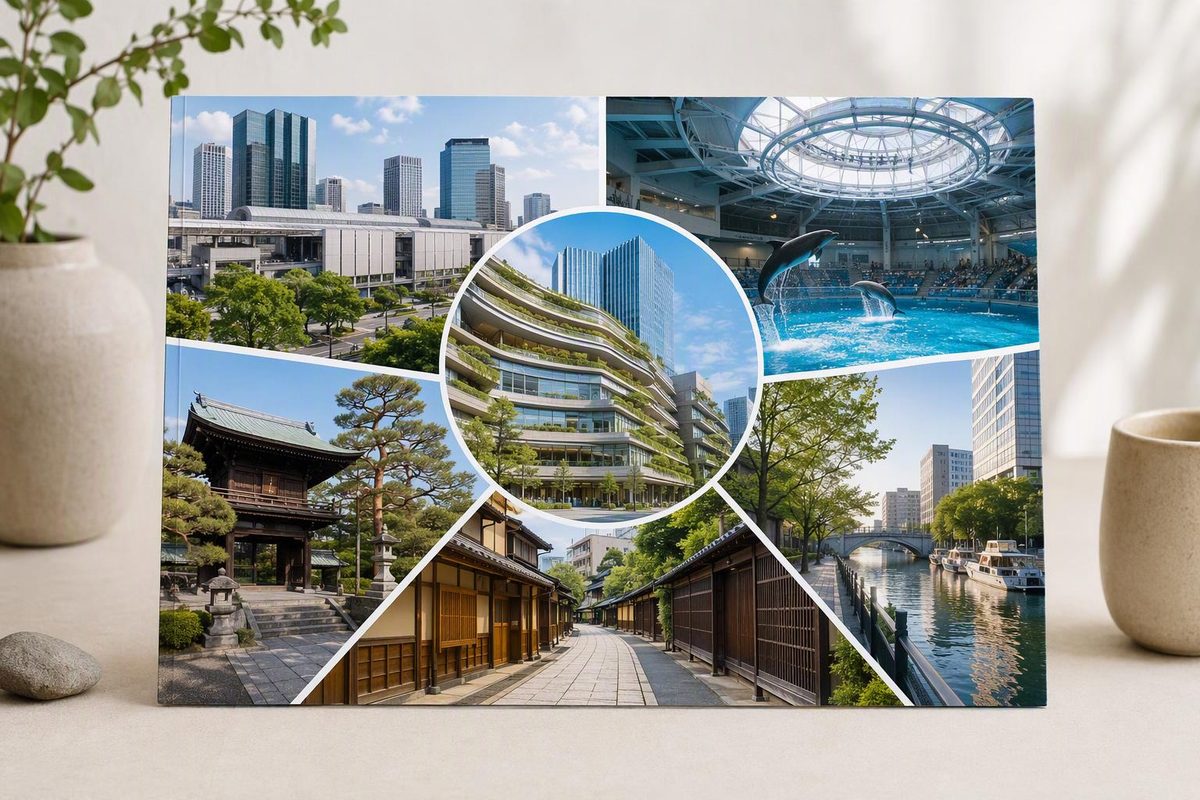
Plan Shinagawa by station side, with Aqua Park, Sengakuji, MoN Takanawa, the old Tokaido and Tennozu canals, plus hours and half-day routes.
For a short visit, choose Maxell Aqua Park and a meal near Shinagawa Station. For a walking half-day, follow the old Tokaido through Kita-Shinagawa to Shinagawa Shrine, then continue toward Tennozu’s canals and art spaces. Sengakuji and MoN Takanawa make a separate pairing around Takanawa Gateway Station.
These are nearby clusters, not one sightseeing precinct. Pick the cluster before choosing your station exit.
Start from the right station side
Shinagawa’s two main sides are Takanawa on the west and Konan on the east, connected by an east–west passage outside the ticket gates. Aqua Park is on the Takanawa side; use the Konan side for a direct walk toward Tennozu. Station orientation
| Your plan | Best starting point | Walking effort |
|---|---|---|
| Aquarium near the station | Shinagawa, Takanawa Exit | Aqua Park lists about 2 minutes from the exit |
| Old Tokaido and Shinagawa Shrine | Shinagawa for the walk; Shimbamba for the shrine alone | The old-road route starts roughly 12 minutes from Shinagawa; the shrine is 1 minute from Shimbamba’s North Exit |
| Tennozu canals and dining | Shinagawa, Konan Exit; or Tennozu Isle | T.Y.HARBOR lists about 20 minutes from Shinagawa, or 5 minutes from either Tennozu Isle station |
| Sengakuji and MoN Takanawa | Takanawa Gateway, North Ticket Gate | Temple and museum list walks of 5 and 6 minutes respectively |
Access comes from the aquarium, old-road itinerary, shrine listing, T.Y.HARBOR, temple and MoN. Add time to get from your train through the station.
1. Visit Maxell Aqua Park Shinagawa
This is the simplest substantial activity close to Shinagawa Station, inside the Shinagawa Prince Hotel complex. Choose it for aquarium displays combined with lights, music and entertainment, rather than a neighborhood walk. GO TOKYO’s aquarium overview
Allow around 1½–2 hours as a planning block. Adult admission is ¥2,800. For September 24–October 31, 2026, aquarium hours are 10:00–20:00, with last admission at 19:00; rides cost extra. Check hours for later visits. Hours and prices
Don’t confuse it with Shinagawa Aquarium. That separate venue is farther south, an eight-minute walk from Omorikaigan Station, with adult admission of ¥1,350. Plan a rail journey, not a walk across Shinagawa Station. Shinagawa Aquarium access and prices Our Tokyo aquarium comparison helps if the aquarium itself is your main destination.
2. See the 47 ronin memorials at Sengakuji
Sengakuji is the history-focused choice. Visit the temple grounds and the memorial cemetery associated with the 47 ronin; add the Ako Gishi Memorial Museum for artifacts and more context.
The temple’s current hours are 7:00–16:00 year-round, while the museum opens 9:00–15:30. Make this a morning or early-afternoon stop. From Takanawa Gateway’s North Ticket Gate, the temple lists a five-minute route via the plaza and street crossing. If arriving by the Asakusa or Keikyu line, use Sengakuji Station, Exit 2, three minutes away. Official access and hours
Cemetery visitors are asked to pay ¥500 for incense. The museum’s adult admission is a separate ¥500, covering the memorial museum and wooden-statue gallery; it may pause for about 45 minutes around lunchtime. Temple visitor information
3. Pair Sengakuji with MoN Takanawa
MoN Takanawa: The Museum of Narratives adds a cultural-program stop to the temple visit. Choose a program before going, or include the rooftop garden areas as a lighter stop.
The museum lists a six-minute walk from Takanawa Gateway’s North Ticket Gate. General building hours are 10:00–21:00, but individual programs and spaces differ; rooftop garden areas close at 20:00. The regular closure is the second Tuesday of each month, with published exceptions. Check the program’s ticket price rather than assuming one admission covers everything. Visitor information and opening schedule
4. Walk the old Tokaido to Shinagawa Shrine
For street-level exploration, head toward Kita-Shinagawa and Kyu-Tokaido, the former highway. Shinagawa was the first of the Tokaido’s 53 post towns between Edo and Kyoto. Today this is a modern neighborhood along a historic route, not a preserved Edo-period streetscape. A short detour to Shinagawa Ura, with its moored fishing and pleasure boats, gives the walk a waterfront element. Route and historical context
Continue to Shinagawa Shrine and look for the carved dragons winding around the torii pillars. GO TOKYO lists visiting hours of 9:00–17:00 daily and access one minute from Shimbamba Station’s North Exit. That station is also a useful stopping point if you don’t want to continue to Tennozu. Shrine details
5. Explore Tennozu’s canals and art spaces
Tennozu is the strongest choice here for a leisurely waterfront walk. Combine the boardwalks and Tennozu Fureai Bridge with one indoor stop, rather than trying to visit every gallery. The Shinagawa walking itinerary connects the old-road area with Tennozu’s murals, museum and bridge.
Two useful stops are:
- PIGMENT TOKYO: an art-materials shop carrying around 4,500 pigment colors, brushes and other supplies. Treat it as a browsing stop rather than a museum visit. GO TOKYO’s art-supply overview
- ARCHI-DEPOT, adjacent to WHAT MUSEUM: architectural models stored and displayed in a warehouse setting. For October 3–December 20, 2026, it lists 11:00–18:00, last admission 17:00, adult admission ¥900 and advance timed booking. It closes Mondays, shifting closure to Tuesday after a Monday holiday, and is also closed October 9. Check in at WHAT MUSEUM’s reception before your entry time. ARCHI-DEPOT details
An autumn option is WHAT MUSEUM’s free Coordinates exhibition, October 10–December 20, 2026. Its usual hours are 10:00–17:00, last admission 16:30, with opening-weekend exceptions. It follows the Monday/holiday closure pattern; ARCHI-DEPOT needs a separate ticket. Exhibition details
6. Finish with a waterfront meal—or station food
At Tennozu, T.Y.HARBOR serves craft beer and American food. Lunch runs 11:30–15:00 on weekdays and 11:30–16:00 on weekends and holidays; dinner is 17:30–22:00. Last orders are one hour before each service ends. Reserve if this meal is central to your plan. Restaurant overview and service hours
For a train-day stop, Ecute Shinagawa offers food and sweets inside the JR ticket gates; Atre Shinagawa is outside them. Buy your train meal while already in the paid area rather than exiting and discovering you need to enter again. GO TOKYO station dining guide
Two half-day routes without unnecessary backtracking
Old streets to canals: allow 4–5 hours. Start at Shinagawa → old Tokaido → Shinagawa Ura → Shinagawa Shrine → Tennozu → one art stop → waterfront meal. Finish at Tennozu Isle Station rather than automatically walking back to Shinagawa. T.Y.HARBOR lists five-minute walks to the Tokyo Monorail’s Central Exit and the Rinkai Line’s Exit B; choose the station for your onward journey. Keep ARCHI-DEPOT after 11:00 and check its closure calendar before booking. Tennozu station access
Temple and culture: allow 3–4 hours. Start at Takanawa Gateway’s North Ticket Gate → Sengakuji → MoN Takanawa → return to Takanawa Gateway. Both the Yamanote and Keihin-Tohoku lines serve the station, so you can continue by JR toward Shinagawa without changing operators. MoN’s station information
These are planning blocks, not measured visit times. If you have a fixed Shinkansen departure from Shinagawa, choose Aqua Park only if you have time for the visit, or keep to station dining instead of the full canal route. Leave room for luggage collection and reaching your platform—not just the walk back to the station.