
Things to Do in Tokyo: Activities and Itineraries by Interest
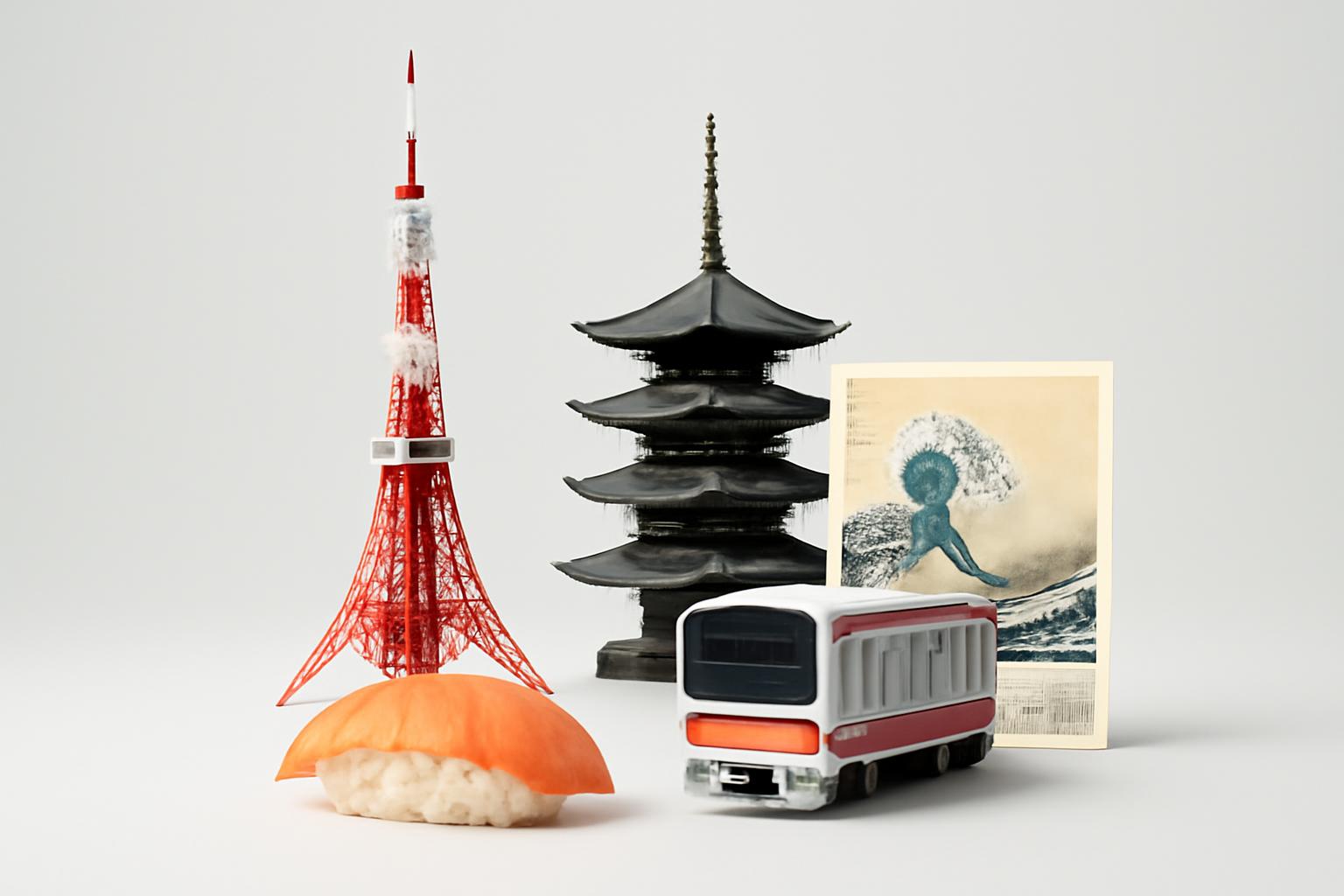
For three days, pair Shibuya, Harajuku and Shinjuku on day one, Ueno and Akihabara on day two, then Asakusa, the Tokyo Station area and Ginza.
Overview
The best things to do in Tokyo combine a historic site, contrasting neighborhoods, a deliberate food experience, an interest-led museum or cultural attraction, and one evening view or nightlife district. Your ideal mix depends on how many days you have, what your group enjoys, and which reservations or mobility needs constrain the itinerary.
A strong first visit might include Meiji Jingu, Shibuya and Harajuku in western Tokyo; Senso-ji and Asakusa in the east; food at Tsukiji Outer Market or a neighborhood izakaya; and an indoor attraction such as a museum, immersive-art venue, arcade, or anime-focused stop. Observation decks, gardens, nightlife, and day trips then compete for the remaining space.
Tokyo becomes easier to plan when you stop treating it as one continuous list of attractions. The official GO TOKYO guide organizes suggestions by interest, travel party, and geographic day clusters. That is a useful model: choose a few experiences that matter to you, group them by area, and leave enough capacity to enjoy each neighborhood rather than repeatedly crossing the city.
This guide uses that approach. It separates broadly useful first-visit anchors from taste-dependent choices, then turns the shortlist into practical one-, three-, and five-day plans.
What deserves priority on a first Tokyo visit
Give priority to experiences that reveal genuinely different sides of Tokyo. A shrine or temple, a dense commercial district, a food-focused stop, and an evening experience together tell you more than several similar shopping streets or multiple observation decks.
There is no objective ranking that works for everyone. One published Tokyo list explicitly describes its recommendations as debatable, while another says its attractions are not placed in a particular order (Travel Babbo; Adventures of A+K). Popularity is therefore a useful signal, but it is not proof that an attraction deserves several hours of your trip.
Use three priority levels. First, choose two or three geographic anchors, such as western Tokyo, Asakusa, or Ueno and Akihabara. Second, add one interest-led experience, perhaps food, art, gardens, gaming, or nightlife. Third, treat famous photo stops as optional additions that can be sampled briefly when they fit the route.
This framework also makes tradeoffs visible. A timed museum may displace an unstructured neighborhood walk. A full evening of nightlife requires more energy than a quick skyline view. A day trip removes an entire day that could otherwise deepen your experience of Tokyo itself.
Landmarks and neighborhoods that define a first visit
Meiji Jingu, Shibuya, Asakusa and Senso-ji, Harajuku, Shinjuku, and Akihabara recur in first-visit guides because they offer contrasting settings rather than interchangeable attractions. The goal is not necessarily to visit all of them. It is to choose a combination that shows Tokyo’s range without creating unnecessary backtracking.
Meiji Jingu gives you a shrine visit within the western Tokyo cluster. A first-timer guide specifically recommends exploring the shrine and its grounds (Bon Traveler). Harajuku adds youth fashion, vintage shopping, and busy streets nearby. The GO TOKYO guide places Harajuku between Shibuya and Shinjuku in a coherent western itinerary, making these three areas natural partners.
Shibuya works best as a district rather than a single crossing. The crossing is famous and easy to sample, but fame alone should not determine how much time it receives. If you enjoy contemporary city energy, shopping, people-watching, and illuminated streets, stay and explore. If the crossing itself is your only interest, treat it as a brief stop on the way between Harajuku and another Shibuya destination.
Shinjuku can carry several different roles. It can provide shopping and urban scale during the day, a garden-based pause, an observation point, or a longer nightlife plan. Decide which role you want before arriving. Trying to combine all of them late in an already crowded day can leave the area feeling like an obligation rather than a choice.
Asakusa offers a different first-visit anchor. Senso-ji, its approach streets, and the surrounding district provide a historic counterpoint to western Tokyo’s retail and nightlife focus. Because the temple precinct and approach can become busy, an earlier visit can make movement and observation easier. One accessibility guide specifically recommends arriving before the midday crowd (Maison de Vie).
Akihabara deserves substantial time when anime, games, electronics, or arcades are central interests. Otherwise, it can be a shorter component of a Ueno-area day. This is the broader rule for famous districts: allocate time according to what you intend to do there, not merely according to name recognition.
Shrines, temples, gardens, and quieter contrasts
Tokyo’s shrines, temples, parks, and gardens provide more than a break from sightseeing. They change the pace of the itinerary and help you avoid spending an entire visit in similarly intense commercial districts.
Meiji Jingu and Senso-ji are useful first choices because each belongs to a strong geographic cluster. Meiji Jingu fits naturally with Harajuku, Shibuya, and Shinjuku, while Senso-ji anchors Asakusa. You do not need to cross the city specifically for a quiet stop when a meaningful historic site already sits within that day’s route.
Gardens and park walks can play a similar role. They are especially valuable between shopping, museums, arcades, or nightlife, all of which can involve sustained visual attention and crowds. Instead of treating a calm space as filler, use it to shape the day: an active commercial area before lunch, a quieter walk in the afternoon, and a more energetic evening afterward.
The best selection depends on the experience you want. Choose a shrine or temple when ritual space and historic atmosphere matter most. Choose a garden or park when your priority is open space and a slower walk. Mobility needs may also change the choice, because paved routes, gravel, slopes, and accessible entrances differ by site.
Food experiences worth building into the day
Food should be part of the itinerary structure, not an afterthought squeezed between attractions. Tokyo guides repeatedly include izakayas, sweets, coffee, markets, convenience-store food, and dining across different price levels (Bon Traveler; Never Ending Voyage). The practical advantage is that every neighborhood day already requires meals.
A useful first-visit food shortlist includes:
- Tsukiji Outer Market for a food-centered market visit. Use the precise Outer Market name when searching and planning; Adventures of A+K recommends it specifically for food lovers.
- Sushi or ramen when you want one focused meal rather than a separate attraction.
- An izakaya evening when conversation, drinks, and several dishes matter more than a quick dinner.
- Sweets and coffee as flexible additions to a neighborhood walk.
- Convenience-store food for an early breakfast, snack, or late-night option. One travel guide describes these stores as affordable, reliable, and convenient across those situations (Adventures of A+K).
- A food tour when you want interpretation and guided selection rather than choosing independently.
These options displace different amounts of itinerary time. A snack or coffee stop is easy to fit around sightseeing. A market visit deserves deliberate space in the morning or earlier part of the day. An izakaya is an evening plan, not merely a meal slot. A tour introduces a fixed meeting time and route, which can limit what you schedule immediately before it.
Pair the experience with its surrounding area. Tsukiji Outer Market can support an eastern or central Tokyo day. An izakaya fits naturally after Shinjuku sightseeing. Sweets, coffee, ramen, and convenience-store stops can fill gaps without sending you across the city for a single famous address.
Museums, immersive art, anime, gaming, and arcades
Tokyo’s indoor cultural attractions are best selected by interest. Museums, immersive art, anime, gaming, and arcades all provide indoor time, but they produce very different days. Choosing one deliberately is usually more rewarding than adding several because they appear on popular lists.
Traditional museums suit visitors who want a structured cultural or historical experience. Ueno is a useful area to consider because it can combine a museum with park time and a later visit to Akihabara. Accessibility evidence for the Tokyo National Museum notes elevators and accessible toilets across its exhibition buildings, as well as wheelchair borrowing from the information desk (Maison de Vie). Confirm current exhibitions, admission, and access arrangements directly before visiting.
Immersive-art venues require a different commitment. The experience depends on moving through installations rather than following a conventional sequence of labeled objects. teamLab Borderless is a supported example, but its ticket availability, operating hours, and prices are time-sensitive. Its official social account has warned that tickets may sell out and that on-site pricing can differ from online pricing (teamLab Borderless). That makes it an attraction to plan around rather than an assumed walk-in stop.
Anime, gaming, and arcade time should be even more personal. Akihabara is the obvious cluster for visitors who want to browse shops or spend time playing, but the district does not require equal time from every first-time visitor. A committed fan may make it the main event of a Ueno and Akihabara day. Someone with only casual curiosity can sample the atmosphere and preserve more time for another area.
Indoor does not automatically mean quiet or low-sensory. Immersive installations, arcades, popular exhibitions, and dense retail spaces can involve low light, sound, crowds, or sustained visual stimulation. Select the format as carefully as the subject.
Skyline views, illuminated districts, and nightlife
After dark, choose between seeing Tokyo from above, experiencing its streets at night, and committing to nightlife. These are related but distinct activities, and fitting all three into one evening can create an unnecessarily rushed plan.
An observation deck gives you a defined destination and a wide view. Compare decks by what matters to you: free or paid admission, indoor or exposed viewing, the landmarks visible, reservation pressure, and the effect of poor visibility. The Tokyo Metropolitan Government Building is a supported free-view option; travel guides specifically identify its 45th-floor views and free admission (Adventures of A+K; Little Grey Box). Verify current opening conditions before relying on it.
A street-level evening can be more flexible. Shibuya and Shinjuku offer illuminated urban settings without requiring you to reserve a long nightlife session. This works well when you want photographs, dinner, and a walk but still need an earlier finish.
A proper nightlife plan deserves the rest of the evening. The GO TOKYO guide places Shinjuku nightlife at the end of its western Tokyo day, after Shibuya and Harajuku. That sequence is geographically sensible, but your energy level still matters. If nightlife is a priority, reduce the afternoon load instead of treating the evening as an unlimited extension of the day.
Choose activities by interests, time, and budget
Narrow the list by choosing one primary interest, one geographic anchor, and one practical constraint. The matrix below connects those decisions without assigning unsupported exact prices or visit lengths.
| Your priority or constraint | Strong categories to consider | Time commitment | Budget approach | Main tradeoff |
|---|---|---|---|---|
| A broad first-time introduction | A historic site, one modern district, food, and an evening view or walk | Several brief-to-medium stops | Mix free public sights with one paid priority | Breadth leaves less time for deep exploration |
| Food | Tsukiji Outer Market, sushi, ramen, izakayas, sweets, or a food tour | Flexible unless tied to a tour | Everyday meals can double as experiences | Destination dining can create extra travel |
| Anime and gaming | Akihabara shops, arcades, and related indoor attractions | Brief sample or substantial area focus | Browsing is flexible; paid play and purchases vary | Less time for historic or outdoor areas |
| Quiet settings | Shrines, temples, gardens, parks, and slower neighborhood walks | Flexible | Several categories include free public spaces | Surface conditions and weather may matter |
| Art and museums | A conventional museum or immersive-art attraction | Usually a central scheduled activity | Reserve paid admission for the venue you value most | Fixed entry can control the surrounding day |
| Night views and nightlife | A free or paid observation point, illuminated streets, or an izakaya evening | Quick view through full evening | Free skyline and street-level options exist | Visibility, crowds, and late finishes affect value |
| Limited mobility or sensory tolerance | Step-free historic routes, accessible museums, calmer early visits | Allow more transition capacity | Confirm concessions and facilities directly | Detours, surfaces, elevators, and crowds can alter the route |
This is a selection tool, not a ranking. For example, a food lover with one day might choose Tsukiji Outer Market and an eastern Tokyo cluster rather than force Akihabara and Shinjuku into the same plan. A visitor focused on anime may choose Akihabara as a major commitment and use nearby Ueno for contrast. Someone managing a limited budget can combine shrines, neighborhood walks, street-level night scenes, and a free observation point.
The final test is displacement: if you add this activity, what leaves the plan? That question prevents an inspiring shortlist from becoming an impossible itinerary.
Selectors for different travelers and interests
Travel-party labels are useful only when they lead to a concrete choice. The GO TOKYO guide explicitly separates ideas for visitors with children and people traveling alone, but individual needs still matter more than the label.
- Families: favor geographic clusters with flexible exits, open space, and one principal attraction. Avoid building the entire day from fixed reservations.
- Solo visitors: use the freedom to linger in museums, shops, cafés, or arcades without negotiating group preferences. A food tour can add structure if desired.
- Couples: pair one shared-interest activity with a slower meal, garden, skyline view, or evening walk.
- Groups of friends: choose an activity that supports interaction, such as an izakaya evening, gaming, arcades, or nightlife, then simplify the daytime route.
- Food lovers: make Tsukiji Outer Market, a food tour, or a deliberate meal the anchor rather than attempting to collect unrelated famous dishes across the city.
- Anime and gaming fans: give Akihabara enough space to browse rather than treating it as a rushed photo stop.
- Travelers seeking calm: alternate a shrine, temple, garden, museum, or park with the busiest commercial areas.
The key is not to find an attraction marketed to your party type. It is to identify how your group handles fixed schedules, crowds, walking, spending, and late nights. Choose the category that fits those realities, then place it in the nearest sensible area cluster.
How to compare similar Tokyo experiences
When two attractions appear to serve the same purpose, compare the physical experience and planning burden before comparing reputation. This is particularly helpful for observation decks, immersive-art venues, markets, museums, and theme-park-style commitments.
For an observation deck, ask whether you want a free overview or a paid attraction, an indoor viewpoint or weather exposure, a particular landmark in the view, and a fixed reservation or flexible arrival. A free option such as the Tokyo Metropolitan Government Building can preserve the budget for food or art, but any skyline plan loses value when visibility is poor.
For immersive art, compare movement, lighting, sound, surfaces, accessibility, and ticket pressure. The supplied evidence supports current-planning questions around teamLab Borderless, including possible sellouts and route considerations for wheelchair users, but it does not support a definitive ranking of Tokyo’s immersive venues. Choose based on the environment you want and the access information you can verify, not on an unsupported claim that one is universally better.
For markets, decide whether you want a food-focused stop, a meal, or extended browsing. For museums, compare subject matter and current exhibitions before prestige. For theme parks or other large-format attractions, decide whether the experience is important enough to take the place of a neighborhood day.
The same rule applies throughout Tokyo: compare atmosphere, commitment, reservation pressure, physical setting, and what the choice displaces. Those criteria are more dependable than an all-purpose “best” label.
Free and low-cost choices
A limited budget does not require a thin itinerary. Tokyo’s neighborhoods, religious sites, public spaces, food options, and some viewpoints let you build substantial days without assigning every hour to paid admission. Both Tripadvisor and Little Grey Box maintain dedicated collections of free Tokyo activities, though individual access conditions should be checked before travel (Tripadvisor; Little Grey Box).
Useful supported categories include:
- Meiji Jingu and its grounds
- Senso-ji and the surrounding Asakusa streets
- Shibuya Crossing and neighborhood walks
- Harajuku, Shinjuku, and Akihabara street-level exploration
- Parks and public-space walks
- The Tokyo Metropolitan Government Building viewpoint, subject to current access
- Convenience-store breakfasts, snacks, coffee, or late-night food as lower-cost everyday options
Free does not mean consequence-free. A distant stop can cost time and transit even when admission costs nothing. Several scattered free attractions may therefore be less useful than a paid experience within a coherent neighborhood day.
A sensible budget method is to choose one paid priority, use free sights around it, and let normal meals do some of the experiential work. This gives your spending a purpose while preserving enough flexibility for unplanned discoveries and changes in energy.
Build a one-, three-, or five-day plan by neighborhood
Neighborhood clustering reduces avoidable movement and makes the itinerary easier to revise. The GO TOKYO guide provides a clear three-day sequence: Shibuya, Harajuku, and Shinjuku; Ueno and Akihabara; then Asakusa, the Tokyo Station area, and Ginza. Another Tokyo guide similarly says it groups activities that are close together (Adventures of A+K).
Before assigning attractions, classify each choice by commitment:
- A sample stop is easy to enter and leave, such as seeing a crossing or walking part of a commercial street.
- A neighborhood anchor rewards unstructured time, such as Asakusa, Harajuku, Shinjuku, or Akihabara.
- A scheduled attraction controls the surrounding hours because entry is fixed.
- A major commitment uses much of the day, as a distant day trip can.
Then add practical metadata you can verify: area, indoor or outdoor setting, free or paid status, reservation need, and relevant access conditions. Exact durations are not consistently available in the evidence, so avoid pretending every traveler needs the same number of hours.
Build each day around one or two anchors. Add meals, brief stops, and quiet pauses nearby. If the plan requires repeatedly returning through a major station merely to reach the next unrelated attraction, the geographic logic probably needs revision.
One day: choose one coherent side of Tokyo
With one day, choose either a western cluster or an eastern and central cluster rather than attempting to complete a citywide checklist.
A western day can connect Meiji Jingu, Harajuku, Shibuya, and Shinjuku. The sequence works because the areas already appear together in the official three-day model. Choose two or three as meaningful stops, then finish with a Shinjuku view, dinner, or nightlife. If you plan a late evening, keep the afternoon lighter.
An eastern and central day can begin around Asakusa and Senso-ji, then continue toward another compatible area such as Ueno, the Tokyo Station area, Ginza, or Tsukiji Outer Market. Do not add all of them automatically. Food interests may justify Tsukiji, while museums may point toward Ueno.
One day cannot represent every side of Tokyo. A successful plan provides contrast within a manageable area and leaves enough flexibility for meals, station navigation, and a change of pace.
Three days: western Tokyo, Ueno and Akihabara, then eastern and central Tokyo
A three-day itinerary can follow the geographic sequence published by GO TOKYO, with substitutions based on your interests:
- Day 1, Shibuya, Harajuku, and Shinjuku: begin with Meiji Jingu or Harajuku, continue to Shibuya, and end in Shinjuku. Choose a skyline view, illuminated walk, dinner, or nightlife rather than stacking every evening option.
- Day 2, Ueno and Akihabara: use Ueno for a museum, park, or calmer cultural component, then move to Akihabara for anime, gaming, electronics, or arcades. Reverse the emphasis if pop culture matters more than museums.
- Day 3, Asakusa, the Tokyo Station area, and Ginza: make Senso-ji and Asakusa the historic anchor, then select the central district that best matches your interests. A food-centered traveler might instead incorporate Tsukiji Outer Market.
A timed indoor attraction can replace part of the relevant day. It should not be added on top of an already full sequence. If immersive art is your primary interest, reserve it first, identify its area, and simplify that day around it.
This structure is valuable because it remains editable. You can remove a district without breaking the entire itinerary, and each day still retains a recognizable identity.
Five days: add depth or reserve a day beyond central Tokyo
Two extra days are most useful when they deepen an interest or create room for a day trip. They should not merely extend the attraction list.
Use one day for a category that received too little space in the three-day plan. Food lovers can add a market visit, guided food experience, and unhurried meal. Museum visitors can devote more time to Ueno or another selected venue. Anime and gaming fans can give Akihabara the depth that a mixed day would not allow. Travelers seeking a slower pace can add gardens, parks, or neighborhood walks.
Reserve the fifth day for either another Tokyo cluster or an excursion. The GO TOKYO guide suggests surrounding areas such as Mount Takao for a five-day stay . The correct choice depends on what you value more: broader regional contrast or another full day in Tokyo.
Keep a major attraction or excursion on its own day when possible. Extra days should create breathing room, not justify denser scheduling.
Book high-demand attractions and manage crowds
Book the attraction that can fail first, then construct the flexible parts of the itinerary around it. Timed museums and immersive venues deserve attention before shrines, crossings, public streets, and other places that do not require a reserved entry.
teamLab Borderless provides a clear example. Its official social account has stated that same-day tickets are available only when the venue is not sold out and that tickets purchased on site may have different pricing from the official ticket website (teamLab Borderless). That evidence supports buying ahead when the attraction is important to you. It does not establish a permanent release window, current price, or guaranteed sellout pattern.
Other travel guides recommend advance booking for high-demand Tokyo attractions, but their suggested windows are not consistent and may refer to different venues (Never Ending Voyage; Adventures of A+K). Confirm current admission prices, release dates, closure days, entry rules, and operating hours on each attraction’s official channel. Do this again shortly before the visit if the day depends on that booking.
Use a simple planning order:
- Reserve the highest-priority timed attraction.
- Place it within the correct neighborhood day.
- Keep the activity immediately before it nearby and easy to leave.
- Avoid another inflexible booking on the opposite side of the city.
- Recheck official operating information before travel.
For unticketed sights, earlier visits can reduce crowd pressure. Bon Traveler recommends arriving by roughly 7:30 or 8:00 for crowd-free photographs, while accessibility-oriented guidance suggests visiting popular places before 9:00 (Bon Traveler; Wheelie Guides). Treat these as practical recommendations, not guarantees. An early start is most valuable when you need clearer photographs, more personal space, or shorter waits for constrained routes and elevators.
Accessibility, mobility, and sensory considerations
Accessibility information can change which attractions are sensible, which entrance you use, and what time you arrive. Do not rely on a citywide assumption that every famous sight is equally easy to navigate. Check the precise route from station exit to entrance, the surfaces within the site, available toilets, and any alternative access path.
Senso-ji is a useful supported example. Maison de Vie describes the route from Kaminarimon Gate along Nakamise-dori as flat, wide, and paved, with a ramped route that bypasses steps into the main hall and accessible toilets within the precinct. Wheelie Guides also reports a paved approach and elevator access to the main hall. Because the area becomes crowded, arriving earlier may provide more space to move.
Meiji Jingu requires a more careful route choice. Wheelie Guides reports that the main gravel approach is difficult for wheelchair users but that a paved alternative and a ramp to the prayer area are available. Maison de Vie similarly distinguishes the gravel approach from a paved, wide, step-free route inside the grounds. Ask staff about the appropriate entrance and confirm current route conditions before the visit.
Some museums may be easier to plan than historic outdoor grounds. Confirm the Tokyo National Museum’s current elevators, accessible toilets, and mobility services directly before visiting. Maison de Vie reports that teamLab Borderless offers staff route mapping and accessible toilets; verify current route and sensory conditions directly with the venue.
These examples support a practical access checklist:
- Identify the exact station exit and street-level route.
- Check for gravel, slopes, steps, uneven floors, and long detours.
- Confirm accessible entrances, toilets, lifts, seating, and wheelchair loans.
- Ask whether only part of the attraction is accessible.
- Consider low light, sound, crowd density, and visually complex floors.
- Visit popular places earlier when additional space would help.
The evidence does not support a complete stroller, walking-intensity, or sensory rating for every recommendation in this guide. Build extra transition capacity into the day and verify details with the venue. If one site requires a difficult surface or complicated detour, pair it with a simpler nearby experience instead of adding another physically demanding stop.
Plan substitutes for rain, heat, and poor visibility
A resilient Tokyo itinerary keeps the same geographic cluster while changing the experience category. When weather undermines an outdoor walk or skyline view, replace it with an indoor cultural, food, retail, gaming, or immersive option nearby rather than crossing the city for a famous fallback.
Start by marking every choice as primarily indoor, primarily outdoor, or visibility-dependent. Shrines, gardens, neighborhood walks, and exposed viewpoints are more dependent on conditions. Museums, arcades, shops, food experiences, and many immersive attractions can be candidates for substitution, but their current operating conditions and access still need verification.
Next, preserve the day’s anchor. If poor visibility weakens a Shinjuku observation plan, keep the western Tokyo day and redirect that time toward food, retail, or another selected indoor experience in the same area. If rain undermines a longer Asakusa walk, retain the essential historic stop if conditions allow, then shorten the outdoor portion and move to an indoor option within the broader eastern or central cluster.
During extreme heat, reduce consecutive exposed walks and create more indoor pauses. This is a planning method rather than a venue-specific safety claim: alternate settings, shorten optional detours, and leave capacity to stop earlier than planned.
Do not reserve every fallback in advance. One protected booking and several flexible nearby alternatives give you more control than two competing timed entries. The purpose of a contingency is to preserve the shape of the day, not to reproduce every original activity indoors.
Day trips when Tokyo has an extra day
A day trip is worthwhile when regional contrast matters more to you than another Tokyo neighborhood. Hakone, Kamakura, Nikko, and Mount Takao recur as options, but they play different roles and should not be treated as interchangeable boxes on a checklist.
Hakone suits visitors attracted to a hot-spring-town setting and the possibility of Mount Fuji views. The GO TOKYO guide presents it as an easy day trip and specifically associates it with hot springs and Fuji views. Because any distant view is condition-dependent, do not make the entire day’s value depend on visibility alone.
Kamakura is a recurring suggestion for visitors with a spare day. Adventures of A+K includes it among its day-trip recommendations. It is a sensible category choice when you want a destination outside central Tokyo rather than another dense urban district, though the supplied evidence does not support a detailed transport or attraction-by-attraction comparison.
Nikko represents a more substantial journey. One source places it about two hours from central Tokyo by train or car (Next Level of Travel). That travel commitment means the day should be reserved for Nikko rather than combined with a major Tokyo neighborhood.
Mount Takao is the supported choice for visitors interested in a hiking-oriented outing. GO TOKYO suggests it for a five-day trip and describes it as offering several easier hiking trails. Route difficulty, weather, and individual mobility still need to be checked before selecting a trail.
Make the final decision by asking what the excursion replaces. With only one to three days, Tokyo’s contrasting neighborhoods usually deserve the available time. With five days, a day trip becomes easier to justify. Choose Hakone for its hot-spring-town role and potential Fuji views, Mount Takao for hiking, or Kamakura or Nikko for a different destination experience. Then give the excursion the full day instead of trying to recover lost Tokyo sightseeing that evening.