
Master Tokyo Station: Seamless Access to Japan's Iconic Bullet Trains
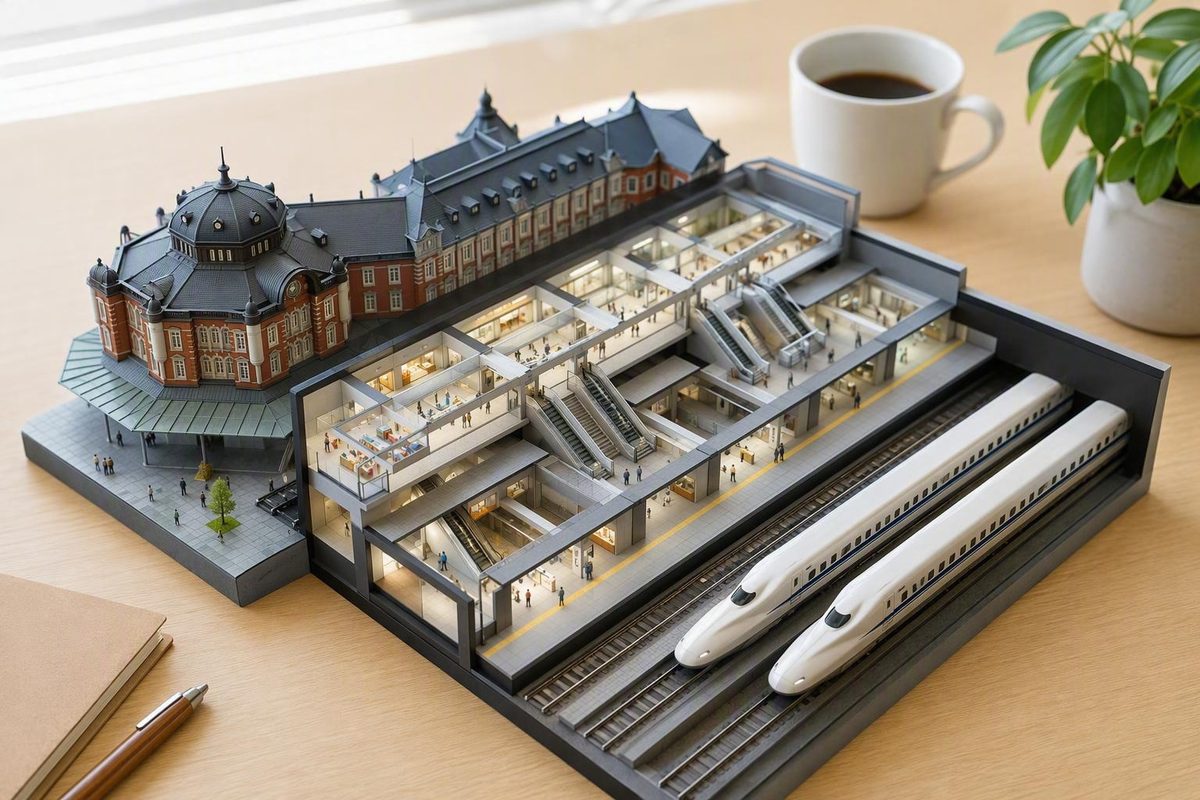
At Tokyo Station, the Shinkansen side is concentrated on the east, and the Yaesu approaches are the practical entrances for bullet-train travelers.
If you are boarding Japan’s Shinkansen from Tokyo Station, you do not need to understand the entire station. You need a short, usable mental map: which side to enter from, which Shinkansen gate area to aim for, and which platform band your train is likely to use.
That matters because Tokyo Station can feel much larger than the task you are actually trying to complete. It has shopping arcades, underground corridors, multiple JR lines, and enough exits to make a simple departure feel more complicated than it is. But the Shinkansen part of the station is easier once you stop thinking of Tokyo Station as one giant maze and start treating it as a series of practical choices.
This guide is built for that exact moment. You are in Tokyo. You need the Shinkansen. You want a clean path from street or local line to the right platform without re-reading every sign twice. Here, “speed rail” means Japan’s Shinkansen high-speed trains departing from Tokyo Station.
Tokyo Station Layout: Yaesu vs. Marunouchi for Speed Rail Access
The first decision is the one that makes most later decisions easier: Yaesu or Marunouchi.
Tokyo Station has two main faces. Marunouchi is the historic west side, known for the red-brick station building and the business district around it. Yaesu is the east side, more modern in feel and more practical for Shinkansen departures. For travelers whose only goal is boarding a bullet train, Yaesu is the better default.
The reason is simple. The Shinkansen side of Tokyo Station is concentrated on the east side, and the practical entrance points for bullet-train travelers are the Yaesu approaches. If you are coming from the street, the safest default is to aim for Yaesu North, Yaesu Central, or Yaesu South rather than emerging on Marunouchi and crossing the station later.
That does not mean Marunouchi is a mistake. It means Marunouchi usually adds a step. If you start there, you will normally need to follow signs across the station interior toward Yaesu before the layout starts feeling simpler again. With a backpack, that is fine. With luggage, children, or a tight departure window, that extra walk matters more than it looks on a map.
A useful way to orient yourself is to think in side + floor, not just station name. Tokyo Station’s official JR East maps break the complex into 1F, M2F, 2F, and B1F and mark facilities such as Shinkansen areas, ticket offices, coin lockers, restrooms, and the JR EAST Travel Service Center (JR East station maps).
In practice, 1F on the Yaesu side is the clearest mental target for straightforward Shinkansen boarding. B1F matters if you are arriving through underground passages, shopping areas, or a basement-level connection. If you feel lost, do not keep walking and hope the station explains itself. Stop and identify two things first: which side are you on, and what floor are you on?
That small reset solves a surprising number of wrong turns. Tokyo Station is manageable when you move deliberately. It gets confusing when you wander first and diagnose later.
Shinkansen Platforms at Tokyo Station by Line and Direction
Once you have Yaesu fixed in your head, the next useful shortcut is platform grouping.
For most travelers, Tokyo Station’s Shinkansen layout becomes much easier when you split it into two platform bands. The westbound block is platforms 14 to 19, used for the Tokaido/Sanyo Shinkansen family, including trains toward Nagoya, Kyoto, and Shin-Osaka. Many traveler guides also describe this block as the blue-sign Shinkansen group (Japan Bullet Train boarding guide).
The second block is the northbound family. Tokyo Station serves seven Shinkansen lines in total: Tokaido, Tohoku, Joetsu, Hokuriku, Yamagata, Akita, and Hokkaido. On the Yaesu side, station guidance also notes separate Shinkansen gate areas for northbound and southbound services, which is why confirming your line family before you commit to a gate saves time (Tokyo Cheapo’s Tokyo Station guide).
For navigation, that usually boils down to a very workable rule:
- Going west toward Kyoto or Osaka? Think 14–19.
- Going north on Tohoku-, Joetsu-, or Hokuriku-family services? Think 20–23.
- Not sure what your train is called? Match the line family first, then the exact service name on the departure board.
That last point matters. Travelers often mix up a line name and a train service name. You may be on the Tokaido Shinkansen, but your train might be a Nozomi, Hikari, or Kodama. On northern routes, you may see names such as Kagayaki or Yamabiko. The service name tells you the stop pattern. The line family tells you where in the station to start.
The final authority is always the platform signage and overhead board for your specific departure, and it is worth checking your car number before you line up (Japan Bullet Train boarding guide).
So the practical sequence is: identify the line family, confirm the platform number, then confirm your car position. Once you know those three things, Tokyo Station stops feeling abstract and starts becoming a short series of obvious moves.
Step-by-Step Guide to Boarding Shinkansen from Tokyo Station
If you are arriving from the street, use Yaesu North, Yaesu Central, or Yaesu South, then follow the Shinkansen signs. If you are arriving on a JR local line inside the station, do the same thing internally: follow the explicit Shinkansen wayfinding rather than exiting first and trying to re-enter from outside.
If you begin on the Marunouchi side, your first job is not to find your train. It is to cross toward Yaesu. If you arrive from an underground passage or basement shopping area, your first job is to identify whether you are on B1F and then move toward the Shinkansen-marked route up to the main boarding flow. In both cases, the cleanest move is usually the boring one: do not improvise, do not chase a shortcut, and do not let a food hall distract you into losing the line of travel.
As you approach the Shinkansen zone, confirm which gate area matches your train family. Tokyo Station’s Yaesu-side Shinkansen setup separates northbound and southbound flows, so it helps to know whether you are aiming for the westbound Tokaido/Sanyo group or the northbound Tohoku/Joetsu/Hokuriku group before you pass through a gate.
If you still need tickets or a reservation change, do that before you commit to the platform run. Guides to Tokyo Station note that Shinkansen ticket machines support multiple languages and accept cash and credit cards, which makes last-minute purchases manageable as long as you leave a little room for them in your timing.
Once through the gate, the station usually gets easier. The Shinkansen concourse is more focused than the wider station, and the number of decisions narrows fast. At that point, you mainly care about three things:
- Platform number
- Departure time
- Car number
That is the right level of attention. Many first-timers over-read Tokyo Station. You do not need every sign in the building. You need the next sign that confirms the direction you already know you should be going.
A few transfer examples make this more concrete:
- From the street on Yaesu: enter, follow Shinkansen signs, handle tickets if needed, then go straight to your platform and car position.
- From Marunouchi: first cross the station toward Yaesu, then join the Shinkansen flow.
- From a JR line or underground route: stay inside, find the Shinkansen signs, and think in terms of side and level rather than station name alone.
Platform areas themselves are fairly traveler-friendly. Guides describe rest areas, vending machines, and convenience-style purchases near the Shinkansen platforms, which is useful if you want a drink, a snack, or a quick pause before boarding.
As for timing, some guides estimate about 5 to 10 minutes if you are already entering from the correct side and you know exactly where you are going, but that is best understood as a calm minimum in good conditions, not a target to test. If you are coming from Marunouchi, transferring from a distant local platform, buying tickets on arrival, or moving with luggage, give yourself more time on purpose.
A good real-world rule is this: arrive early enough to make one wrong turn without panic. That buffer changes the feel of the whole station.
Baggage, Lockers & Services Near Shinkansen Gates
Luggage is one of the biggest difference-makers in how Tokyo Station feels.
With a small day bag, the station seems straightforward. With a large suitcase, every escalator choice, corridor pinch point, and last-minute platform adjustment becomes more consequential. So if you do not need your full luggage for the trip, storing it before boarding is often the smartest move.
Tokyo Station’s official station-city information lists a dedicated Shinkansen Parcel Service & Baggage Storage counter outside Yaesu South Gate, with hours of 5:30 to 23:00. The same listing says it handles temporary storage and Hakobyun Quick, a JR East-area luggage transport service that accepts requests until 30 minutes before train departure (Tokyo Station City information).
That location matters because it sits where many departing Shinkansen travelers naturally pass. If you are on the Yaesu side already and feel even slightly burdened by your bags, this is the most intuitive place to simplify the rest of the trip.
Tokyo Station also lists several other storage options. Outside the gates, there is JR EAST Travel Service Center Baggage Storage at 1F Marunouchi North Gate. Inside the station, the official listing includes Cloak Service in B1 inside GRANSTA TOKYO, BAGGAGE STORAGE + in B1 inside GRANSTA TOKYO, and Shinkansen South Transfer Gate Temporary Storage for the Tohoku, Joetsu, and Hokuriku Shinkansen South area. Coin lockers are also available around the station on the same official information page.
In practical terms, here is how to decide:
- Doing a short day trip and coming back to Tokyo tonight: store the big bag.
- Leaving Tokyo for multiple cities: keep the luggage you truly need, but reduce loose pieces.
- Making a tight transfer: only stop for storage if the counter is directly on your path.
- Not sure where to start: Yaesu South is the clearest first check for many Shinkansen departures.
Traveling light is not just a comfort tip at Tokyo Station. It is a navigation advantage. A lighter load makes it easier to correct mistakes, switch levels, and get to the right car without fighting both the station and your own bags.
Pro Navigation Tips for Large Stations Like Tokyo
Large stations get easier when you decide what they are supposed to do for you before you enter them.
That sounds obvious, but it is one of the cleanest ways to keep Tokyo Station from feeling bigger than it needs to. Are you using the station as a departure point, a transfer, or simply a way out to the street? Once you know that, most of the building becomes irrelevant.
For a Shinkansen trip, your purpose is usually narrow: get to the correct Shinkansen gate area, then the correct platform band, then the correct car position. That framing strips out a huge amount of visual noise.
The habits below are simple, but they work:
- Anchor yourself to exits and levels, not to “Tokyo Station” as one object. “Yaesu Central on 1F” is useful. “Somewhere in Tokyo Station” is not.
- Prefer the clearest route over the cleverest route. A supposed shortcut is slower if it costs you two stops to reorient.
- Build your buffer before you need it. The station is well signed, but even good signs are harder to read when you feel late.
- Use elevators deliberately if you have baggage, a stroller, or mobility concerns. Fewer level changes often beats a theoretically shorter path.
- Ask staff early, and ask narrowly. “Tokaido Shinkansen, platform 16?” is a better question than “Where is the bullet train?”
- Allow one correction, then reset. If a corridor starts feeling wrong, stop and re-anchor to side and floor rather than compounding the mistake.
That general approach matches the logic in our guide to navigating large Tokyo train stations: break the problem into exits, levels, and the one next move that matters for the trip you are making.
The underlying philosophy is simple: break the station into parts, choose one clear path, and ignore the rest. Tokyo Station is not testing you. It is infrastructure. Treat it that way, and it becomes much easier to use well.
Short Shinkansen Trips from Tokyo: Perfect Day Outs
If you want to experience Japan’s speed rail without committing to a long intercity journey, short Shinkansen rides from Tokyo Station are excellent practice. They also turn Tokyo Station from a stress point into the start of a very manageable day.
For many travelers, the easiest first ride is Tokyo to Odawara. One short-rides guide recommends it as the best short bullet-train trip from Tokyo for most visitors, putting the journey at about 33 minutes on Kodama or Hikari services. The same guide also suggests Omiya at about 25 minutes and Shin-Fuji at around 1 hour 9 minutes (short bullet-train rides from Tokyo).
Odawara works especially well because the ride is long enough to feel like a real Shinkansen trip, but short enough to feel low-risk. Once there, you can keep the day simple with Odawara Castle and a compact town walk, or use Odawara as the gateway to Hakone.
Omiya is a good choice if you like rail culture itself. Shin-Fuji is the better fit if what you really want is scenery and the possibility of classic Fuji views. Neither requires a huge mental commitment from Tokyo.
For a slightly longer outing, Nagano is one commonly suggested Shinkansen day trip. In one traveler recommendation from a Japan resident, Nagano City is described as about 1.5 hours from Tokyo Station by Shinkansen, with Zenkoji Temple as the anchor sight and Kagayaki mentioned as a fast Hokuriku option (Nagano day-trip recommendation).
A few Tokyo Station-specific habits improve any of these outings:
-
If you want the classic train ritual, buy an ekiben before boarding.
-
On Tokaido runs, the right-hand side leaving Tokyo is often suggested for possible Mt. Fuji views, with the obvious caveat that weather decides whether Fuji appears or not (short bullet-train rides from Tokyo).
If you are new to the system, choose the destination that matches your confidence as much as your interests. Odawara is the easiest “I want to ride the Shinkansen today” answer. Omiya is good for train fans. Shin-Fuji suits scenery seekers. Nagano works if you want the ride to deliver you into a fuller city day.
Shinkansen Basics: What to Expect on Japan’s Speed Rail
Once you are on board, the Shinkansen usually feels less dramatic than first-timers expect, and that is a compliment. The experience is defined less by spectacle than by competence: smooth acceleration, orderly boarding, quiet cabins, and a ride that feels notably calmer than most local trains.
A general guide to train travel in Japan describes the Shinkansen as Japan’s high-speed intercity rail system, with top operating speeds reaching up to 300 km/h (186 mph) on the fastest services. The same guide describes the main seating classes as Ordinary and Green Car, with Ordinary class commonly split into reserved and unreserved seats (Rakuten Travel’s train guide).
That helps with expectations. You are not boarding a commuter train with better upholstery. You are boarding a purpose-built long-distance service where seating, luggage flow, and passenger behavior all assume a more settled trip.
Typical onboard basics include:
- padded forward-facing seats
- tray tables
-
restrooms
-
a generally smooth, quiet ride
- food and drink brought on board, often including station-bought ekiben
One ticketing difference is especially useful to understand before you reach the gate. A traveler guide to short Shinkansen trips notes that Tokyo Station’s Shinkansen ticket gates may require two tickets together: a base fare ticket and a Shinkansen supplement or limited express ticket. Even if you are using a pass or digital booking method, that underlying logic explains why Shinkansen ticketing can feel different from a normal local JR ride.
That distinction also helps with mindset. Shinkansen travel is less like “just another train line” and more like a rail version of a domestic intercity hop: city-center to city-center, but with a calmer boarding flow once you are in the correct part of the station.
At Tokyo Station specifically, that means the most stressful part is usually finding the right gate area, not riding the train itself. If you arrive already knowing your line family, platform number, and car number, the rest tends to feel surprisingly orderly.
Planning Your Tokyo Day with Shinkansen: Itineraries & Bases
A Shinkansen day usually goes best when the rest of the day is simple.
Many visitors accidentally make Tokyo Station harder by wrapping it inside an overstuffed city plan. They cross town for breakfast, backtrack for shopping, rush into the station half-disoriented, take the train, return tired, and then crisscross Tokyo again for dinner. The station gets blamed, but the real problem is that the whole day was built with no slack.
A better structure is to build around one anchor.
If your anchor is a Shinkansen side trip, let the rest of the day support it. Start from your hotel on the simplest route you can explain in one sentence. Go to Tokyo Station. Take the train. Do the destination properly. Return. Then either stay near the Tokyo Station/Marunouchi/Nihombashi area for the evening or go back to your base directly.
This is also a useful filter when choosing where to stay. The right answer depends less on prestige than on whether you can picture your departure morning and your return path without friction.
A good planning filter looks like this:
- One main area or purpose
- One nearby backup stop
- One simple return path
- Buffer for station time both ways
That style of planning suits short Shinkansen trips especially well. Odawara can be a clean day out followed by a quiet Tokyo evening. Omiya can work as a half-day. Nagano is enough to be the whole day. The goal is not to do less for its own sake. The goal is to spend your energy on places, not on unnecessary transfer friction.
Armed with the Yaesu-side default, the Shinkansen platform bands, and a calmer way of reading large stations, Tokyo Station becomes what it should be: not a gauntlet, but a gateway.
Which Tokyo Station platforms are for Tokaido Shinkansen to Kyoto/Osaka?
For Kyoto or Osaka, you are looking for the Tokaido Shinkansen platform band, which traveler guides place on platforms 14 to 19 at Tokyo Station (JRailPass Tokyo Station guide). Always confirm your exact train on the departure board, but 14–19 is the right starting range.
Best entrance for quick Shinkansen access at Tokyo Station?
The best default is the Yaesu side, especially Yaesu North, Yaesu Central, or Yaesu South. If you start on Marunouchi, expect an extra cross-station walk before the layout becomes simpler again.
Where are Shinkansen baggage services at Tokyo Station?
The main Shinkansen-focused baggage counter is the Shinkansen Parcel Service & Baggage Storage outside Yaesu South Gate, with official listed hours of 5:30 to 23:00. Tokyo Station also lists temporary storage at the Shinkansen South Transfer Gate area for Tohoku, Joetsu, and Hokuriku Shinkansen South services (Tokyo Station City information).
Is Speed-Rail the same as Shinkansen high-speed trains?
No. In this article, “speed rail” means Japan’s Shinkansen high-speed trains. Speed-Rail® can also refer to an unrelated aluminum pipe-fitting product brand used in structural and rigging contexts (Modern Studio Equipment).
How long to budget for Tokyo Station Shinkansen transfers?
If you are already on the correct side of the station and know your gate, the transfer can be fairly quick. The smarter approach, though, is to budget for a calm walk rather than a tight dash. Give yourself extra time if you are coming from Marunouchi, changing from a distant JR platform, buying tickets on arrival, or handling luggage. A good buffer is whatever lets you read signs once, make one correction, and still board without rushing.