
The Best Tokyo Neighborhoods to Explore—and How to Pair Them
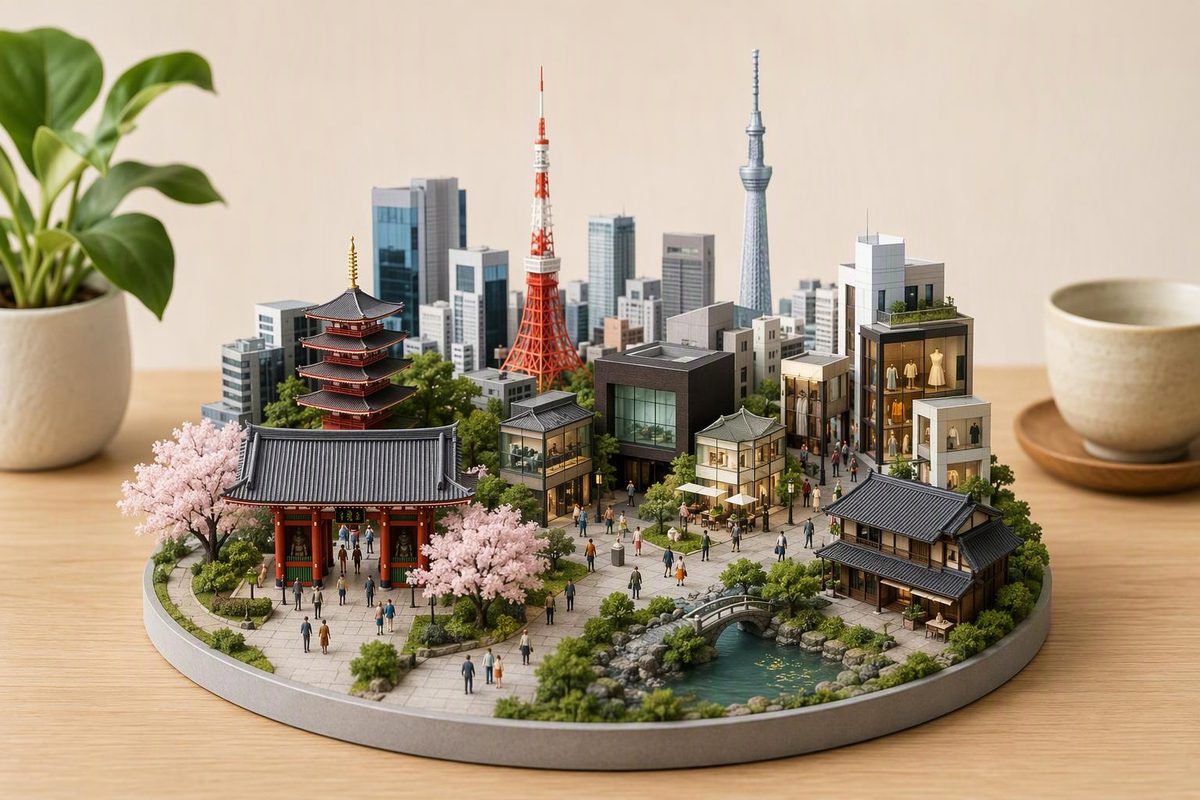
Choose Tokyo neighborhoods by interest, with useful stations, opening-time checks and compact pairings for temples, shopping, museums and slower walks.
For a first visit, prioritize Asakusa for temple streets, Harajuku and Shibuya for fashion and city energy, and Ueno for museums. Add Yanaka for a smaller-scale walk, Shimokitazawa for vintage shopping, or Kichijoji for a park-and-shopping half-day.
These are places to explore, not a ranking of hotel bases. For that decision, use our Tokyo neighborhoods-to-stay comparison. The time budgets below are suggested allowances, including browsing and breaks. Opening schedules are current as of October 24, 2026; check the linked calendars for your visit date.
Asakusa: best for a first temple-and-street walk
Start: Tokyo Metro’s Asakusa Station on the Ginza Line. Allow: 2–3 hours.
Asakusa gives a first-time visitor a clear walking sequence: Kaminarimon gate, Nakamise shopping street, then Senso-ji. Nakamise sells traditional toys, cakes and souvenirs; Senso-ji is a Buddhist temple, not a Shinto shrine. The temple’s official guide describes the gates and buildings along the approach.
Make the temple your first stop, then browse the shopping streets. If you want a river walk afterward, head toward the Sumida River.
Easy pairing: Ueno. Both stations are on the Ginza Line, so the rail connection needs no transfer.
Ueno: best for a museum-led half-day
Start: JR Ueno Station’s Park Exit if arriving by JR; Metro Ueno if arriving from Asakusa on the Ginza Line. Allow: 3–5 hours with one museum.
Ueno is the strongest choice when you want a substantial indoor visit alongside outdoor space. Ueno Park contains the Tokyo National Museum, National Museum of Western Art and other museums, with Shinobazu Pond at its southwestern end. The JR Park Exit is the easiest park access. If arriving by subway, the Tokyo National Museum allows a 15-minute walk from Metro Ueno to its entrance.
Choose one museum rather than racing between several. The Tokyo National Museum’s regular hours are 9:30am–5pm, extending to 8pm on Fridays, Saturdays and Sundays before a Monday holiday. Last admission is 30 minutes before closing; special-exhibition hours may differ. It normally closes Mondays, or the following day when Monday is a holiday. Its access, admission and calendar page also lists gallery closures.
Easy pairing: Yanaka on foot, especially if you finish near the museum at the northern end of the park.
Yanaka: best for shopping streets and a slower walk
Start: Nippori Station or Sendagi Station. Allow: 2–3 hours.
Choose Yanaka for small shops and residential streets rather than skyline attractions. Yanaka Ginza is a short shopping street, not a second version of central Ginza: its appeal is the mix of everyday businesses and places to browse. It is about five minutes’ walk from Nippori or Sendagi, and opening hours vary by shop.
A compact route is Nippori → Yanaka Ginza → Yomise-dori → Sendagi. Alternatively, include Tennoji Temple and Yanaka Cemetery, keeping the cemetery portion quiet and respectful.
Walking connection: Japan Guide places Yanaka Cemetery about 15 minutes north of the Tokyo National Museum, with Yanaka Ginza a further ten minutes away. That makes Ueno–Yanaka a workable walking pairing, though not a next-door stop.
Harajuku and Shibuya: best for contrasting fashion districts
Start: Harajuku or Meijijingu-mae. Finish: Shibuya. Allow: 4–6 hours together.
Harajuku combines Takeshita Street’s fashion shops and snack stands with the broader, tree-lined Omotesando avenue. Meiji Jingu lies west of the railway tracks. Harajuku and Shibuya are only one stop apart on the JR Yamanote Line, so you can walk between your chosen shops or use the train when tired.
Visit Meiji Jingu before the shopping portion. Its grounds close seasonally: 4:40pm in October, 4:10pm in November and 4pm in December. Entry is free, according to the shrine’s opening schedule.
Finish in Shibuya if you want a busier evening. For the crossing, follow signs toward Hachiko rather than taking whichever exit appears first. The crossing is in front of the station’s Hachiko Exit.
Shinjuku: best for an evening district—with a daytime garden option
Start: Choose the station side for your first stop. Allow: 3–5 hours.
Shinjuku works best when you decide which version you want: skyscrapers west of the station, shopping around it, or Kabukicho to the northeast. These are distinct directions, not one compact attraction cluster. Japan Guide’s district overview explains that layout.
For a garden-to-evening plan, start at Shinjuku Gyoen. Shinjuku-Gyoemmae Exit 1 is a five-minute walk from the Shinjuku Gate, avoiding the main Shinjuku station complex. Official garden access lists alternatives by line.
From October 1 to March 14, the garden opens 9am–4:30pm, with last entry at 4pm. It normally closes Mondays, or the following weekday if Monday is a public holiday. Seasonal exceptions include daily opening from November 1–15. Check the garden calendar before making it the afternoon anchor.
Ginza: best for shopping and an architecture walk
Start: Ginza Station, or Yurakucho if arriving by JR. Allow: 2–3 hours.
Choose Ginza for department stores, boutiques and galleries rather than vintage hunting. Ginza and Yurakucho are convenient access stations; there is no need to route through Tokyo Station just because it is nearby.
The most useful timing choice is a weekend or public-holiday afternoon. Chuo-dori’s pedestrian zone normally operates noon–5pm from October through March, and noon–6pm from April through September, subject to cancellation. See the Ginza association’s schedule.
Use our Ginza shopping and architecture walk to choose a starting station around your first stop.
Shimokitazawa: best for vintage shopping and independent music
Start: Shimokitazawa Station. Allow: 3–4 hours, longer for a show.
Shimokitazawa is a better fit than Ginza when the goal is second-hand clothing, records, cafés and small performance venues. JNTO identifies its concentration of thrift stores and independent music and theater as defining attractions. Its access guide gives two straightforward approaches: Odakyu from Shinjuku or Keio Inokashira from Shibuya, both without a rail transfer.
Plan an afternoon browsing session. If live music is the reason for going, choose the performance first and build the walk around its start time rather than assuming you can drop into any venue.
Kichijoji: best for a park-and-shopping half-day
Start: Kichijoji Station. Allow: 4–5 hours.
Kichijoji combines Inokashira Park with a shopping district north of the station, including Sunroad, Daiyagai and Harmonica Yokocho. It has direct connections from Shinjuku on the JR Chuo Line and Shibuya on the Keio Inokashira Line.
Make the park your daylight anchor, then return for shopping and a meal. The park is about five minutes’ walk from Kichijoji Station; general entry is free and the grounds are continuously open, although individual facilities have separate hours and charges. Tokyo’s park directory gives those access details.
Our Kichijoji neighborhood walk covers the fuller park-to-evening route.
Pair neighborhoods without crossing the city repeatedly
- Temple-and-museum day: Asakusa → Ueno, using the Ginza Line without a transfer. Add Yanaka only if you still want a substantial walk.
- Fashion-and-city day: Harajuku → Shibuya. Save Shinjuku for another evening if shopping or the shrine already fills the day.
- Park-and-vintage day: Kichijoji → Shimokitazawa on the Keio Inokashira Line. Both appear on Keio’s station list; no change of railway line is needed.
For timed tickets or dinner reservations, budget the whole journey—not just the minutes on the train. Our large-station navigation guide helps you choose the correct side before leaving the gate.