
Meiji Jingu from Harajuku: Forest Route, Hours and Etiquette
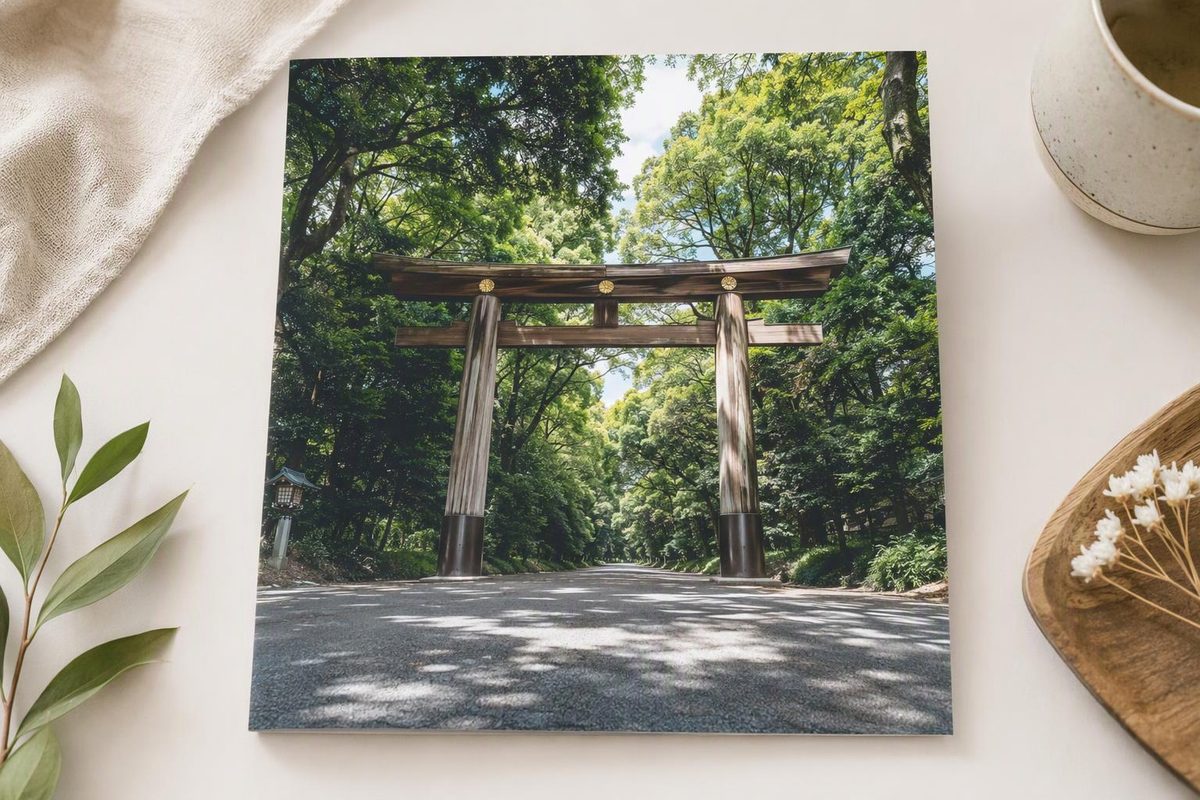
Walk from Harajuku’s west exit to Meiji Jingu, with shrine hours, respectful visiting tips, accessibility notes and optional garden and museum stops.
For a first Meiji Jingu visit, enter from Harajuku, follow the south approach through the forest to the main shrine, then return the same way. This keeps the visit easy to navigate and brings you back to Harajuku for the rest of your day.
Allow 60–90 minutes for this route, including pauses. Meiji Jingu itself suggests around one hour for the shrine, or around two hours if you also visit the Inner Garden and museum. The entrance beside the station is not the sanctuary: the operator says it takes at least another ten minutes from the grounds’ entrance to the main shrine buildings. Visit duration · Entrance-to-shrine walking time
Start on the shrine side of Harajuku
By JR: arrive at Harajuku Station on the Yamanote Line. Follow signs up to the Omotesando Gate, rather than down to the Takeshita Gate. After leaving the ticket gate, turn right and pass the ticket machines to reach the West Exit—the exit JR identifies for Meiji Jingu and Yoyogi Park. Stairs, escalators and elevators connect the platforms with the Omotesando Gate. JR’s station navigation guide, updated August 2026
From Shinjuku, take a Yamanote train toward Shibuya and Shinagawa; from Shibuya, take one toward Shinjuku and Ikebukuro. Both journeys are direct, so you can stay on JR rather than changing to the subway for this visit. JR Yamanote directions at Harajuku
By Tokyo Metro: use Meiji-jingumae〈Harajuku〉, served by the Chiyoda and Fukutoshin lines. Exit 2 is listed for Meiji Jingu, JR Harajuku and Yoyogi Park. If your existing line reaches this station, leave the railway system here rather than transferring to JR for the short final approach. Tokyo Metro station and exit guide
The forest-to-shrine route
Use the official precinct map alongside this sequence. The south approach is labelled Minami sando.
- Enter beneath the southern torii. A small bow on entering is respectful. Once inside, treat the approach as part of the shrine visit, not simply a shortcut through a park.
- Follow the south approach through the forest. The forest is deliberately planted, not a remnant of untouched woodland: it covers 70 hectares and was created in honour of Emperor Meiji and Empress Shoken. You do not need a separate garden ticket to experience this forest approach. Meiji Jingu’s forest history
- Pause at the sake and wine barrels. These are offerings, not a tasting stop. The straw-covered sake barrels are decorative and empty; the Burgundy wine offerings commemorate Emperor Meiji’s interest in Western culture. Keep the path clear while looking or taking photographs. Official precinct guide
- Continue through the Great Torii toward the main shrine. Follow the main-shrine signs rather than branching onto another entrance route. At the water font, pause for purification before entering the shrine courtyard.
- Enter through Minami Shinmon, the main gate. Step over its wooden threshold rather than standing on it. Visit the public prayer area, then look at the paired camphor trees and the wooden prayer plaques without obstructing worshippers. The public prayer area is at the front of the shrine; this route does not include access to its inner sanctum. Gate, trees and sanctuary guide
- Return along the south approach. For a compact Harajuku visit, retracing this path is simpler than leaving through the north or west side. Make any garden or museum detour only if its opening hours fit.
Hours, admission and optional stops
The shrine grounds are free and open daily throughout the year. Plan an ordinary walk-in shrine visit rather than a timed-ticket attraction. Gate times change by month with daylight; facilities inside can open later and close earlier. As listed on the operator’s schedule on 25 October 2026:
| Month | Grounds open |
|---|---|
| October | 5:40am–4:40pm |
| November | 6:10am–4:10pm |
| December | 6:40am–4pm |
Across the year, opening ranges from 5am to 6:40am and closing from 4pm to 6:30pm. Check the full monthly gate schedule for your travel month. For the basic route, aim to enter at least 90 minutes before closing.
Choose an extra stop according to what you want from the visit. Hours and fees below were checked on 25 October 2026:
- Inner Garden: a separate ¥500 maintenance contribution, with South Pond, Kiyomasa’s Well and the iris garden. It opens 9am–4:30pm March–October, except June, and 9am–4pm November–February. June has extended hours: 8am–5pm, until 6pm on weekends. It is open daily. This is the garden detour, not the forest approach. Official garden hours and fee
- Meiji Jingu Museum: displays objects associated with Emperor Meiji and Empress Shoken in a building designed by Kengo Kuma. Published hours are 10am–4:30pm, last admission 4pm; adult admission is ¥1,000. It is closed Thursdays unless Thursday is a public holiday, and also closes during exhibition changeovers. Check its schedule before planning the detour. Choose it for historical context rather than more outdoor walking. Official museum details
Respectful visiting
At the water font, follow the shrine’s sequence: wash your hands, rinse your mouth using water poured into your hands, then wash your hands again. If you choose to pray, the sequence is bow twice, clap twice, bow once; a coin offering is optional. Meiji Jingu’s visiting instructions
Do not photograph or film at the main sanctuary where people pray. The shrine also asks visitors not to photograph the amulet office. Its wider regulations require permission for videos or promotional photography. Stay on forest paths, do not collect leaves or other natural material, and eat or drink only in designated areas—not while walking the approach. Running and sports are prohibited. Photography guidance · Grounds regulations
Accessibility and luggage
For wheelchairs or strollers, distinguish station access from conditions inside. Tokyo Metro lists an elevator from the Yoyogi-koen Gate to Exit 2 on the Chiyoda side; the Fukutoshin side has its own elevator route via the Jingumae Intersection Gate. Follow the operator’s accessibility route for your platform rather than assuming every route to Exit 2 is step-free. Metro accessibility details
The shrine’s approaches include gravel, and the operator says wheelchairs are available at the grounds’ entrance. Ask there about the appropriate route and assistance; do not assume that the entire forest-and-garden itinerary is equally easy to roll. Gravel approach information · Wheelchair availability
There is no suitcase storage inside the grounds. Leave large luggage before entering, and bring cash if you want an amulet or goshuin memorial seal: those counters do not accept credit cards. Visitor facilities and payment guidance
Back at Harajuku, continue with the neighborhood or use our compact Shibuya day route. If you are still choosing which shrine fits your itinerary, the Tokyo shrine comparison covers that separate decision.