
Best Shrines in Tokyo: Meiji Jingu, Nezu, and What's Actually a Temple
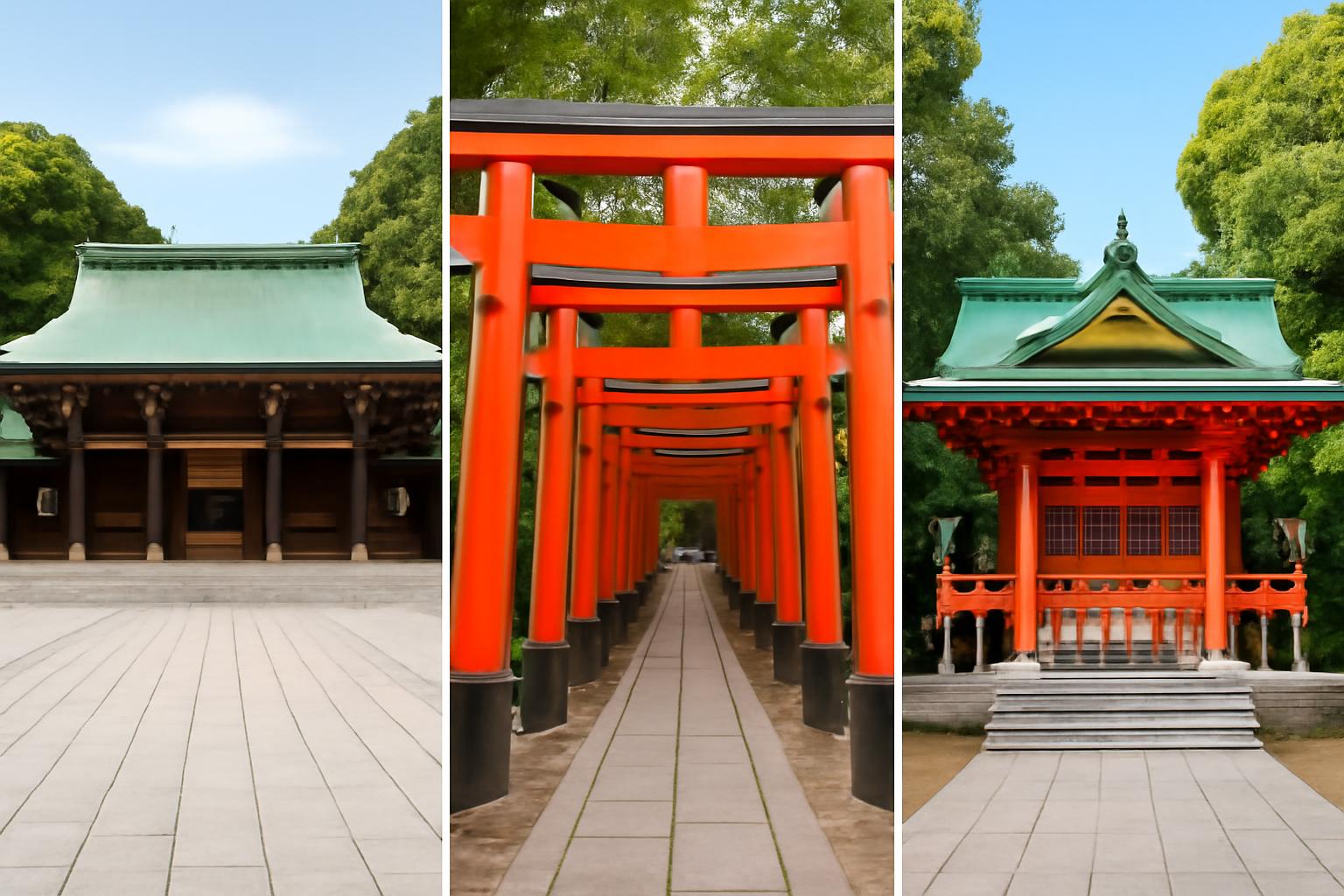
Meiji Jingu is the forested pick, while quieter Nezu has a torii tunnel. Senso-ji is Buddhist, and Asakusa-jinja next door is the Shinto shrine.
Overview
The best shrines in Tokyo are Meiji Jingu, the forested Imperial shrine near Harajuku, and Nezu Shrine in Bunkyo, a quieter site with its own tunnel of torii gates and an April azalea festival. Senso-ji, the site nearly every list recommends, is actually a Buddhist temple, with Asakusa-jinja, a true Shinto shrine, standing right next door.
That distinction matters more than most guides admit. Almost every ranking of “Tokyo shrines” mixes temples in without saying so, which leaves you unsure whether you have actually seen a shrine at all. This guide labels every pick, so you know what you are walking into.
Below you will find the shortlist itself, a quick primer on telling shrines from temples, the step-by-step etiquette for visiting respectfully, timing advice for crowds and seasonal peaks (including verified 2026 dates and fees for Nezu’s azalea festival), a cost overview, a neighborhood pairing table for day planning, and an honest answer to the question most guides dodge: whether you should save your shrine time for Kyoto.
Shrine or Temple? Know What You’re Visiting
A shrine is a Shinto place of worship and a temple is a Buddhist place of worship, a distinction Spanish Nomad sums up plainly after making the same mistake most first-time visitors do. The two traditions coexist in Japan, often side by side, which is why so many “shrine” lists quietly include temples.
The fastest way to identify a shrine is the gate. According to Travel? Yes Please!, the easiest way to recognize a Shinto shrine is the torii gate marking the entrance to the sacred precincts. Walk under a torii and you are on shrine ground. Temples, by contrast, use larger, roofed gates and typically house Buddha statues and incense burners.
Inside the torii, the layout follows a pattern. Travel? Yes Please! describes the typical shrine architecture as a main sanctuary (honden), where the shrine’s sacred object is kept, and a worship hall (haiden), where visitors make prayers and offerings. You pray at the haiden; the honden stays closed to the public.
Names help too. Shrine names usually end in “-jinja” (as in Asakusa-jinja) or “-jingu” (as in Meiji Jingu), while temple names often end in “-ji” (as in Senso-ji). It is not a perfect rule, but it resolves most cases you will meet in Tokyo.
The Best Shrines in Tokyo, Pick by Pick
The shortlist below sticks to a simple discipline. Every entry is labeled shrine or temple, so the list serves the question you actually searched. And every pick is corroborated by more than one published account or a direct firsthand report; sites recommended only secondhand, including a few that recur in other guides even though the recommending author admits never visiting, are left out. That keeps the list shorter than some competitors, but everything on it is worth your limited sightseeing time.
Meiji Jingu: Tokyo’s Grandest Shrine
Meiji Jingu is the consensus first choice, and the sources agree on why. Travel? Yes Please! calls this Imperial shrine the grandest Shinto shrine in Tokyo and one of the top shrines in Japan, while Truly Tokyo describes it as an awe-inspiring shrine set among a soothing green forest and one of Tokyo’s greatest sights.
This is a shrine, unambiguously: you enter under a massive torii and walk a long gravel approach through the forest before reaching the main buildings. The forested precinct is the point. It filters out the noise of the surrounding city so completely that the contrast with Harajuku, directly outside, is part of the experience. The Quora thread on Tokyo’s best shrines recommends visiting Meiji Shrine in Harajuku specifically to see Shinto architecture after a temple visit, which is a useful sequencing idea.
One scale check: Travel? Yes Please! reports that over 3 million people come to Meiji Jingu for the year’s first prayers at New Year, more visitors than any other shrine in Japan. Visit on an ordinary morning and you will have far more breathing room.
Nezu Shrine: The Hidden Gem with a Torii Tunnel
Nezu Shrine is the pick for travelers who want the famous torii-tunnel experience without leaving Tokyo or fighting crowds. Travel? Yes Please! makes the comparison directly: Nezu combines some of the best features of Fushimi Inari Shrine in Kyoto and Toshogu Shrine in Nikko, but without the big tourist crowds. Jonelle Patrick describes it as a beautiful red and gold shrine with a tunnel of orange torii gates you can walk through, and Always Pack Tissues confirms the iconic torii gates of Kyoto can be found here on a smaller scale.
The cost structure is friendly. Per Always Pack Tissues, you can wander the torii gates and the shrine grounds for free, with a small fee only for the gardens, which are most popular during the azalea festival. Travel? Yes Please! rates Nezu among Japan’s most beautiful shrines in spring, when its hillside of azaleas blooms.
Access is straightforward. Japan Den puts the shrine a 5-minute walk from Nezu or Sendagi Station on the Tokyo Metro Chiyoda Line, or Todaimae Station on the Namboku Line. If you only add one lesser-known stop to your itinerary, make it this one.
Senso-ji and Asakusa-jinja: The Temple Everyone Includes, and the Shrine Next Door
First, the honest label: Senso-ji is a Buddhist temple, not a shrine. It appears in nearly every “best shrines in Tokyo” list anyway, because it is Tokyo’s most famous religious site. The good news for your itinerary is that Asakusa Shrine stands right next door; Spanish Nomad explains it was built to worship the three men connected to the temple’s founding as deities. One visit to Asakusa covers both a temple and a genuine shrine.
Should it be on your list? The sources disagree on tone but not on the verdict. A contributor on Quora calls Senso-ji essential for first-time visitors, “tourist trap that it may be,” while Truly Tokyo calls this huge, bustling temple the spiritual heart of the city and one of Tokyo’s best sights. Both are right: expect heavy crowds and a genuinely significant place.
Truly Tokyo adds that Asakusa-jinja, though overshadowed by Senso-ji next door, is a great place to see living Shinto. Step over after the temple; most visitors never do, and the contrast teaches you more than either site alone.
Toshogu Shrine in Ueno Park: A Quiet Detour
Toshogu Shrine is the easy add-on for a day you are already spending in Ueno. It is a Shinto shrine inside Ueno Park, and Truly Tokyo names this beautiful, peaceful shrine one of its favorite sights in that part of the city. Always Pack Tissues found it so tucked away that it looked quiet and tranquil, worth a visit even when passing through en route to Nezu.
That location is the practical argument. Ueno Park already anchors a full sightseeing day with its museums and grounds, and Toshogu sits inside it, so the shrine costs you almost no extra transit or backtracking. Treat it as a calm twenty-minute detour rather than a destination in itself, and it earns its place.
Specialty Shrines for Luck, Love, and Creative Success
Beyond the big names, Tokyo has smaller sites tied to specific wishes, which suit returning visitors who have already seen Meiji Jingu and Asakusa. Two published accounts anchor this category:
- Gotokuji (temple), for luck. Always Pack Tissues describes the tradition of buying a maneki-neko (beckoning cat) of any size as a symbol of luck, and adds a practical warning: go early so the cat statues don’t sell out, and because the shop reportedly closes around 3pm (the author notes this closing time secondhand).
- A lucky-cat matchmaking temple. Jonelle Patrick recommends a lucky cat temple devoted to matchmaking for anyone with romance on their wish list.
- Kanda Myojin (shrine), for creative success. Per Jonelle Patrick, this is where anime and manga artists come to pray for success, a natural fit if your trip includes Akihabara’s manga and electronics district nearby.
The pattern to take away: match the site to the wish, and arrive early at the small ones. Their shops and offices keep shorter hours than the major shrines, and the specific items people travel for can run out by afternoon.
Shrine Etiquette: How to Visit Respectfully
The full ritual takes about two minutes, and no one expects a visitor to perform it perfectly. There are two stages: purifying yourself at the fountain near the entrance, then offering a prayer at the worship hall.
Start at the purification fountain. Travel? Yes Please! advises using the fountain at the shrine’s entrance to cleanse your hands and mouth, and Always Pack Tissues spells out the mechanics: take the ladle, wash the left hand, then the right, then bring some water to your mouth. Do not drink directly from the ladle, and pour the water into your cupped hand rather than sipping from the shared scoop.
At the worship hall, follow the sequence Travel? Yes Please! describes as customary:
- Ring the bell or gong, if there is one, to summon the resident kami.
- Toss some coins into the offertory box.
- Bow twice.
- Clap two times.
- Bow once more and hold it for a few moments of silent prayer.
You do not need to be Shinto, or religious at all, to take part; the sequence is a gesture of respect rather than a declaration of faith, and standing quietly to one side is equally acceptable. Beyond the ritual, ordinary courtesy covers the rest: keep your voice down near the worship hall, follow any posted photography restrictions, and step aside for worshippers, especially during festivals and weddings.
When to Visit: Crowds, Seasons, and Festivals
The short answer: go early on a weekday, and let the seasonal calendar decide which shrine you prioritize. Crowd pressure varies enormously between sites, so timing matters most at the famous ones.
Senso-ji is the clearest case. Always Pack Tissues recommends early morning or night to avoid the crowds, and the Quora thread adds two refinements: weekdays beat weekends, and the evening is rewarding in its own right because the temple is lit up at night. If your schedule forces a midday weekend visit, go anyway, but expect to move at the pace of the crowd through Nakamise.
New Year is the extreme. Travel? Yes Please! reports that Meiji Jingu welcomes over 3 million visitors for hatsumode, the year’s first prayers, more than any other shrine in Japan. That figure is both an invitation and a warning: it is a remarkable cultural moment, and it is the single most crowded time you could possibly choose.
For the rest of the year, these corroborated season-and-shrine pairings are the ones worth planning around:
- February: excellent plum blossoms, per Jonelle Patrick.
- April: Nezu Shrine’s azalea festival, which Jonelle Patrick flags as the event to see (details for 2026 below).
- Late April to early May: famous wisteria, again per Jonelle Patrick.
- May: Sanja Matsuri in Asakusa, which the Quora thread describes as the area’s biggest festival, with parades, plays, and many mikoshi (portable shrines) carried through the streets.
Senso-ji hosts other events across the year as well, so it is worth checking what falls during your dates before you fix your Asakusa day.
The Nezu Shrine Azalea Festival in 2026
In 2026, Nezu Shrine’s azalea festival (the Bunkyo Azalea Festival) runs through April, with the garden open 9:30 AM to 5:30 PM and a ¥500 garden ticket, while the shrine grounds themselves stay free. Japan Den lists the dates as April 1 to 30, 2026, with the ¥500 admission covering the azalea garden and children of elementary school age and younger entering free with an adult. Metropolis Japan reports peak bloom typically falls between April 10 and 20 and suggests arriving earlier in the day, especially on weekends and holidays.
Two details conflict across otherwise current sources, so plan with a margin. Metropolis Japan lists the festival ending April 20, 2026, while Japan Den and MATCHA both give April 30. And MATCHA describes a tiered fee, ¥500 early or late in the bloom but ¥1,000 at peak, where the other two sources list a flat ¥500. Budget for up to ¥1,000 and check the official Nezu Shrine site shortly before you go; it is the only source that settles both questions.
Access is the easy part: per Japan Den, the shrine is a 5-minute walk from Nezu, Sendagi, or Todaimae stations.
What Shrine Visits Cost and How to Verify Current Details
Expect to pay nothing at most shrine grounds, with fees only for gardens and special areas. Travel? Yes Please! states the general rule: admission to shrines in Japan is usually free, though some of the more famous ones charge an entrance fee. Nezu is the concrete, verified example of the pattern. Per MATCHA, admission to Nezu Shrine itself is free, and the ¥500 ticket applies only to the azalea-covered garden paths; Always Pack Tissues confirms the free torii gates and grounds. Getting there costs only a metro fare, with Japan Den noting the 5-minute walk from Nezu, Sendagi, or Todaimae stations and a Toei Bus stop (Nezu-jinja-iriguchi, Route 58) one minute away.
For the other picks in this guide, be direct about the limits: current opening hours, station exits, and any paid areas at Meiji Jingu, Kanda Myojin, and the smaller specialty sites are not verified by the sources behind this article. The Nezu case shows why that caution matters, since even three current write-ups of the same festival disagree on its end date and fee. Before you lock in a day plan, spend two minutes on each site’s official page or a same-year listing. It costs less time than one wrong train.
Pairing Shrines with Neighborhoods and Planning Your Day
The efficient way to plan shrine visits is by neighborhood, not by shrine. Each major pick anchors a district you would want to explore anyway, so pairing them turns a twenty-minute shrine stop into a full half day with no backtracking. The table below merges the corroborated picks into one comparison, with each site labeled honestly.
| Site | Shrine or temple | District | What makes it distinctive | Natural pairing | Best timing cue |
|---|---|---|---|---|---|
| Meiji Jingu | Shrine | Harajuku / Yoyogi | Forested Imperial precinct, Tokyo’s grandest shrine (Travel? Yes Please!) | Harajuku streets after the forest calm | Morning, before the area fills; avoid New Year unless you want the hatsumode crowds |
| Nezu Shrine | Shrine | Nezu, Bunkyo | Tunnel of orange torii gates, azalea hillside (Jonelle Patrick; Travel? Yes Please!) | The surrounding old Yanesen area on foot | April for azaleas; any weekday for quiet |
| Senso-ji + Asakusa-jinja | Temple + shrine next door | Asakusa | Tokyo’s most famous temple with a working shrine beside it (Truly Tokyo) | Nakamise shopping street on the approach | Early morning or evening illumination (Always Pack Tissues; Quora) |
| Toshogu | Shrine | Ueno Park | Peaceful, tucked-away shrine inside the park (Truly Tokyo) | Ueno Park’s museums and grounds | Any time; fold it into an Ueno day |
| Kanda Myojin | Shrine | Near Akihabara | Where anime and manga artists pray for success (Jonelle Patrick) | Akihabara browsing | Daytime, alongside an Akihabara visit |
Two sites pair especially well in sequence: Toshogu and Nezu sit close enough that Always Pack Tissues visited one en route to the other, so an Ueno-to-Nezu walk covers both in one relaxed afternoon. The Quora thread’s suggestion of seeing Senso-ji first and Meiji Jingu after also works well across two mornings, since the temple-then-shrine contrast makes each clearer.
A note on guided tours: browsing listings such as GetYourGuide’s Tokyo temples and shrines category shows that many products sold under a Tokyo shrine label actually travel to Hakone, Arakura Sengen, or Nikko, all hours outside the city. Read the itinerary before booking. A tour can add context you would miss alone, but access arrangements at some religious sites change over time, so confirm what a tour actually enters rather than assuming from the title.
Should You Save Your Shrine Time for Kyoto?
If Kyoto is on your itinerary, a defensible plan is to limit Tokyo to Meiji Jingu plus the Senso-ji and Asakusa-jinja pairing, but the sources genuinely disagree, and the disagreement is worth understanding. Truly Tokyo takes the restrained position, and grounds it in history: most of the temples and shrines in Tokyo were bombed flat in World War II, so almost everything you see today is a modern reconstruction. Even Senso-ji’s ancient founding does not mean ancient buildings; the Quora thread notes the temple was razed during WWII and burned several times across its long history. Kyoto simply has more surviving old fabric.
The counterargument comes from writers like Jonelle Patrick, whose favorites list makes the case that Tokyo’s shrines reward visitors who know where to look: Nezu’s torii tunnel, February plum blossoms, late-April wisteria, and shrines tied to specific wishes are experiences Kyoto’s fame does not replace.
A practical rule of thumb: on a short trip that includes Kyoto, do Meiji Jingu and the Asakusa pair in Tokyo and save deep temple time for Kyoto. On a longer trip, or if you are visiting in April, add Nezu; per Travel? Yes Please!, it gives you a version of Fushimi Inari’s torii experience without the crowds, right inside the city you are already in.