
The Delicate Flavor Behind Japan’s Sakura Foods and Drinks
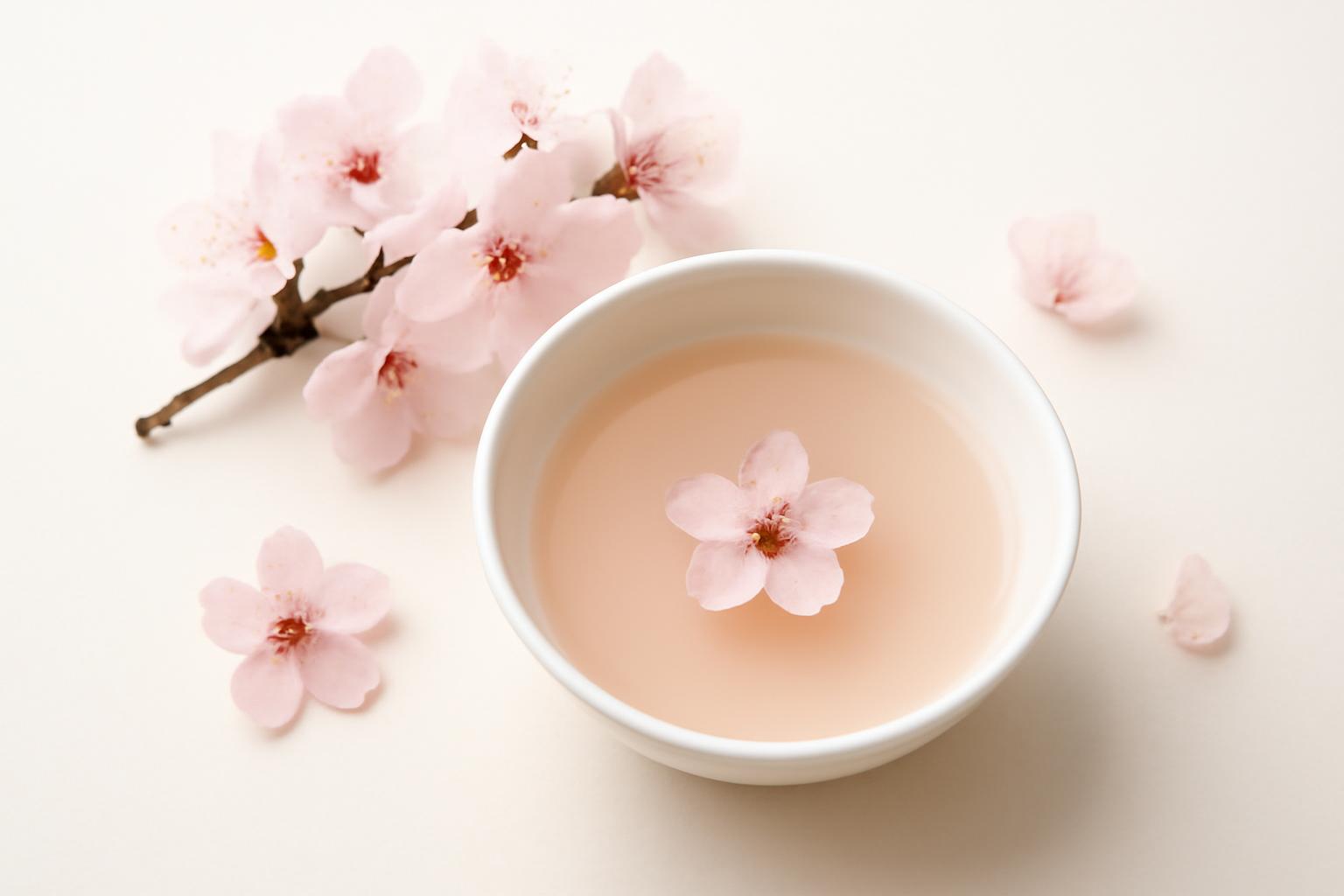
Sakura is usually delicate and floral-green. Preservation and recipe ingredients account for much of the saltiness, tartness and obvious sweetness.
The short answer: what cherry blossom tastes like
Cherry blossom, or sakura, is commonly described as delicate, floral, lightly herbal or green, and only subtly sweet. It is closer to a mild edible flower or gentle green tea than to ripe cherry fruit. The flavor can be so restrained that you notice its fragrance before identifying a distinct taste.
Occasional tasting notes include grassy, earthy, nutty, almond-like, hay-like, or mildly bitter qualities. These are subjective impressions, not characteristics that every blossom or sakura product will share. The most useful baseline is a soft floral aroma with a restrained green or herbal taste. Culinary descriptions generally present sakura as mild rather than bold. Uwajimaya describes the flavor as light, herbal, floral, and subtly sweet.
Preparation determines what you ultimately taste:
- Untreated petals may seem faint, grassy, vegetal, or slightly bitter.
- Salt-and-vinegar-preserved blossoms can be floral, salty, sour, or briny.
- Preserved leaves usually taste more assertive than the flowers.
- Sakurayu, an infusion of preserved blossoms, can retain noticeable saltiness and tartness.
- Commercial sweets and drinks may taste mainly of sugar, bean paste, milk, chocolate, strawberry, or matcha, with sakura providing a gentle aromatic accent.
That variation explains why one person might describe sakura as grassy while another calls it sweet and salty. They may be tasting entirely different forms: an untreated petal, a preserved leaf wrapped around sweet mochi, or a latte made with sweetened sakura syrup.
Aroma and taste also need to be separated. Almond, hay, rose, vanilla, and earthy comparisons can help describe individual experiences, but none is the single “correct” flavor of sakura.
There is no strong body of controlled sensory research in the supplied evidence. Most available descriptions come from food retailers, hospitality publishers, specialist bloggers, and individual tasters. The broad qualitative consensus is therefore more dependable than any highly specific tasting note: sakura is usually delicate and floral-green, while preservation and recipe ingredients account for much of the saltiness, tartness, and obvious sweetness in sakura foods.
Cherry blossom does not taste like cherry fruit
Sakura is the flower, not the familiar cherry cultivated and eaten as fruit. In Japanese usage, the term commonly refers to ornamental cherry blossoms rather than fruit-producing cherries.
Do not expect the concentrated sweet-tart flavor associated with ripe cherries, cherry candy, soda syrup, or cherry-flavored medicine. Blossom flavor is generally quieter, greener, and more floral. It may occasionally suggest fruit to an individual taster, particularly after preservation or when combined with other ingredients, but it is not a natural equivalent of strong artificial cherry flavor.
A specialist sensory writer describes fresh cherry blossoms as green and delicately earthy rather than candy-like. The same writer reports mellow green, almond, and hay-like qualities in culinary sakura, while finding that salt and vinegar strongly shape tea made from preserved blossoms. These are personal sensory notes rather than controlled findings, but they illustrate how different sakura can be from the expected “red cherry” profile. Read the comparison of fresh and preserved sakura at Bois de Jasmin.
One unusual anecdote is worth acknowledging without treating it as representative. A Biology Stack Exchange questioner who chewed unidentified blossoms described them as initially bland and vegetal, then bitter, followed by an increasingly pronounced unsweetened dark-cherry flavor. That is one person’s experience with unidentified plant material, not evidence that fresh sakura normally tastes like black cherry—and not a reason to repeat the experiment. The original account also includes explicit cautions about identification and safety.
Likewise, a vanilla-like aroma does not establish that a blossom tastes like vanilla. Vanilla, almond, hay, and dark cherry are best understood as possible nuances reported by particular observers, not promises about what a tea, mochi, or pastry will taste like.
Confusion can also come from the product rather than the plant. Japanese spring packaging often uses pink colors, blossom shapes, and petal imagery. Some seasonal foods are strawberry-flavored, fruit-flavored, or merely colored pink. If a pastry tastes strongly of strawberry or a candy resembles conventional cherry flavoring, that character may come from added fruit or flavoring rather than sakura.
For a first tasting, set aside the expectation of cherry fruit. Think instead of a mild edible flower with green and herbal qualities, then account for the salt, acid, sugar, dairy, tea, bean paste, or chocolate in the finished product.
Fresh, pickled, brewed, and flavored sakura compared
Different sakura products can taste surprisingly unrelated because “sakura flavor” may come from untreated petals, preserved flowers, preserved leaves, powder, syrup, extract, or formulated flavoring. Each form supplies a different balance of aroma, taste, color, salt, acid, and sweetness.
| Culinary form | Typical flavor | Intensity | Preparation-derived notes |
|---|---|---|---|
| Untreated petals | Faint, green, grassy, or vegetal; sometimes mildly bitter | Very low | Little added flavor, although the plant and its condition may affect the result |
| Salt-and-vinegar-preserved blossoms | Floral and aromatic with salty, sour, or briny qualities | Low to moderate | Salt, vinegar, and brine may be more obvious than the blossom itself |
| Preserved cherry leaves | Herbal, floral, salty, and sour | Moderate | Preservation creates a strong contrast with sweet rice and bean paste |
| Sakurayu | Light floral or herbal infusion; potentially salty or tart | Low to moderate | Savory and acidic notes reflect the preserved blossoms used for brewing |
| Sakura powder | Mild floral-herbal flavor, often accompanied by pink color | Variable | Depends on composition, concentration, and whether flowers, leaves, or other ingredients are included |
| Sakura syrup | Sweet first, with a floral accent | Variable | Sugar and formulation usually determine the dominant taste |
| Extract or commercial flavoring | Floral, perfumed, fruity, or stylized | Variable to strong | May not closely reproduce either untreated petals or traditional preserved sakura |
| Finished sakura sweet or drink | Often sweet, creamy, starchy, or bean-forward with a floral accent | Variable | Sugar, milk, chocolate, red bean, matcha, fruit, and flavorings may dominate |
Untreated petals
Descriptions of untreated petals vary. Some accounts characterize them as nearly blank at first, like tender plant material; others report grassy, vegetal, floral, or mildly bitter notes. Because these observations are largely anecdotal and may concern different trees, plant parts, and conditions, no single description should be treated as universal.
Untreated petals may seem less recognizably “sakura-like” than preserved culinary products because many traditional foods derive their characteristic profile from flowers or leaves combined with salt and acid.
Preserved blossoms
Culinary blossoms are often preserved with salt and an acidic ingredient such as plum vinegar. The resulting ingredient remains floral but may also taste salty, tart, or briny. The preservation ingredients should be understood as separate flavor contributors rather than natural tastes of untreated petals. Oriental Mart’s overview distinguishes delicate blossom notes from the salt and acidity introduced during preservation.
Depending on the intended use, preserved blossoms may be rinsed or soaked before cooking to reduce excess surface salt. That can make them less intense, but it does not make them equivalent to untreated flowers or guarantee the complete removal of salt and acidity.
Preserved leaves
Preserved leaves are generally more assertive than blossoms. They can add an herbal, floral, salty, and sour contrast that remains noticeable alongside rice cake and sweet bean paste.
This difference matters when comparing products. A cake made with a small quantity of blossom powder may be extremely restrained, while mochi wrapped in a preserved leaf can have a pronounced herbal-salty finish. Both may accurately be marketed as sakura foods even though they offer very different experiences.
Brewed blossoms
Sakurayu is not ordinary tea flavored with cherry fruit. It is an infusion made by placing preserved blossoms in hot water. The liquid is usually light and floral, while its salty or tart character comes largely from the preservation ingredients carried into the cup.
The result depends on the product and preparation. Rinsing or soaking the blossoms first may soften the salty edge. A blossom used directly from its preserved state can produce a more savory infusion.
Powders, syrups, extracts, and flavorings
These products are not interchangeable.
Concentration also matters. A label such as “sakura powder” or “cherry blossom flavor” does not reveal by itself whether the product will taste fresh, pickled, sweet, salty, or primarily floral.
When assessing a sakura food, separate its likely flavor layers:
- Blossom character: delicate, floral, green, herbal, or occasionally grassy.
- Preservation: salty, sour, briny, and more aromatic.
- Sweetening: sugary, syrupy, or candy-like.
- Recipe base: creamy, starchy, chocolatey, earthy, bitter, fruity, or bean-forward.
That framework resolves many apparently contradictory descriptions of sakura.
What common sakura foods and drinks actually taste like
Sakurayu
Sakurayu—also called sakura tea—is made by steeping preserved cherry blossoms in hot water. Expect a subtle floral fragrance, a light herbal or green quality, and possibly a salty or tart finish. It should not resemble cherry juice.
Some cups taste distinctly savory because the blossoms retain salt from preservation. Others are gentler because the flowers have been rinsed or soaked first. JustHungry describes the traditional infusion as salty and sour with a subtle fragrance and notes that preserved flowers are often soaked before other culinary uses. See its examples of sakurayu, preserved blossoms, and sakura sweets.
A salty first sip does not necessarily indicate incorrect brewing. It may simply reflect the preserved blossom used and how it was prepared before steeping.
Sakura mochi
Sakura mochi is a layered experience rather than a pure expression of petals. The rice cake or flour-based wrapper is soft and gently sweet, the red bean paste supplies richer sweetness, and the preserved cherry leaf adds an herbal, floral, salty-sour contrast.
A bite with the leaf can therefore seem much more strongly “sakura-flavored” than a cake containing only a small amount of blossom powder. The leaf offsets the sweetness of the rice and bean paste rather than reproducing cherry-fruit flavor.
Eating the leaf is optional. Leave it on for a stronger aroma, a more pronounced salt-sweet contrast, and the texture of the preserved wrapper. Remove it if you prefer a milder sweet dominated by rice and bean paste.
Sakura manju
One form of sakura manju combines soft steamed dough and sweet bean paste with salted or pickled blossom mixed into the filling. In that example, the beans and sugar create the primary sweetness, while the preserved flower contributes floral, salty, and tart complexity.
Other recipes may use sakura differently, so the flavor need not be distributed evenly through every manju. When a blossom appears only as a garnish, its taste may be concentrated in a single bite.
Sakura lattes
A sakura latte will often taste sweet and creamy first, especially when it is made with syrup or sweetened powder. The sakura component may register as a restrained floral, herbal, or lightly salty accent.
Formulations differ substantially. One drink may be a sweet floral milk beverage made with syrup. Another may include salted petals or leaf powder and have a more savory edge. A third may use a broad commercial blossom flavor that does not closely resemble preserved sakura.
If the latte also contains matcha, much of its bitterness, vegetal depth, and earthiness may come from the tea. Sakura usually supplies the lighter aromatic layer.
Sakura rice
Rice prepared with preserved blossoms can acquire a delicate floral fragrance and slight saltiness.
The effect is still generally subtle: fragrant rice with occasional salty-floral accents where preserved blossoms are present, not rice that tastes like cherry fruit.
Cakes, puddings, chocolates, and candies
In cakes and puddings, sakura may be introduced through powder, syrup, extract, infused liquid, or pieces of preserved blossom. Flour, eggs, butter, cream, and sugar can easily overshadow its delicate character. The result may taste primarily like a mild cake or creamy pudding with a floral finish.
Candies are especially dependent on formulation and may taste mostly of sugar, acidity, fruit flavoring, or perfume-like aromatics.
When assessing a commercial dessert, ask:
- What arrives first: sugar, cream, bean paste, chocolate, strawberry, or matcha?
- Is there a floral or herbal note underneath?
- Does the finish seem salty or tart, suggesting preserved sakura?
- Does the ingredient list identify a blossom, leaf, powder, extract, syrup, or general flavoring?
This is more informative than expecting every pink, blossom-decorated product to deliver one standard sakura taste.
Flowers versus leaves: where the stronger flavor comes from
Cherry blossoms and cherry leaves are not interchangeable ingredients. The flowers are generally treated as the more delicate component, contributing a light floral-green aroma and mild taste. Preserved leaves tend to be stronger, with a more persistent herbal, floral, salty, and sour profile.
Sakura mochi demonstrates the difference clearly. Sweet bean paste and rice cake provide a sugary, starchy base. The preserved leaf supplies the main contrast: savory against sweet, herbal against mild rice, and tart against rich bean paste.
A pastry-industry overview similarly distinguishes the gentle flower from the stronger leaf and identifies blossoms, leaves, freeze-dried ingredients, and powders as different ways of building sakura products. Puratos also notes common combinations with red bean, chocolate, and matcha.
Whole flowers may be steeped for tea, added to rice, incorporated into dough or filling, or used as an edible garnish. Their visual effect can exceed their flavor impact. Preserved leaves are especially associated with wrapping sakura mochi, where direct contact with the sweet makes their aroma and salt-sour taste prominent.
This distinction explains why two products labeled “sakura” can taste noticeably different. One may use a blossom-inspired syrup, another preserved petals, and another cherry-leaf powder. A fourth may combine flowers and leaves.
That does not mean every flower or leaf tastes identical. Species, cultivar, plant condition, preservation, concentration, and the surrounding recipe may all affect the result. An ingredient label can identify the form used without predicting exactly how strong it will taste.
How to tell whether a pink product really contains sakura
Pink color, petal shapes, spring packaging, and the word “blossom” do not prove that a product contains cherry blossom. Sakura season is also a visual and marketing theme, so a food may participate through appearance alone.
Some seasonal products use strawberry or another fruit flavor. Others combine fruit with sakura, while some are ordinary sweets colored pink or molded into blossom shapes. A strong berry taste is therefore not evidence that sakura naturally tastes fruity.
Check the complete ingredient list for terms such as:
- Sakura or cherry blossom petals
- Whole or preserved cherry blossoms
- Salted or pickled blossoms
- Sakura or cherry leaves
- Cherry leaf powder
- Sakura powder
- Cherry blossom extract
- Sakura syrup
- Blossom-infused water
- Sakura or cherry blossom flavoring
Then look at the surrounding ingredients. Sugar, bean paste, strawberry, matcha, chocolate, milk, cream, or other flavorings may be more prominent than the sakura itself.
Ingredient terminology does not guarantee concentration or intensity. “Sakura powder” may be present only in a small amount, while a preserved leaf can create a much more obvious flavor. “Cherry blossom flavor” may refer to a formulated aromatic profile rather than whole flowers.
Hanami dango illustrates why appearance can mislead. Its pink, white, and green colors evoke spring and blossom viewing, but the pink portion does not necessarily contain a distinct sakura ingredient. A Kanazawa hospitality guide likewise notes that some spring sweets are seasonally colored and confirms that eating the salted leaf around sakura mochi is optional. See its guide to sakura sweets and hanami dango.
A practical purchasing rule is:
- Trust the full ingredient list more than the color.
- Expect dominant ingredients to dominate the taste.
- Treat “sakura-themed” and “made with sakura” as different claims.
- Do not assume that two products using the word sakura will taste alike.
Can you eat cherry blossoms safely?
This article should not be used as a foraging or plant-identification guide. Do not pick a flower from an ornamental tree merely to discover what it tastes like. Appearance and washing alone do not establish its identity, treatment history, or suitability for food.
For tasting or cooking, the conservative choice is sakura explicitly sold or supplied for culinary use by a reputable food seller. “Culinary processing” can include salting, pickling, drying, or powdering; it is different from unknown pesticide, landscaping, roadside, or other ornamental-tree treatments.
The supplied evidence raises concerns about variation among Prunus species, cultivars, plant parts, treatments, and quantities, but it does not provide an authoritative species-by-species safety standard. The available community discussion warns that unidentified blossoms may contain harmful compounds and that findings about flower essential oils cannot be used directly to determine the safety of eating whole blossoms. Because that source is a community Q&A rather than an official food-safety authority, it supports caution and uncertainty—not a definitive edibility rule. Review the discussion and its safety limitations.
Nor does the established culinary use of preserved blossoms and leaves in Japanese foods prove that every cherry-like plant, tree treatment, or plant part is safe.
Salt-preserving, pickling, rinsing, and soaking affect flavor. The evidence does not justify treating these methods as universal detoxification procedures or assuming that home processing can make unidentified flowers safe.
Anyone with allergy concerns, possible exposure, symptoms after ingestion, uncertainty about plant identification, or other medical questions should seek advice from an appropriately qualified local clinician, poison-control service, food-safety authority, or botanical expert. A general food and travel article cannot assess a particular plant or individual health risk.
The practical takeaway
Sakura is closer to a delicate edible flower with green and herbal qualities than to ripe cherry fruit. Untreated petals may be very faint, grassy, vegetal, or mildly bitter. Preserved blossoms and leaves create the salty-tart profile associated with sakurayu and sakura mochi, while sugar, bean paste, dairy, chocolate, matcha, and fruit often shape the dominant taste of commercial products.
Check ingredient lists rather than relying on pink packaging. Distinguish blossom from leaf and preserved ingredients from sweetened flavorings. For tasting, choose sakura supplied specifically as a culinary product rather than sampling unidentified flowers from ornamental trees.
Frequently asked questions
Is cherry blossom flavor naturally sweet?
Only subtly, if at all. Sakura is commonly described as delicate, floral, green, and herbal, sometimes with a mild impression of sweetness.
In mochi, manju, lattes, cakes, chocolates, and candy, most obvious sweetness comes from sugar, syrup, sweet bean paste, milk, or other recipe ingredients. Floral aroma can also create an expectation of sweetness even when the blossom’s taste is restrained.
Why does sakura tea taste salty or sour?
Sakurayu is generally made from blossoms preserved with salt and an acidic ingredient such as plum vinegar. Some of that salt and acidity enters the water, creating a salty, sour, or briny edge around the light floral character.
Rinsing or soaking the blossoms before brewing may reduce excess salt, depending on the product and method. The savory taste does not mean that untreated petals are naturally salty.
Are you supposed to eat the leaf around sakura mochi?
Eating the preserved leaf is optional. Leave it on for a stronger herbal, floral, salty-sour contrast with the sweet rice cake and bean paste. Remove it if you prefer a softer texture and a milder flavor.
The leaf is an important part of the traditional sensory contrast, but enjoying sakura mochi does not require eating it.
What flavors pair well with cherry blossom?
Sakura is commonly combined with ingredients that leave room for its delicate aroma, including:
- Sweet red bean paste
- Mochi and plain rice
- Milk and cream
- White chocolate
- Mild cakes and puddings
- Matcha
- Strawberry
- Lightly sweetened tea or lattes
Red bean and mochi provide a sweet, starchy background. Dairy and white chocolate create a mild, creamy base. Matcha adds bitterness, earthiness, and vegetal depth, but those stronger green notes usually come primarily from the tea rather than the sakura.
Does every sakura-themed sweet contain real cherry blossom?
No. A sakura-themed sweet may contain blossoms, leaves, powder, syrup, extract, or flavoring, but it may instead use strawberry, another fruit flavor, pink coloring, or seasonal decoration.
Check the complete ingredient list rather than relying on package color or blossom shape. Even when sakura is present, sugar, bean paste, chocolate, matcha, fruit, or dairy may be much more prominent in the finished flavor.