
A First-Timer’s Guide to Yellowtail at the Sushi Counter
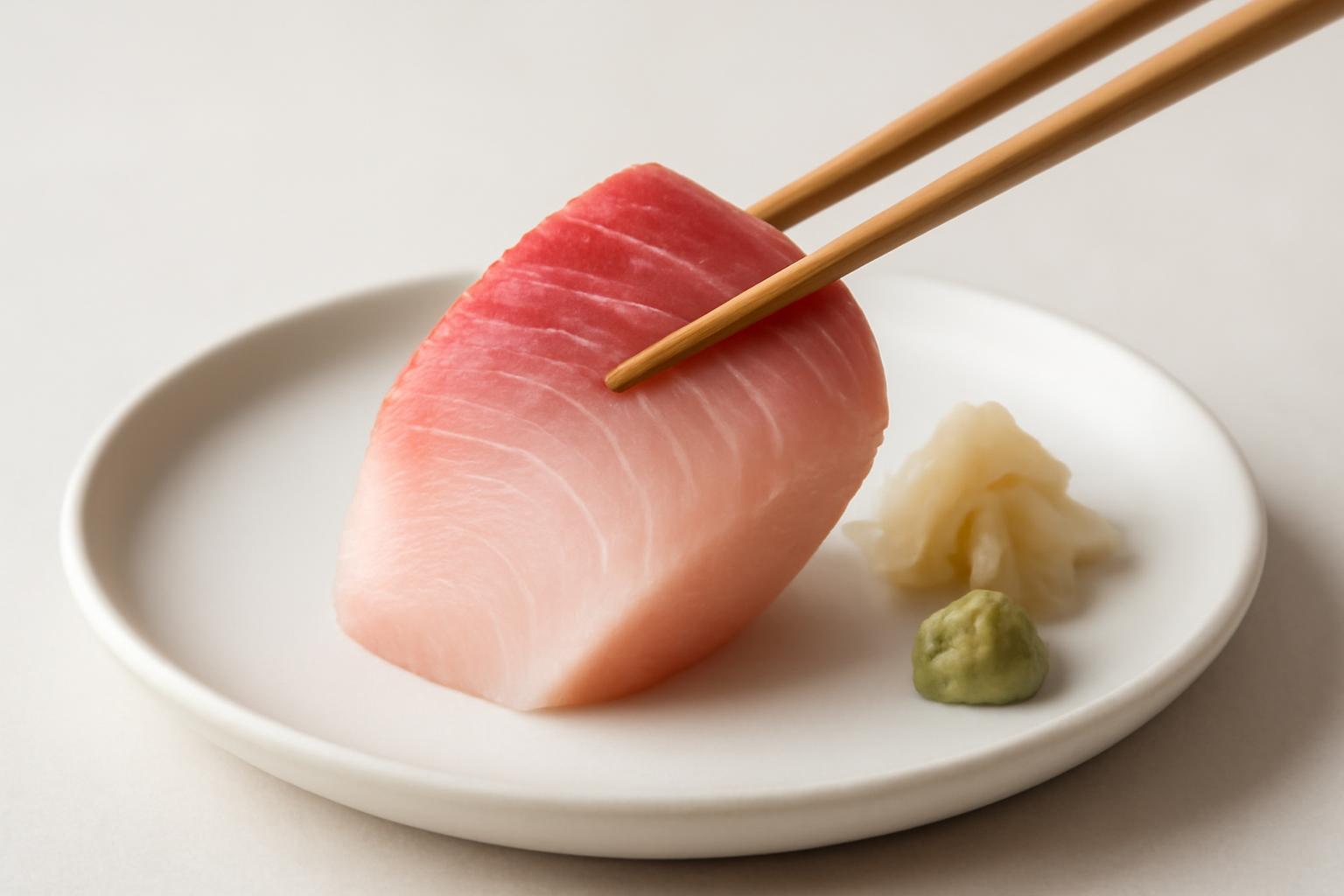
It is usually mild, savory and subtly sweet rather than strongly fishy. Fatty pieces are silky and buttery, while leaner cuts finish cleaner and firmer.
The short answer: mild, savory, and often buttery
Yellowtail is generally mild to moderate in flavor, with a clean taste, subtle sweetness, and gentle savoriness rather than a strong fishy character. Its most distinctive quality is often its richness: natural fat can create a buttery taste and smooth mouthfeel even when the underlying flavor remains delicate.
A typical bite of yellowtail sashimi or nigiri may begin with mild sweetness, move into restrained seafood savoriness, and finish with a rich coating sensation. Fatty pieces can feel almost creamy, while leaner pieces taste cleaner and have a firmer bite. Yellowtail sashimi is commonly characterized as mildly sweet, rich, buttery, and silky, although those descriptions are subjective and apply especially well to fatty hamachi served raw. Lusamerica’s yellowtail sashimi guide describes this familiar profile.
A practical sensory profile looks like this:
| Quality | What to expect |
|---|---|
| Flavor intensity | Usually mild to moderate |
| Sweetness | Subtle rather than sugary |
| Savoriness | Gentle, clean, and slightly saline |
| Richness | Moderate to high, depending on the fat |
| Fishiness | Usually low, although not absent in every serving |
| Texture | Structured enough to hold a slice but commonly tender; fatty cuts may be silky |
The important qualification is that “yellowtail” does not identify one uniform product. The name can cover more than one related fish, and separate cuts from the same fish may differ in fat and texture. One serving might be lean, pale, and pleasantly firm. Another may have visible fat, soften quickly on the tongue, and taste much richer than its delicate flavor initially suggests.
That range explains why one diner may call yellowtail light and clean while another remembers it as oily or exceptionally buttery. Both impressions can be reasonable. Richness and flavor intensity are separate qualities: a fish can taste mild while still having a luxurious, fatty mouthfeel.
For a first order, think of yellowtail as an approachable but potentially rich sushi fish. It is a plausible choice if you usually avoid forceful seafood flavors. If soft or fatty textures bother you, ask the chef or server whether the available cut is lean or rich instead of assuming every piece of yellowtail will be alike.
How yellowtail feels: firm flesh, tender bite, and silky fat
Yellowtail sits between obviously firm and obviously soft fish. Its flesh generally has enough structure to hold a clean sashimi slice, but it should yield readily when bitten. “Firm-bodied but tender” is more useful than calling it simply soft or firm.
Fat changes that impression considerably. With rich hamachi, the first sensation may be smoothness rather than resistance. The slice can feel silky across the tongue and then soften quickly as you chew. In this context, “buttery” describes both taste and texture: the fat rounds out the flavor while making the flesh seem softer.
A leaner piece can retain yellowtail’s mild, savory character while feeling cleaner and less oily. One firsthand review of a fish presented as Hawaiian hiramasa described a hamachi-like flavor and soft sashimi texture but less oiliness than the reviewer associated with farmed hamachi. That was an individual tasting of one fish rather than a controlled comparison, but it illustrates the variation a diner may encounter. The Hawaiian Nearshore Fishing review records that tasting.
Descriptions of yellowtail can therefore appear contradictory:
- Firm refers to the underlying structure of the flesh.
- Tender describes how readily it gives when bitten.
- Silky or soft usually points to the effect of fat, particularly in raw cuts.
- Chewy may reflect a leaner piece, a thicker slice, the direction of slicing, or an individual diner’s perception.
Slicing can also affect the bite. Food writer Hank Shaw recommends cutting yellowtail sashimi against the grain to reduce chewiness. That is experienced culinary advice rather than a controlled sensory finding, but it helps explain why two otherwise similar pieces may feel different. His guide also characterizes yellowtail as fatty, silky, mild, and savory while noting that farmed hamachi is commonly fattier than wild American yellowtail. Shaw’s hamachi sashimi guide discusses both texture and slicing.
The fish remains the main feature, but the seasoned rice adds gentle resistance, distinct grains, and a lightly sweet-tart note.
Full cooking changes the structure more decisively: yellowtail becomes lighter in color, separates into larger flakes, and feels meatier. Someone who dislikes the cool softness of sashimi may therefore prefer the texture of grilled or broiled yellowtail.
No single description applies to every menu item. Species, fat level, cut, slice thickness, slicing direction, and preparation all contribute. At a restaurant, words such as fatty, lean, belly, seared, or grilled may tell you more about the coming bite than “yellowtail” alone.
Is yellowtail fishy?
Yellowtail is usually described as mild and not strongly fishy. For diners who prefer restrained seafood flavors, sashimi or nigiri cut mainly from pale flesh can be a reasonable introduction. Its flavor is more likely to register as gently savory and rich than sharply marine.
That does not make yellowtail universally non-fishy. Individual reports differ. In one discussion among anglers, opinions ranged from mild and appealing to somewhat fishier than expected. The locally caught fish under discussion may not have been identical to sushi-bar hamachi, and the comments were personal impressions rather than formal tasting evidence, but the disagreement shows why “never fishy” is too absolute. The Bloodydecks discussion records those contrasting reactions.
It also helps to separate fishiness from oiliness. Fatty yellowtail can coat the palate and leave a long, rich finish. A diner unfamiliar with oily fish might call that sensation fishy, while another might describe the same piece as buttery. The terms are subjective, but the distinction matters: a lingering fatty sensation does not necessarily mean the fish has a powerful seafood flavor.
The cut can contribute to the difference. Culinary accounts sometimes describe the darker bloodline as stronger or fishier than the pale or marbled portions. This is a qualified observation, not a universal rule. Still, a sashimi slice dominated by pale flesh may taste gentler than a cooked portion that includes more dark meat.
Several variables can shape the final impression:
- Species: More than one related fish may be sold under the yellowtail name.
- Fat content: Additional fat can make the finish seem buttery, oily, or more persistent.
- Cut: Pale flesh and darker bloodline may differ in intensity.
- Seasoning: Soy, wasabi, chili, citrus, and miso can emphasize or obscure particular notes.
- Preparation: Raw service highlights delicacy, while browning and cooking deepen savoriness.
- Personal sensitivity: Diners do not all use the word “fishy” in the same way.
For the gentlest introduction, ask for a pale piece of sashimi or nigiri with light seasoning. Try the first bite before adding much soy so you can distinguish the fish’s flavor from the sauce. If richness concerns you more than seafood intensity, ask for the leanest available cut rather than relying on a menu name such as hiramasa to guarantee a particular fat level.
Raw, seared, grilled, and broiled yellowtail taste different
Preparation can move yellowtail from delicate and silky to deeply savory and meaty. Before ordering, check whether the fish is raw, seared only on the surface, fully cooked, or covered with a strongly flavored sauce.
Sashimi or nigiri
Raw yellowtail gives the clearest expression of its mild sweetness, gentle savoriness, and natural fat. Fatty sashimi may feel silky or soften quickly in the mouth, whereas a leaner piece retains more firmness.
Simple condiments shift the emphasis:
- Soy adds salt and depth.
- Wasabi adds sharp heat.
- Yuzu or ponzu contributes acidity that cuts through richness.
- Shiso or daikon can make the bite feel lighter.
- Chili oil or jalapeño moves attention toward heat.
If you want to understand the fish itself, begin with little or no extra soy.
Lightly seared yellowtail
Searing browns the exterior, introducing toasted, smoky, and more concentrated savory notes. If the center remains tender, the dish retains some of the smooth textural character associated with sashimi.
This is a useful middle ground in flavor and texture—not a claim about relative safety—for diners who want more browning and firmness without the fully flaky structure of cooked fish. Searing may also make a fatty piece more aromatic while preserving a soft center.
Chili and garlic create a bolder dish but can partially cover yellowtail’s delicate baseline flavor.
Grilled or broiled yellowtail
Full cooking makes the flesh lighter in color and causes it to separate into larger flakes. The result is firmer, more savory, and meatier than sashimi. Grilling can add smoke and browned edges; broiling may introduce roasted or nutty notes while preserving some richness inside.
One retailer’s broiled preparation describes yellowtail as buttery, fatty, flaky, and potentially dry when overcooked. These are culinary characterizations rather than guaranteed outcomes, but they capture the central tradeoff: cooking develops structure and deeper savoriness while reducing the cool, silky quality of raw fish. Real Good Fish’s broiled yellowtail recipe describes that change.
Cooked yellowtail can therefore appeal to someone who finds sashimi too soft. Instead of a smooth raw slice, expect warm flakes and a denser bite. Browning also makes the overall flavor seem more assertive, even though the fish begins with a relatively mild profile.
Yellowtail can become dry if overcooked. That does not mean grilled or broiled yellowtail is inherently dry; it means the pleasant firmness can become less succulent when cooking goes too far. Broths, glazes, and sauces may add moisture, although they also change the taste of the complete dish.
Heavily seasoned preparations
Teriyaki, miso, soy-based marinades, chili sauces, and forceful citrus dressings can substantially reshape yellowtail. Teriyaki brings sweetness, salt, ginger, and garlic; miso adds fermented savoriness; chili supplies heat; smoke adds depth.
A baked teriyaki dish may taste rich and meaty, but much of its immediate flavor comes from the marinade and glaze rather than the unseasoned fish. One recipe writer uses tuna and swordfish as loose reference points for cooked yellowtail while emphasizing the strong contribution of teriyaki. Champagne Tastes presents that cooked preparation.
Choose a heavily seasoned dish if you want something bold and composed. Choose simply dressed sashimi or nigiri if your main question is what yellowtail tastes like with minimal interference.
Yellowtail compared with tuna and milder white fish
Yellowfin tuna is the most useful familiar comparison, although the two fish are neither biologically identical nor exact sensory substitutes.
If you know tuna sashimi, think of yellowtail as a paler, softer experience in which fat may be more noticeable than flavor intensity. A seafood-market comparison likewise describes yellowtail as an amberjack with a richer mouthfeel and yellowfin as tuna with a firmer texture. Catalina Offshore Products provides the direct comparison.
The distinction becomes less tidy when cuts and preparations differ. Comparing fatty yellowtail sashimi with a lean cooked tuna portion says as much about fat and cooking as it does about the fish. Even when both are raw, slice thickness, temperature, cut, and seasoning can alter the result.
Mild white fish provide another loose point of orientation. Yellowtail’s underlying flavor may be similarly restrained, but its mouthfeel is often richer. That richer finish makes yellowtail feel substantial without giving it an especially powerful flavor.
Some food writers compare cooked yellowtail with tuna or swordfish because of its meaty character. Treat those comparisons as broad orientation rather than equivalence. Yellowtail does not objectively taste exactly like either one.
It is less useful to create a rigid scale involving salmon, mackerel, cod, or albacore. Such comparisons often mix raw and cooked preparations or lean and fatty cuts. Individual diners may also have very different reference points for those familiar fish.
For ordering purposes, the simplest comparison is:
- Choose yellowfin tuna if you want a firmer, denser, more steak-like bite.
- Choose yellowtail if you want a softer texture and richer, buttery finish.
- Choose a mild white fish if you want a lighter, leaner sensation.
Yellowtail’s defining feature is therefore often its mouthfeel rather than unusually forceful flavor. It can taste delicate while feeling luxurious.
Yellowtail is not yellowfin tuna: decoding the menu names
Yellowtail and yellowfin tuna are different fish. Yellowtail is associated with amberjacks and other jacks, while yellowfin is a tuna. The phrase “yellowtail tuna” incorrectly combines their names and should not be treated as an interchangeable term.
The complication is that yellowtail itself is an ambiguous market name. Culinary usage may apply it to more than one fish in the genus Seriola, and restaurant terminology can vary across languages and markets.
A culinary ingredient guide distinguishes yellowtail amberjack, Seriola lalandi, from Japanese amberjack, Seriola quinqueradiata. It associates the former with kingfish and hiramasa and the latter with hamachi and buri. These associations are useful for reading menus, but a menu term alone may still be insufficient to establish the precise fish being served. Great British Chefs outlines these species and naming distinctions.
Here is a practical decoder:
| Menu term | What it commonly indicates |
|---|---|
| Yellowtail | A broad English market name that may cover more than one related jack |
| Hamachi | Commonly associated with Japanese yellowtail |
| Buri | Also associated with Japanese yellowtail, with usage varying by context |
| Hiramasa | Commonly associated with yellowtail amberjack or kingfish |
| Kanpachi / kampachi | Another jack-family menu term, not an automatic synonym for every yellowtail |
| Yellowfin | A tuna, not yellowtail |
Kanpachi is particularly important not to overdecode. The supplied culinary evidence supports treating it as a jack-family term but does not justify assuming it is biologically identical to hamachi, buri, or hiramasa in every restaurant. When the distinction matters, ask what fish the kitchen means by the name.
A familiar Japanese word does not necessarily reveal the fish’s source, age, farming method, exact cut, or fat content. Travelers should also avoid assuming that every Tokyo restaurant uses these terms in precisely the same way.
Useful questions include:
- “Is this hamachi or hiramasa?”
- “Is today’s cut lean or fatty?”
- “Which yellowtail is being served?”
- “Is it softer or richer than the tuna?”
- “Would you recommend this particular fish raw or seared?”
You do not need a taxonomy lesson before ordering. The practical objective is simply to avoid assuming that every item translated as “yellowtail” will provide the same experience.
Ask how the available cuts differ that day instead of relying on a universal rule. One may be richer or firmer, but the fish and cut in front of the chef matter more than a generic description.
Why one yellowtail serving can taste richer than another
Fat is the best starting point for understanding variation. More fat generally produces greater richness, softness, and a buttery finish. Less fat creates a cleaner impression and allows the flesh’s underlying firmness to become more noticeable.
That does not necessarily mean the fattier piece has a stronger fish flavor. It may simply coat the palate more thoroughly and linger longer after swallowing. The same sensation can lead one diner to say “luxurious” and another to say “too oily.”
Farmed hamachi is commonly described in culinary sources as fattier than wild American yellowtail, but this is a general comparison rather than a rule for every fish. Species, individual variation, cut, and restaurant sourcing can all disrupt the pattern. Ask whether the particular piece is fatty instead of inferring its texture solely from whether it was farmed or wild.
The cut matters in two separate ways:
- Flavor intensity: Pale flesh may taste gentler than the darker bloodline, which can have a stronger character.
- Richness and softness: Visible fat or marbling is a more useful sign of a buttery mouthfeel than paleness alone.
Conversely, a visibly fatty pale slice can be mild in flavor but exceptionally rich in texture.
Preparation adds another layer:
- Raw service preserves delicacy, tenderness, and the direct sensation of fat.
- Searing adds smoke and toasted savoriness while potentially leaving the center soft.
- Grilling or broiling makes the flesh flakier, firmer, and meatier.
- Strong marinades and glazes redirect attention from the fish’s natural subtlety.
Seasonings can either balance or cover yellowtail:
- Soy deepens savoriness and adds salt.
- Wasabi contributes brief, sharp heat.
- Ponzu and yuzu brighten the fish and cut through richness.
- Chili makes the dish feel bolder.
- Smoke reinforces its savory character.
- Miso adds fermented depth.
- Teriyaki can dominate with sweetness and salt.
Species and the individual fish matter as well, but diners usually cannot isolate those influences from the cut, sourcing, seasoning, and preparation. Broad claims that age, size, or season independently guarantee a particular flavor go beyond what the available evidence can establish.
For practical ordering, decide which experience you want:
- For a lean, clean bite: Ask for a pale, lean cut of sashimi rather than relying only on the species name.
- For maximum richness: Ask for fatty hamachi sashimi or nigiri.
- For richness with browned aroma: Choose lightly seared yellowtail.
- For a firmer, meatier result: Order grilled or broiled yellowtail.
- For the clearest taste of the fish: Begin with minimal sauce.
- For a bolder composed dish: Choose miso, teriyaki, chili, or a smoky preparation.
The takeaway: Most diners can expect yellowtail to be mild, savory, subtly sweet, and richer than its delicate flavor initially suggests. Fatty sashimi offers the softest, silkiest, most buttery experience. Leaner cuts feel cleaner and firmer, while cooked yellowtail becomes flakier, deeper, and meatier.
Yellowtail is not yellowfin tuna, and menu terms such as hamachi, buri, hiramasa, and kanpachi can indicate related but distinct jacks. The most useful ordering decision is not whether yellowtail has one fixed taste. It is whether you want a lean and clean bite, a fatty and silky piece, or the developed savoriness of seared or grilled fish.
Frequently asked questions
Does yellowtail taste very fishy?
Usually not. Yellowtail is commonly described as mild, clean, subtly sweet, and savory rather than strongly fishy. Its richness is often more noticeable than its seafood intensity.
Some diners nevertheless detect a stronger note, particularly in the darker bloodline or in certain cooked portions. Species, cut, fat, seasoning, preparation, and personal sensitivity all affect the impression, so “never fishy” would be too absolute.
What does yellowtail sashimi taste like?
Yellowtail sashimi generally tastes mildly sweet, clean, and gently savory. Fatty pieces have a rich, buttery finish and silky texture, while leaner cuts feel firmer and finish more cleanly.
Soy and wasabi make the bite saltier and sharper. Yuzu or ponzu adds acidity and can make a rich piece seem lighter.
Is yellowtail the same as yellowfin tuna?
No. Yellowtail is associated with jacks or amberjacks, while yellowfin is a tuna. “Yellowtail tuna” is not an accurate interchangeable name.
Yellowtail is also generally softer, fattier, and more buttery. Yellowfin tuna tends to be firmer, denser, and more steak-like.
Is hamachi always the same as yellowtail?
Hamachi is commonly associated with Japanese yellowtail, but “yellowtail” is a broader and less precise English market label. It may refer to more than one related Seriola species.
Hamachi, buri, hiramasa, and kanpachi belong to the broader vocabulary of jack-family fish, but they should not be treated as exact synonyms in every restaurant or market. Ask which fish and cut are being served when the distinction matters.
Does cooked yellowtail taste different from raw yellowtail?
Yes. Raw yellowtail emphasizes mild sweetness, gentle savoriness, natural fat, and a tender or silky texture.
Searing adds browned, smoky, or toasted notes while potentially preserving a soft center. Grilling or broiling produces a more savory, flaky, firm, and meaty result. Miso, teriyaki, citrus, chili, smoke, and other seasonings can further deepen, brighten, or partially cover the fish’s naturally delicate flavor.