
Use Suica at Ginza, but Skip the New Trial Gate
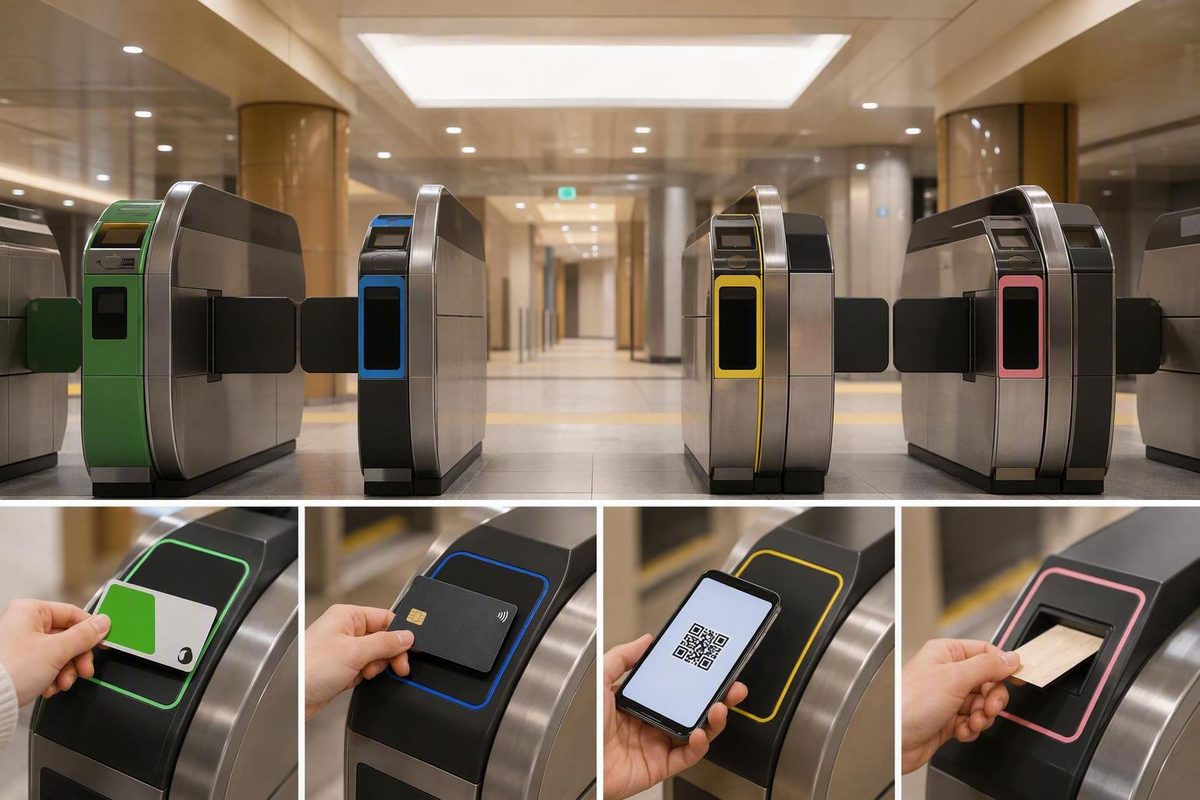
Suica works at Ginza and Ueno stations, but not in the new trial lanes. See which gate to use for IC cards, bank cards, QR and paper tickets.
You can use Suica at Ginza Station, but not at its new black-and-white experimental gate. Use a conventional gate displaying a Suica or PASMO logo instead. The same rule applies at Ueno: Suica works at the station, but not through the new wood-pattern trial gate.
Choose your station and payment method; the lane picker shows which gate to use and lets you compare your own daily fare totals.
Select what you will present at the gate. The default result below is for a physical Suica or PASMO at Ginza.
Do not tap Suica at Ginza’s black-and-white experimental gate. That trial lane excludes transportation IC cards.
Visual cue: Pass the black-and-white trial gate; verify the Suica or PASMO logo on the individual conventional gate.
The published trial details contain no fare amounts, so enter totals from your own route plan. Leave either field blank if you do not have a supported figure.
| Station | Credential | Lane to Choose | Trial Gate? | What to Look For |
|---|---|---|---|---|
| Ginza | Suica or PASMO | Conventional IC gate | No | Suica or PASMO logo; avoid black-and-white trial gate |
| Ginza | Mobile Suica/PASMO | Conventional IC gate | No | Select the IC credential and find its acceptance logo |
| Ginza | Welcome Suica | Conventional IC gate | No | Suica or PASMO logo |
| Ginza | Eligible contactless bank card | Experimental gate | Yes, if compatible | Contactless bank-card symbol; black-and-white design |
| Ginza | Eligible bank card in phone wallet | Experimental gate | Yes, if compatible | Present the bank-card credential, not Mobile Suica |
| Ginza | Supported QR ticket | Experimental gate | Yes | QR reader and supported-ticket instructions |
| Ginza | Paper ticket | Conventional paper-ticket or staffed gate | No | Paper-ticket slot or staff assistance |
| Ueno | Suica or PASMO | Conventional IC gate | No | Suica or PASMO logo; avoid wood-pattern trial gate |
| Ueno | Mobile Suica/PASMO | Conventional IC gate | No | Select the IC credential and find its acceptance logo |
| Ueno | Welcome Suica | Conventional IC gate | No | Suica or PASMO logo |
| Ueno | Eligible contactless bank card | Experimental gate | Yes, if compatible | Contactless bank-card symbol; wood-pattern design |
| Ueno | Eligible bank card in phone wallet | Experimental gate | Yes, if compatible | Present the bank-card credential, not Mobile Suica |
| Ueno | Supported QR ticket | Experimental gate | Yes | QR reader and supported-ticket instructions |
| Ueno | Paper ticket | Conventional paper-ticket or staffed gate | No | Paper-ticket slot or staff assistance |
Source: Tokyo Metro trial details as reported by SoraNews24 and Stars and Stripes; Suica acceptance guidance from JR East. Trial scheduled through February 2027. Exact card, wallet and QR-product compatibility is not fully established.
The Restriction Applies Only to the Experimental Lane
Tokyo Metro has not stopped accepting Suica at Ginza or Ueno. Each station still has conventional gates for transportation IC cards. The restriction belongs to the individual experimental gate.
| Gate | Suica or PASMO | Contactless Bank Card | Supported QR Ticket | Paper Ticket |
|---|---|---|---|---|
| Conventional compatible gate | Yes | Not established for this trial | Not established for this trial | Use a marked paper-ticket gate |
| Experimental gate | No | Eligible cards only | Yes | No |
At Ginza, reporting places the experimental gate in the Ginza Yonchome Crossing Gate array. It has a distinctive black-and-white design. At Ueno, the experimental gate has a wood-pattern design. Appearance can help you notice the trial lane, but the payment symbols on the machine are the more reliable test.
The Ginza installation reportedly began operating on July 22, 2026. The Ueno installation followed on July 31, 2026. The experiment is scheduled to run through February 2027, although the reports do not give an exact end date within that month (Stars and Stripes’ report on the gates and trial schedule).
The schedule does not guarantee that either gate will operate continuously or remain in the same position and configuration. Current station signs and staff directions take precedence.
Pick a Gate by the Credential in Your Hand
A gate’s color, age or shape does not determine whether Suica works. Look for the acceptance mark belonging to the credential you intend to tap or scan.
Suica, PASMO and Other Transportation IC Cards
Use a conventional gate displaying a Suica or PASMO logo. Do not use the black-and-white trial gate at Ginza or the wood-pattern trial gate at Ueno.
The experimental gates exclude Suica, PASMO and other transportation IC cards by design. This includes a Suica credential presented from a phone. Moving Suica into a smartphone does not turn it into a contactless bank card.
JR East’s guidance says Suica can be used where the Suica or PASMO logo is displayed. That logo is a better guide than the gate’s appearance (JR East’s official Suica guidance).
Contactless Credit, Debit and Prepaid Bank Cards
The experimental lanes are intended to accept eligible contactless credit cards, debit cards and prepaid bank cards. Look for the contactless bank-card symbol and follow the instructions on the individual gate.
Eligibility is not universal. The available reporting does not provide a complete list of accepted card networks, participating issuers or compatible foreign-issued cards. A contactless symbol on your card is therefore not a guarantee that a particular card will work.
If you already have Suica, there is no need to obtain or switch to a bank card merely to use the trial gate. A conventional IC-compatible lane remains the straightforward choice.
Phone Wallets
The credential selected in the wallet matters more than the phone itself.
If the phone presents Mobile Suica or Mobile PASMO, use a conventional gate carrying the Suica or PASMO logo. If it presents an eligible contactless bank card, the experimental lane is intended for that payment category.
The evidence does not establish every working combination of phone, wallet, card network, issuer and gate system. A general phone or contactless symbol should not be interpreted as confirmation that Mobile Suica works in the experimental lane.
QR Tickets
Use the experimental gate only when you hold a QR-code ticket supported by the trial system. An arbitrary QR code, QR-payment application or reservation confirmation is not necessarily an eligible ticket.
The supplied evidence does not identify the complete list of supported QR-ticket products. Check the gate instructions or ask staff if the ticket does not explicitly direct you to a QR reader.
Paper Tickets
Do not insert a paper ticket into the experimental gate. Reports say the lane excludes paper tickets as well as transportation IC cards (SoraNews24’s report on the experimental gates).
Use a conventional gate marked for paper tickets. If the appropriate slot or lane is not apparent, use the staffed gate.
What to Do If You Reach the Wrong Gate With Suica
Do not keep tapping Suica against the experimental reader. Repeated attempts cannot make an incompatible lane accept a transportation IC card.
Step aside so other passengers can pass, then look for a conventional gate displaying the Suica or PASMO logo. The compatible lane may be nearby, but the available evidence does not guarantee that it will be immediately beside the trial gate or within the same gate array.
If you cannot see an appropriate lane, show your Suica to a station employee and ask for the correct gate. You do not need to leave the station, buy a paper ticket or replace your Suica merely because you approached the trial lane.
This is the same next-decision approach used for Navigating Large Tokyo Train Stations by Trip Goal: identify the gate that accepts what you already hold before solving the rest of the station route.
When Entering the Station
Check the symbols before joining a lane. With Suica or PASMO, pass the distinctive trial gate and choose a conventional IC gate.
Once through, follow signs for your line and direction. At Ginza, that may mean checking which subway line you need rather than assuming every gate leads equally directly to every platform.
When Exiting the Station
Use the same acceptance rule from inside the paid area. A Suica journey must be completed at a conventional Suica- or PASMO-compatible gate, not at the bank-card-and-QR trial lane.
Keep your intended street exit in mind while changing lanes. If the compatible gate is not visible or appears to lead away from the exit you need, ask staff rather than making a long concourse detour.
A Trial-Gate Rejection Is Not a Suica Balance Error
A rejection at the experimental gate is expected because that lane excludes Suica. It does not show that the card is damaged or short of funds.
A rejection at a conventional gate displaying a Suica or PASMO logo is a different problem. Use this order:
- Confirm that the individual gate carries the Suica or PASMO logo.
- Check the card’s stored balance if possible.
- Top up or request fare-adjustment help if the balance is insufficient.
- Use the staffed gate if the rejection continues.
Under normal use, Suica is tapped when entering and again when leaving, with the applicable fare deducted from its stored balance. JR East’s guidance says an insufficient balance must be topped up. That normal rule applies at compatible equipment; it does not override the trial gate’s fare-media restriction.
Welcome Suica Also Belongs at a Conventional Gate
The gate-specific reports do not name Welcome Suica separately. The practical approach is to treat it as a Suica transportation IC product and use a conventional gate displaying a Suica or PASMO logo.
JR East describes Welcome Suica as a product used by tapping compatible train and subway gates, with fares deducted from its balance (JR East’s Welcome Suica guidance). The same gate choice applies to Mobile Suica: presenting it from a phone does not change the underlying credential into a bank card.
Suica Versus Bank-Card Cost Cannot Be Compared From the Trial Details
The supplied trial information does not provide the fare figures, discounts, caps or itinerary-specific totals needed to say that tapping a bank card or using Suica will be cheaper for a particular day.
Use the calculator in the lane picker with totals from your own route plan. If both projected totals are identical, choose based on compatibility and convenience. If you do not have both figures, the cost comparison remains unknown; do not assume the newer gate offers a lower fare.
Gate compatibility and fare cost are separate questions. A payment method may be accepted by the experimental lane without being established as cheaper, and Suica may remain the easier option because conventional gates support it throughout the station.
Trial Details That Remain Unconfirmed
Published reporting supports the following points:
- Ginza’s experimental gate excludes Suica, PASMO, other transportation IC cards and paper tickets.
- Ueno has a corresponding experimental gate with a wood-pattern design.
- Eligible contactless bank cards and supported QR tickets are the intended fare media.
- Conventional gates remain available for transportation IC-card users.
- The reported trial period runs through February 2027.
The supplied sources do not establish:
- the exact trial end date;
- continuous daily operating status;
- the full list of accepted card networks and issuers;
- universal compatibility for foreign-issued cards;
- every compatible phone and wallet combination;
- the complete list of supported QR-ticket products;
- a precise permanent position for either trial gate;
- what Tokyo Metro will do after the experiment.
At the station, follow the symbols on the individual gate first, then current directional signs and staff instructions. Older photographs and descriptions are less dependable during a temporary experiment.
Answers to Common Gate Questions
Does the New Ginza Gate Accept PASMO?
No. The black-and-white experimental gate excludes PASMO as well as Suica and other transportation IC cards. Use a conventional gate displaying a Suica or PASMO logo.
Can Mobile Suica Use the Contactless Trial Lane?
Do not plan on it. Mobile Suica remains a transportation IC credential even though it is stored on a contactless phone. Select a conventional Suica-compatible gate.
Will Every Foreign Contactless Card Work?
No universal compatibility is established. An eligible card may work, but the available evidence does not provide a complete list of supported foreign issuers, networks, wallets or devices.
Can I Still Use Ginza or Ueno With Only Suica?
Yes. You do not need a backup bank card merely to enter or leave either station. Skip the distinctive experimental lane and use a conventional gate carrying the Suica or PASMO logo.