
Free Things to Do in Tokyo Without Crossing the City All Day
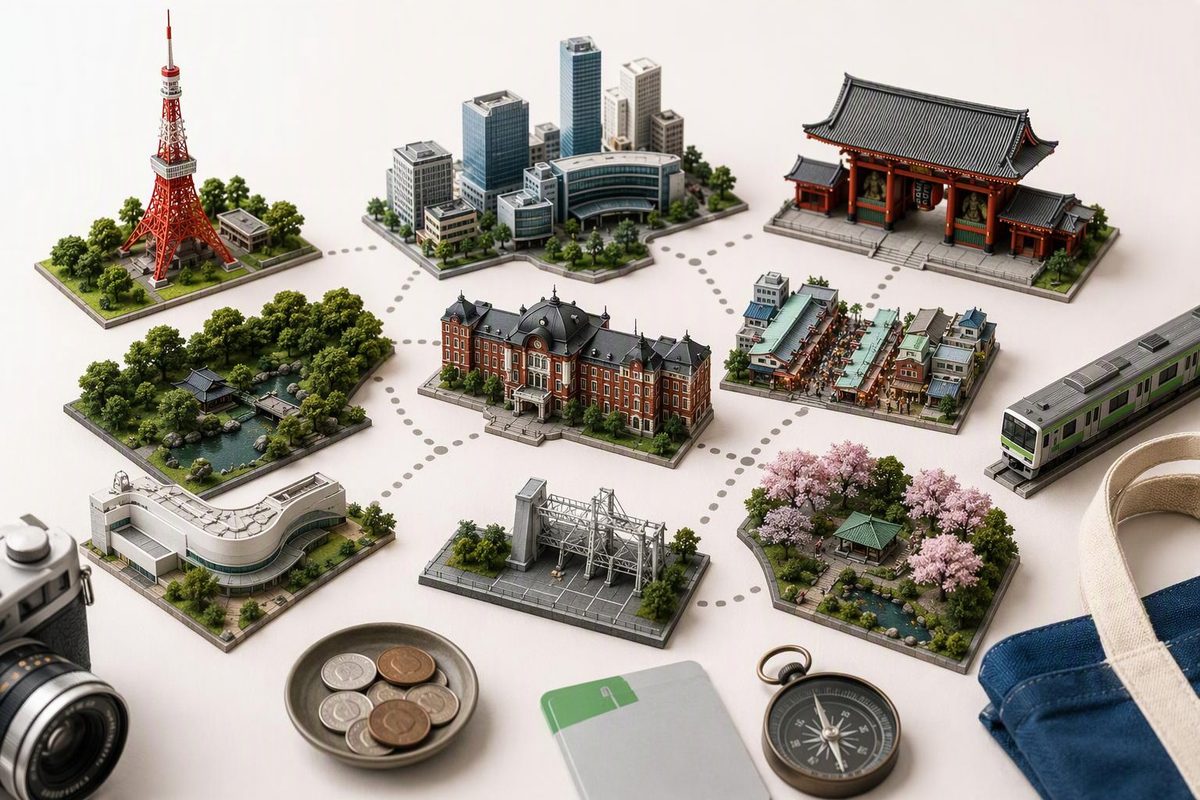
Nine free Tokyo sights grouped into nearby stops, with station access, opening hours, closure checks and clear limits on what costs extra.
For a free skyline view, choose the Tokyo Metropolitan Government observatories in Shinjuku. For a compact sightseeing morning, pair Senso-ji with Asakusa’s free observation terrace. For an indoor stop, head to Intermediatheque beside Tokyo Station.
Free here means no admission charge, not free transport, food or souvenirs. Choose nearby stops rather than spending the savings on extra train journeys. Hours below were checked on October 3, 2026; use the linked venue calendars for your visit date.
Shinjuku: a skyline view and an evening light show
1. Go up the Tokyo Metropolitan Government observatories
The observatories in Main Building No. 1 give you a city view from 202 meters above ground, without an admission charge. Use the dedicated observatory elevators on the first floor; on weekends and public holidays, approach through the first-floor main entrance rather than the closed second-floor entrances. Official visitor information
The South Observatory opens 9:30–22:00, with last entry at 21:30. It normally closes on the first and third Tuesdays. The North Observatory opens 9:30–17:30, with last entry at 17:00, but extends its hours when the south side is closed. It normally closes on the second and fourth Mondays. Holiday substitutions, building inspections and year-end closures make the official opening calendar worth checking before you leave.
Allow time for the elevator queue: the operator advises that waits can be around 20–30 minutes, varying by weather and time of day. Queue and entry information
Tochomae is the nearby Oedo Line station; from JR Shinjuku’s west exit, the official access estimate is a ten-minute walk to the government complex. Access information
2. Watch TOKYO Night & Light outside
Stay in the same area after dark for projection mapping on the building’s east wall. Admission is free, with no tickets or reservations required. GO TOKYO’s visitor guide
Screenings run daily except when stormy weather or other circumstances interrupt them. On October 3, 2026, the listed starts were every half-hour from 18:00 to 21:30. Start times vary seasonally, and programs differ between screenings: check the current program and timetable. This is an outdoor stop, not a rainy-day substitute for the observatory.
Asakusa and Ueno: temple, terrace and park
3. Walk through Senso-ji
Follow Kaminarimon → Nakamise → Hozomon → Main Hall. Admission is free, and the grounds remain open even when the hall is closed. Senso-ji visitor guide
The Main Hall opens 6:00–17:00 from April through September, and 6:30–17:00 from October through March. The temple lists a five-minute walk from Asakusa Station, including from exit A4 on the Toei Asakusa Line. Official hours and access
Browsing Nakamise costs nothing; snacks, charms and souvenirs are separate purchases. For the walking order and prayer etiquette, use our Senso-ji route guide.
4. Look over Asakusa from the tourist information center
The Asakusa Culture Tourist Information Center stands opposite Kaminarimon. Its eighth-floor observation terrace is free and opens 9:00–22:00, offering views over Asakusa and toward Tokyo Skytree. The information counter downstairs closes earlier, at 20:00. Taito City’s facility guide
This is an easy addition to the temple visit, not a separate cross-city destination. The center is about one minute on foot from Tokyo Metro’s Asakusa Station, versus ten minutes from the separate Tsukuba Express station. Official access listing
5. Walk through Ueno Park to Shinobazu Pond
Ueno Park is free to enter and opens 5:00–23:00. If arriving on JR, use Ueno Station’s Park Exit: the park is across the street. A useful walking sequence is the fountain area, the main tree-lined boulevard, then Shinobazu Pond. GO TOKYO’s park guide
The park is free; its zoo, museums and other facilities generally have separate admission charges.
To combine Asakusa and Ueno, take the Ginza Line from Asakusa G19 to Ueno G16, three stops without a transfer. That journey is paid, but it avoids a long walk between the two areas. You arrive at Tokyo Metro Ueno, not JR’s Park Exit; leave the subway station and continue to the park on foot. Tokyo Metro’s Ginza Line station list · Park access
Tokyo Station and Otemachi: gardens plus an indoor museum
6. Explore the Imperial Palace East Gardens
These gardens occupy part of the former Edo Castle site. Entry is free and requires no advance reservation. For Ote-mon Gate, use Otemachi exit C13a, about five minutes away, or walk about fifteen minutes from Tokyo Station’s Marunouchi North Exit. Imperial Household Agency visitor information
Opening begins at 9:00, with seasonal closing times from 16:00 to 18:00. In October, closing is 16:30, with last entry at 16:00. The gardens normally close on Mondays and Fridays, plus December 28–January 3. Public holidays can alter that pattern, including a Tuesday closure after a holiday Monday, so check the same official calendar.
Choose the gardens for a free walk among castle remains and landscaped grounds; this is not entry to the palace buildings.
7. Visit Intermediatheque inside KITTE
Intermediatheque presents scientific and cultural collections accumulated by the University of Tokyo. It is an indoor museum stop, rather than simply a shop you can browse. About the museum
Admission is free. Hours are 11:00–18:00, extended to 20:00 on Fridays and Saturdays. It normally closes on Mondays, or the following Tuesday when Monday is a national holiday, with additional year-end and occasional closures. Official hours
Use Tokyo Station’s Marunouchi South Exit, then enter the museum through KITTE’s second-floor entrance, accessible by elevator or escalator. Official access
Visit the gardens first and the museum afterward. On an ordinary Friday, when the gardens are closed, Intermediatheque still offers a late-opening option.
Harajuku and Shibuya: forest paths and street life
8. Walk to Meiji Jingu’s main shrine
Meiji Jingu’s shrine grounds are free and open every day, with monthly hours tied to sunrise and sunset. In October, they open 5:40–16:40; December’s closing time is 16:00. Do this before your evening plans, not afterward. Official opening hours
Arrive at Harajuku or Meiji-jingumae for the southern approach. Reaching the grounds is not the end of the walk: the shrine advises allowing at least another ten minutes from an entrance to the main buildings. The Inner Garden has an entrance fee, so stay on the shrine approaches if keeping the visit entirely free. JNTO access and garden guide · Shrine access notes
9. Cross Shibuya Scramble and see Hachiko
The crossing itself is free: you do not need a café purchase or an elevated viewing ticket to experience it. From JR Shibuya Station, follow signs for the Hachiko Exit, directly beside the crossing, and include the nearby dog statue before continuing toward Center-Gai. JNTO’s Shibuya guide
Treat this as a short stop within a neighborhood walk, rather than an attraction requiring hours. Keep moving while crossing and take photographs from somewhere that does not obstruct pedestrians. Our compact Shibuya route helps you extend the visit without repeatedly navigating the station.
To pair the shrine with Shibuya by rail, return to Harajuku Station and take the JR Yamanote Line to Shibuya. Both stations serve that line, so no train transfer is needed. Harajuku access · Shibuya access
For no train journeys between attractions, choose the Tokyo Station–East Gardens pair or the two Shinjuku stops.