
Walk to Tocho Unless You Already Have an IC Card
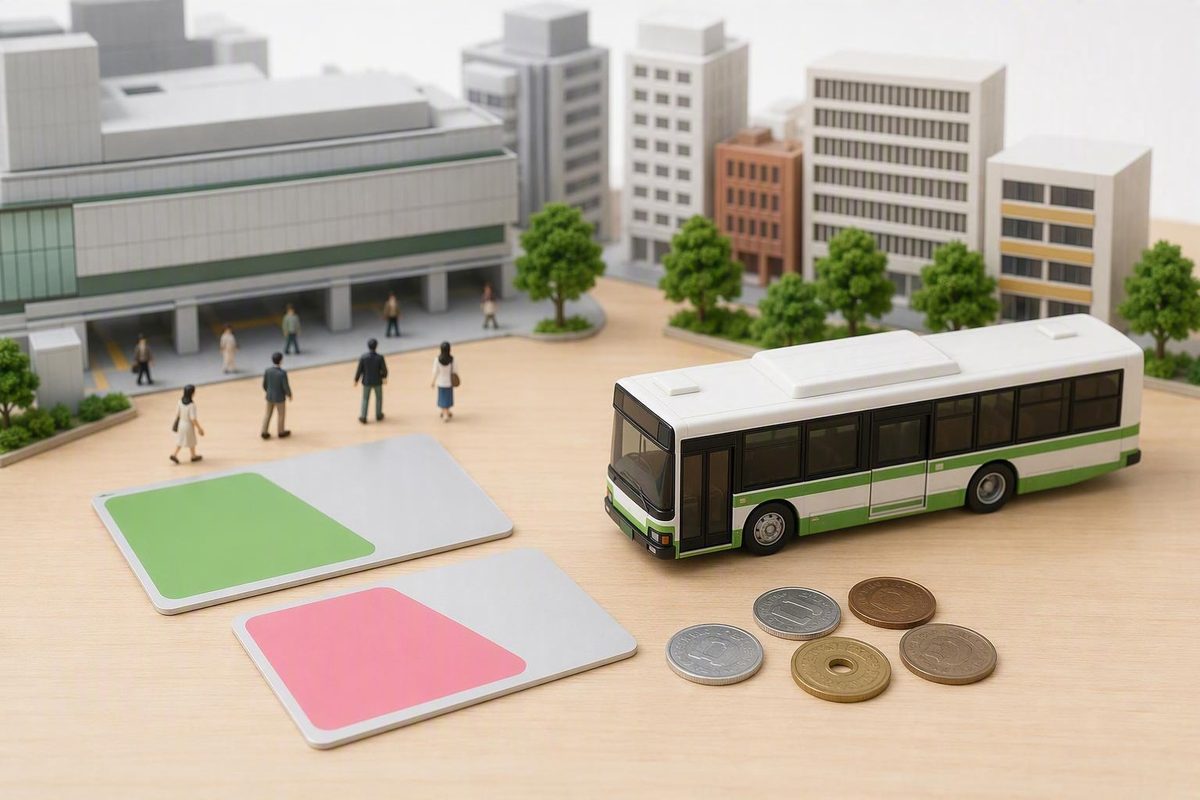
No loaded Suica or PASMO? Walk about 10 minutes from Shinjuku West Exit to Tocho. Check accepted passes, cash limits, and bus options.
From September 1, 2026, the C·H01 Toei shuttle between Shinjuku Station West Exit and the Tokyo Metropolitan Government Building is scheduled to stop taking ordinary cash and contactless bank cards at the farebox. If you do not already have a loaded transit IC card or valid pass, the approximately 10-minute walk to Tocho is the only fast, dependable option; reported driver assistance for cash-only riders is an exception, not a normal payment method.
The route-specific change is supported by two pre-launch reports. TechTimes reports the September 1 start, C·H01 designation, IC-card requirement, and rejection of cash and bank cards. Nikkei confirms the Shinjuku–Tocho loop and IC-card policy, while adding that eligible passes remain valid and drivers can offer manual settlement help to a cardless passenger. Because both accounts predate the launch, current stop and onboard notices take precedence if the operating procedure changes.
Choose whether you have a loaded transit IC card; the picker shows which route wins and how each payment method is treated.
The default assumes you have no loaded transit IC card. Fare, bus frequency, and measured walking distance were not supplied in the route reports, so they remain marked —.
Follow station signs to the West Exit, then signs toward the Tokyo Metropolitan Government Building or Tocho. The estimate begins in the West Exit area, not at your train platform.
Do not plan around the bus without a loaded transit IC card or valid pass. Driver assistance for cash-only riders is reported but unexplained.
- Follow station signs for Shinjuku Station West Exit.
- After reaching the west side, follow signs for the Tokyo Metropolitan Government Building or Tocho.
- Continue toward the government-building district; allow about 10 minutes from the West Exit area.
- Use current station maps or street signage where construction changes the pedestrian path.
| What You Carry | Bus Status | Best Decision | Known Limitation |
|---|---|---|---|
| Loaded Suica or PASMO | Usable | Bus or walk | Exact fare and frequency — |
| One of eight interoperable FeliCa IC brands | Reported usable | Confirm logo, then bus or walk | Full first-party card list not supplied |
| Eligible one-day ticket, commuter pass, Silver Pass, or other valid pass | Remains valid | Use if valid for this route | Route eligibility still applies |
| IC card with low balance | Top-up reported onboard | Load value before boarding | Funding method and limits — |
| Welcome Suica | General bus compatibility | Check logo, validity, and balance | No route-specific Toei confirmation supplied |
| Contactless credit or debit card | Unsupported | Walk unless you obtain a transit IC card | Tap-to-pay bank cards are not transit IC cards |
| Cash only | Not ordinary payment | Walk; ask the driver if necessary | Manual settlement help is unexplained |
| No payment credential | Bus unavailable as planned | Walk ~10 minutes | Walking distance — |
Sources: TechTimes route report, July 29, 2026; Nikkei route report, August 13, 2026; JR East Welcome Suica guidance. A dash means the supplied evidence gives no figure.
Why Guides Usually Recommend the Bus
The usual advice to take a short bus from Shinjuku West Exit is reasonable for a traveler carrying Suica or PASMO. The bus avoids having to navigate the streets of western Shinjuku, and it serves the Tokyo Metropolitan Government Building, commonly shortened to Tocho, where the observation deck is free.
That recommendation is also understandable for travelers with luggage, limited walking tolerance, or a valid pass. The cashless trial does not make the bus a poor choice for everyone. It changes who can treat it as the automatic choice.
The correction is narrow: a traveler without a loaded IC card or eligible pass should no longer walk to the stop expecting to pay an ordinary cash fare or tap a contactless Visa or Mastercard. TechTimes describes passengers without an IC card as being refused, while Nikkei reports a driver-assisted settlement response for someone carrying only cash. Those accounts support planning around the restriction rather than planning around the exception.
The Walk Is the Reliable Cardless Route
From Shinjuku Station, follow signs toward the West Exit, then use signs for the Tokyo Metropolitan Government Building or Tocho. Continue west toward the government-building district. The expected walk is approximately 10 minutes, although the supplied reporting does not provide a measured distance or a verified gate-to-door route.
Treat that timing as an estimate from the West Exit area, not from any train platform. Time spent crossing the station, finding the correct exit, carrying luggage, or correcting a wrong turn is additional.
The walk has no fare-payment dependency and does not require finding the C·H01 stop. That makes it the default for a cardless traveler even though the bus may still be more comfortable in poor weather or when walking is difficult.
The evidence supplied for this guide does not establish the precise bus-stop number or boarding position around the West Exit. It also provides no current fare or timetable. Those missing figures make a claimed door-to-door bus advantage impossible to calculate reliably.
The Restriction Applies Only to the C·H01 Toei Loop
The reported trial concerns the Toei loop linking Shinjuku Station West Exit and the Tokyo Metropolitan Government Building. TechTimes identifies it as C·H01. Check the operator, route designation, destination display, and current stop signage before boarding.
Do not extend the rule to every vehicle near either endpoint. The reports do not say that airport limousine buses, private coaches, hotel shuttles, or all other Toei routes have adopted the same payment policy. A bus traveling through western Shinjuku is not necessarily part of the trial.
This is a route-specific operational test, not evidence that every Tokyo bus has become cashless. Nikkei reports that the transportation bureau intends to evaluate smoother fare payment, punctual operation, and reduced burden on drivers. Those are trial objectives, not benefits already demonstrated on this route.
Suica, PASMO, and Eight Interoperable Cards Work
Suica and PASMO are the clearest choices because both are named in the route-specific coverage. TechTimes reports that eight other interoperable FeliCa-based transit IC card brands also work, although the supplied material does not contain a first-party Toei list naming all eight.
| Payment Method | Reported Status | Practical Use |
|---|---|---|
| Suica or PASMO | Accepted | Load value before boarding |
| Eight interoperable IC brands | Accepted | Confirm less familiar cards |
| Eligible passes | Valid | Present as instructed |
| Cash | Not ordinary payment | Ask the driver for help |
| Contactless bank card | Unsupported | Do not rely on it |
Eligible one-day bus tickets, commuter passes, Silver Passes, and other valid tickets are reported to remain usable. Route eligibility still applies; the trial does not turn an unrelated pass into a valid ticket.
A contactless bank card is not a transit IC card. A Visa or Mastercard with a tap symbol does not become Suica or PASMO, and TechTimes specifically reports that ordinary contactless credit and debit cards are unsupported on this trial.
The same distinction applies on a phone. If a wallet contains both a bank card and a Japanese transit card, the transit card is the relevant product. The supplied evidence does not confirm every phone, wallet configuration, or mobile IC implementation, so a functioning physical Suica or PASMO remains the least ambiguous option.
Welcome Suica Has General Compatibility, Not Route-Specific Confirmation
JR East says Welcome Suica can generally be used on compatible buses in the Tokyo metropolitan area where supported IC-card logos are displayed. It is valid for 28 days beginning on its purchase date. JR East provides the validity period and general bus guidance.
That guidance does not name C·H01 or explain this trial. A traveler using Welcome Suica should check that the card is still valid, has sufficient value, and matches an IC logo displayed on the bus or stop. Ask the driver if the card is not recognized.
The route reports also refer to interoperable, visitor-oriented, and mobile products. Without a supplied first-party Toei card list, those products cannot all be presented with the same certainty as ordinary Suica and PASMO.
Cash Assistance Is a Fallback, Not Farebox Acceptance
The two reports differ in emphasis. TechTimes says passengers without an IC card will be refused. Nikkei says someone carrying only cash can tell the driver and receive help settling the fare.
Nikkei does not explain what that assistance involves. The evidence does not establish whether a driver accepts cash directly, arranges another payment method, gives later-settlement instructions, or follows a different procedure. It therefore does not support telling travelers that cash remains accepted in the ordinary sense.
If you reach the bus with only cash, tell the driver immediately and follow the posted or spoken instructions. Do not insert money into equipment unless directed, and do not assume that assistance guarantees boarding.
If you identify the problem before reaching the stop, walking avoids that uncertainty. That is why the approximately 10-minute route is the dependable cardless choice rather than merely a backup.
Existing IC Cards Can Reportedly Be Recharged Onboard
Both route-specific reports say onboard charging remains available. A passenger who has a supported IC card with insufficient value is therefore in a different position from someone with no transit card.
The reporting does not explain how a top-up is funded, which notes or coins are accepted, the minimum or maximum amount, applicable balance limits, or whether every compatible physical and mobile card can be charged. It also does not establish the exact steps or when a passenger should ask.
Load sufficient value before boarding when practical. If the balance is low after boarding, ask the driver for instructions rather than importing a procedure from another bus route.
There is no supplied evidence that a fare can be divided between an IC-card balance and another payment method. Top up rather than assuming a remainder can be paid in cash or by bank card.
The Driver Shortage Explains the Trial’s Scope
The Japan Bus Association projects a nationwide shortage of about 36,000 bus drivers by 2030. The Toei trial is intended to collect operational data while the industry faces that shortage, according to the route reporting.
No operator-confirmed end date is supplied. The evidence also does not establish that the policy will expand to other routes. Until Toei publishes or displays broader instructions, apply the restriction only to the identified Shinjuku West Exit–Tocho loop.
The unresolved operational details include the current fare, frequency, precise West Exit stop, complete accepted-card list, cash-assistance procedure, onboard charging method, route-specific tapping sequence, and trial end date. Where those details matter, use current Toei notices and stop signage rather than an assumed procedure.
The Practical Boarding Decision
Walk if you have no loaded transit IC card and no eligible pass. The route takes approximately 10 minutes from the West Exit area and removes the risk of reaching a farebox that will not accept your payment method.
Take the C·H01 bus if you have a loaded Suica, PASMO, confirmed interoperable IC card, or valid route-eligible pass and prefer not to walk. Verify the destination display because not every nearby service is covered by the same rules.
If you have an IC card with too little value, top it up before boarding when possible. Onboard charging is reported to remain available, but its detailed procedure is not supplied.
If you have only cash and cannot walk, speak to the driver. Nikkei’s report leaves room for manual settlement assistance, but that narrow fallback does not restore normal cash acceptance or override instructions displayed after launch.