
See Shinjuku Without Zigzagging Across the Station
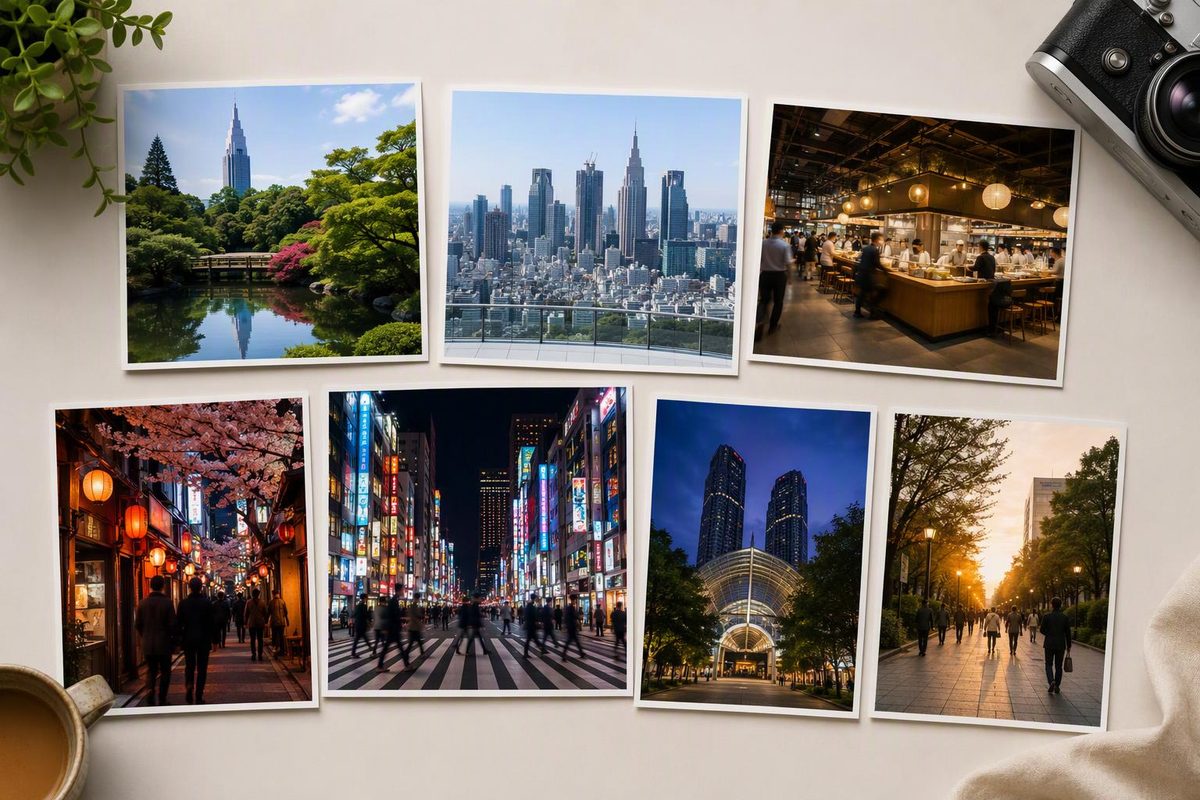
Plan Shinjuku by station side: garden gates, a free skyline view, food halls and neon streets, with opening hours and an afternoon-to-evening walking route.
For a first visit, prioritize Shinjuku Gyoen in daylight, Kabukicho after dusk and Golden Gai if you want a late drink. Add the Tokyo Metropolitan Government Building for a free skyline view, but visit it before the garden: it sits west of Shinjuku Station, away from the main east-side sightseeing cluster. Choose Omoide Yokocho instead of Golden Gai if your evening priority is a small-counter meal.
Choose your daytime anchor and evening plan; the tool shows your starting exit and route.
Build a Shinjuku Walking Route
Garden to Neon: Stay East
Start: Shinjuku Station South Exit, or Shinjuku-sanchome E5 on the Fukutoshin Line.
- Visit Shinjuku Gyoen; enter and leave through Shinjuku Gate.
- Browse Isetan, then stop at Hanazono Shrine.
- Finish in Kabukicho after dusk; view the Godzilla head from the street.
Daytime anchor: ¥500 standard adult garden admission. Allow 90 minutes to two hours as a planning budget.
Check seasonal garden hours and closure dates below before using this route. Choose any dinner venue independently; do not follow touts.
Sources: official garden, observatory, Isetan, Golden Gai and Omoide Yokocho guidance cited below. Routes and visit budgets are planning suggestions; schedules were checked October 4, 2026.
Start on the Side That Matches Your First Stop
Shinjuku’s shopping and entertainment cluster is east of the station; the skyscraper district is west. These sights can be linked on foot, but adding the government building or Omoide Yokocho to an east-side day means deliberately crossing back.
| First stop | Starting point |
|---|---|
| Shinjuku Gyoen | Shinjuku Station South Exit |
| Shopping or Kabukicho | Shinjuku Station East Exit |
| Government building or Omoide Yokocho | Station’s west side |
If arriving by subway for the garden or Isetan, consider Shinjuku-sanchome rather than routing yourself through the larger Shinjuku Station complex. The useful exits differ by destination; use the specific ones below.
1. Shinjuku Gyoen Is the Strongest Daytime Stop
Choose Shinjuku Gyoen for lawns, pond-side paths and views of towers above the trees. It combines Japanese traditional, formal and landscape gardens. Alcohol, smoking, sports equipment and musical instruments are prohibited.
Allow 90 minutes to two hours as a planning budget. For a compact Shinjuku day, enter and leave through Shinjuku Gate rather than finishing on the opposite side of the garden. The operator lists a ten-minute walk from Shinjuku Station’s South Exit, or five minutes from Shinjuku-sanchome Exit E5, listed for the Fukutoshin Line. See the official gate access information.
Standard adult admission is ¥500. Regular hours, checked October 4, 2026, are:
| Dates | Opening Hours | Last Entry |
|---|---|---|
| October 1–March 14 | 9:00–16:30 | 16:00 |
| March 15–September 30, except below | 9:00–18:00 | 17:30 |
| June 11–July 31 | 9:00–19:00 | 18:30 |
The garden is usually closed Mondays, or the next weekday after a Monday public holiday, and December 29–January 3. There are no Monday closures March 25–April 24 or November 1–15. Busy cherry-blossom dates may require advance reservations; check the official admission and closure information.
Use our Shinjuku Gyoen gate and garden route guide for a longer visit.
2. The Government Building Adds a Free Skyline View
The Tokyo Metropolitan Government Building is the west-side choice for seeing Tokyo’s scale from above. Its observatories are 202 metres above ground. Mount Fuji is visible in suitable conditions, not a guaranteed part of the visit.
The building is approximately ten minutes on foot from JR Shinjuku’s West Gate, or accessible from Tochomae Station on the Oedo Line. Follow current construction signage around the grounds; consult the official access information.
As of October 4, 2026, admission is free. The South Observatory opens 9:30–22:00, with last entry at 21:30. It normally closes on the first and third Tuesdays; if these fall on public holidays, closure moves to the next weekday.
The North Observatory normally closes at 17:30, with last entry at 17:00, but extends to 22:00 when the South Observatory is closed. It has separate closure days.
Check the official observatory guide, schedule and queue indicator before making the westward detour. Budget extra time for the elevator queue; the draft’s sources do not establish a fixed wait. Use the dedicated observatory elevators from the first floor of Main Building No. 1.
3. Isetan’s Food Hall Makes a Compact Indoor Stop
If you want one department-store stop, choose Isetan’s main-building B1 food hall rather than trying to browse every shopping complex around the station. It also works as an indoor alternative in rain.
Regular store hours are 10:00–20:00. Shinjuku-sanchome exits B3, B4 and B5 connect directly to the basement level. These details and the floor directory are on Isetan’s official visitor page.
Allow roughly 30–45 minutes as a browsing budget, rather than a limit for extensive shopping. From here, continue to Hanazono Shrine before the evening streets.
4. Hanazono Shrine Fits Between Shopping and Nightlife
Hanazono’s vivid shrine building provides a short cultural stop amid the shopping streets.
It is beside Shinjuku-sanchome Exit E2, making it easy to combine with Isetan before continuing toward Golden Gai and Kabukicho. See Hanazono Shrine’s location and visitor details.
5. Kabukicho and the Godzilla Head Are Best After Dusk
Come for the illuminated streets and the Godzilla head above the Shinjuku Toho Building; you do not need to book a nightlife venue to make this a sightseeing stop.
The sculpture sits on the building’s eighth-floor terrace at 1-19-1 Kabukicho. For this route, view it from street level rather than assuming terrace access is included. The official Godzilla landmark listing identifies the location.
Choose restaurants and bars yourself. Do not follow someone offering to lead you to a venue: the Metropolitan Police warns about tout-led rip-offs in Kabukicho and credit-card fraud at bars recommended by touts. Read the police nightlife guidance.
6. Golden Gai Is for a Late Drink, Not an Early Dinner
Golden Gai is the choice for an intimate drink in closely packed alleys. Many bars seat only five or six people, some are members-only, and most open relatively late—typically around 20:00.
Photography requires permission; street drinking and smoking are prohibited. These restrictions and the small-bar format are covered by the official Golden Gai visitor guidance.
Before sitting down, ask about the cover charge and drink prices. There is no single district-wide price supplied by the sources, and a large group should not assume it can fit into one bar. Our Golden Gai guide covers choosing a bar and reaching the district.
7. Omoide Yokocho Is the Better Meal Stop
Omoide Yokocho, on the station’s west side, is the better fit if your priority is grilled skewers and a small-counter meal rather than Golden Gai’s bar experience.
Its official association describes a concentration of yakitori and grilled-offal restaurants and provides a shop directory. Hours vary by business; use Omoide Yokocho’s official directory to check individual places.
Choose Omoide Yokocho for eating, Golden Gai for a late drink, or both only if you want the extra cross-station detour.
Keep the Afternoon-to-Evening Route East of the Station
The compact version starts with the garden and finishes among the illuminated streets:
- Around 13:00: reach Shinjuku Gyoen via the South Exit or Shinjuku-sanchome E5. Spend 90 minutes to two hours inside and leave through Shinjuku Gate.
- Mid-afternoon: browse Isetan, then visit Hanazono Shrine.
- After dusk: walk through Kabukicho and look up at the Godzilla head. Choose dinner independently.
- Around 20:00 onward: try Golden Gai if you want a drink; otherwise finish after the illuminated streets.
For the skyline view, visit the government building in the late morning before the garden, then continue east. Allow roughly 40 minutes as a planning buffer for walking to Shinjuku Gate and finding the entrance, beyond any observatory queue. This is a routing allowance, not an official walking time.
If you want Omoide Yokocho as well, dinner there means returning to the west side. It is not an extra stop along the east-side route.
On a garden closure day, start later with Isetan and Hanazono, or make the free observatory your daytime anchor. Before settling into a late bar, check the last useful train for your actual hotel route.