
Golden Gai in Shinjuku: The Practical First-Visit Guide
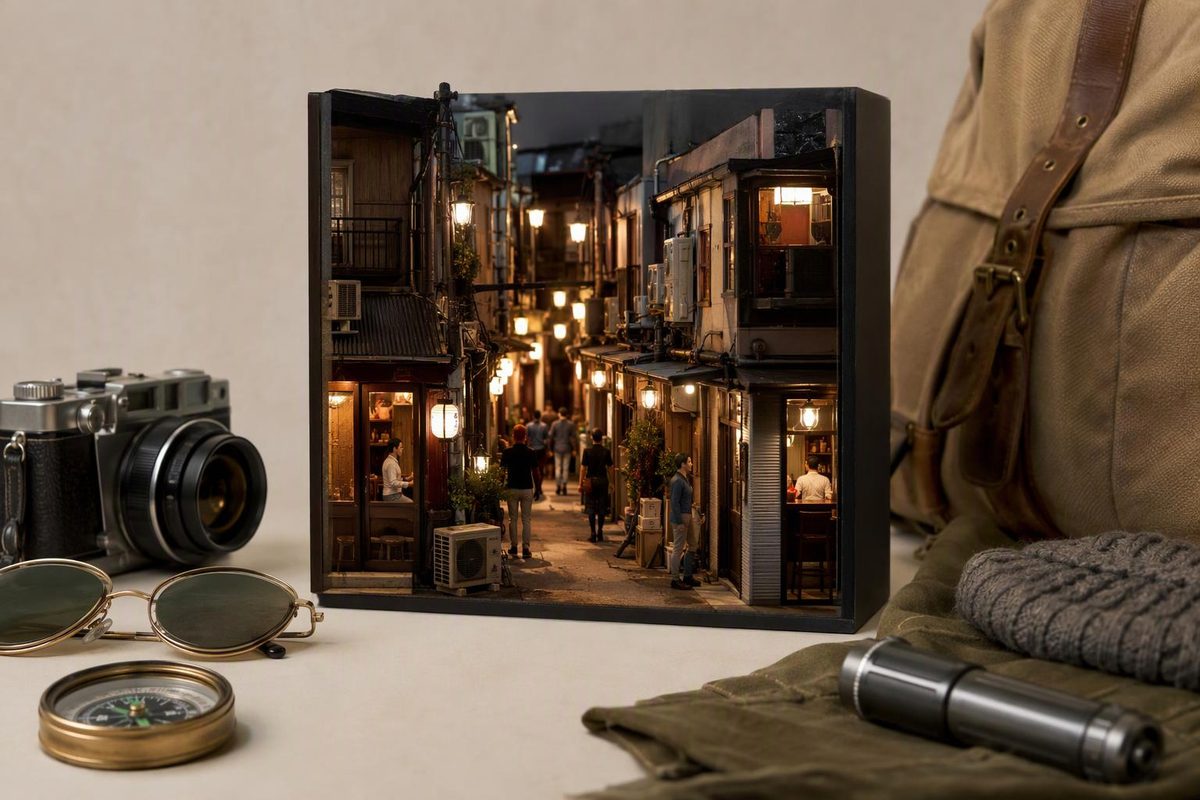
Reach Golden Gai from the right Shinjuku exit, choose a welcoming bar, check cover charges, avoid touts and follow the district’s photography rules.
Golden Gai is a compact drinking district in Kabukicho, on the east side of Shinjuku Station and beside Hanazono Shrine. More than 280 small bars and eateries occupy its narrow lanes and low wooden buildings. Many rooms hold only a few customers, so choosing a bar—not merely walking through the alleys—is the point.
For a first visit, arrive around 8:00 or 9:00 p.m., come alone or with one companion, and look for a door displaying prices or an English menu. Ask about the cover charge before sitting down. Do not treat the lanes as a photo set: official visitor guidance says photography requires permission.
Golden Gai at a glance
| Decision | Practical answer |
|---|---|
| Useful arrival time | About 8:00–9:00 p.m.; many bars open around 8:00 p.m. |
| Easiest group size | One or two people |
| Useful station | Shinjuku-sanchome for a simpler approach; JR Shinjuku for broader rail access |
| Time to allow | About 60–90 minutes for one unhurried drink; more for a second bar |
| Cost check | Confirm the cover, drink prices and payment method before sitting |
| Photography | Ask permission before taking street or interior photos |
| Street behavior | No drinking or smoking in the lanes |
Golden Gai is not one managed nightlife venue with common hours and prices. It is a collection of independently run businesses, each with its own atmosphere and rules. The local association describes approximately 280 different bars and pubs, each with a distinct character (Shinjuku Golden Gai Shopping District Promotion Association).
Getting there from Shinjuku Station
From a JR train
Follow station signs to the East Exit, not a west or south exit. Once outside, use Shinjuku Golden Gai or Hanazono Shrine as your map destination and walk northeast. Golden Gai is the compact block of alleys immediately north of the shrine; it does not have one grand entrance.
GO TOKYO lists Golden Gai as a five-minute walk from Shinjuku Station’s East Exit. If this is your first time navigating the station, allow closer to 10–15 minutes from platform to bar: the platform-to-gate walk can take longer than the street section. The east side is the correct side for Kabukicho nightlife (GO TOKYO’s Shinjuku guide). Inside the station, keep following the signed exit name rather than navigating by compass; JR East publishes floor maps for Shinjuku Station.
From Shinjuku-sanchome
Shinjuku-sanchome is often the cleaner approach if your train already uses the Marunouchi, Fukutoshin or Toei Shinjuku line.
Use Exit E1, which Tokyo Metro’s exit directory lists for “Shinjuku Golden Town”; E1 also has an elevator. Exit E2 is the alternative listed for Hanazono Shrine. From either exit, set Golden Gai as the map destination and allow a few minutes on foot (Tokyo Metro station guide).
Save the associations’ Golden Gai bar map, updated in April 2026 before going. The lanes include G1-dori, G2-dori and several Akarui Hanazono streets; some businesses are upstairs or in basements, so a bar name alone may not identify the door.
How to choose a bar without overplanning
Walk one slow circuit and read the signs. A practical first choice has:
- prices or a cover charge posted outside;
- an English menu or an explicit welcome sign if you need English;
- enough empty seats for everyone in your party;
- a drinks list, music style or theme that appeals to you.
Some venues cater to regulars or members, while others welcome anyone. The official Tokyo guide notes that many bars seat only five or six customers, so a refusal may simply reflect the bar’s policy or available space (GO TOKYO’s Golden Gai guide). Choose another door rather than arguing or squeezing in.
Before sitting, ask:
“Is there a cover charge?”
And, if needed:
“Card okay?”
A charge may be described as a cover, seat charge or otoshi charge and can be separate from the drink price. A Japanese Golden Gai guide recommends confirming charges in advance because systems vary among bars (Nippon.com). Treat prices in old articles and reviews as clues, not current quotes.
Carry some yen even if you prefer cards. Check the payment method before ordering rather than when leaving.
Etiquette in the small bars and lanes
Keep the group small. One or two people fit far more easily than four when an entire counter may seat five or six.
Order rather than occupying a seat just to look around. If the room does not feel right, decide before settling in.
Read the room. You need not perform for the bartender or other customers, but avoid loud private conversations across a packed counter. Follow the bartender’s lead.
Ask before taking any picture. GO TOKYO says photography is not allowed without permission. The district association also says the alleys are private paths and approval is required when the area is the subject of photography or video (district photography terms). Inside a bar, ask the bartender and avoid including other customers without their agreement.
Do not drink or smoke in the lanes. Both appear in the district’s published visitor rules. Keep the narrow passages and doorways clear as well (GO TOKYO).
Do not follow touts in Kabukicho
Golden Gai is in Kabukicho, where people on the street may approach visitors with bar offers. Choose a clearly identified business yourself; do not follow someone who intercepts you and promises cheap drinks or a special venue.
Tokyo’s Metropolitan Police Department warns that illegal street hawkers in Kabukicho may lead customers to businesses that impose excessive charges. Its advice is direct: do not follow them (Metropolitan Police Department).
A compact Shinjuku evening
Golden Gai works well as the final stop in an east-Shinjuku plan:
- Late afternoon: Visit Shinjuku Gyoen if its same-day closing time fits; see the Tokyo park comparison.
- Early evening: Eat around Shinjuku-sanchome or east of Shinjuku Station.
- 8:00–9:30 p.m.: Try one Golden Gai bar, adding a second only if time and interest allow.
- Before leaving: Check your last train and allow time to find the correct station entrance.
Most bars open relatively late, typically around 8:00 p.m., and every business sets its own hours and closing days (GO TOKYO). Mid-afternoon is usually too early outside a special event. If station complexity is the concern, use the exit-first method in the large Tokyo station navigation guide: settle on JR East Exit or Shinjuku-sanchome E1 before starting the journey.