
Best Temples in Tokyo for First-Time Visitors and Different Experiences
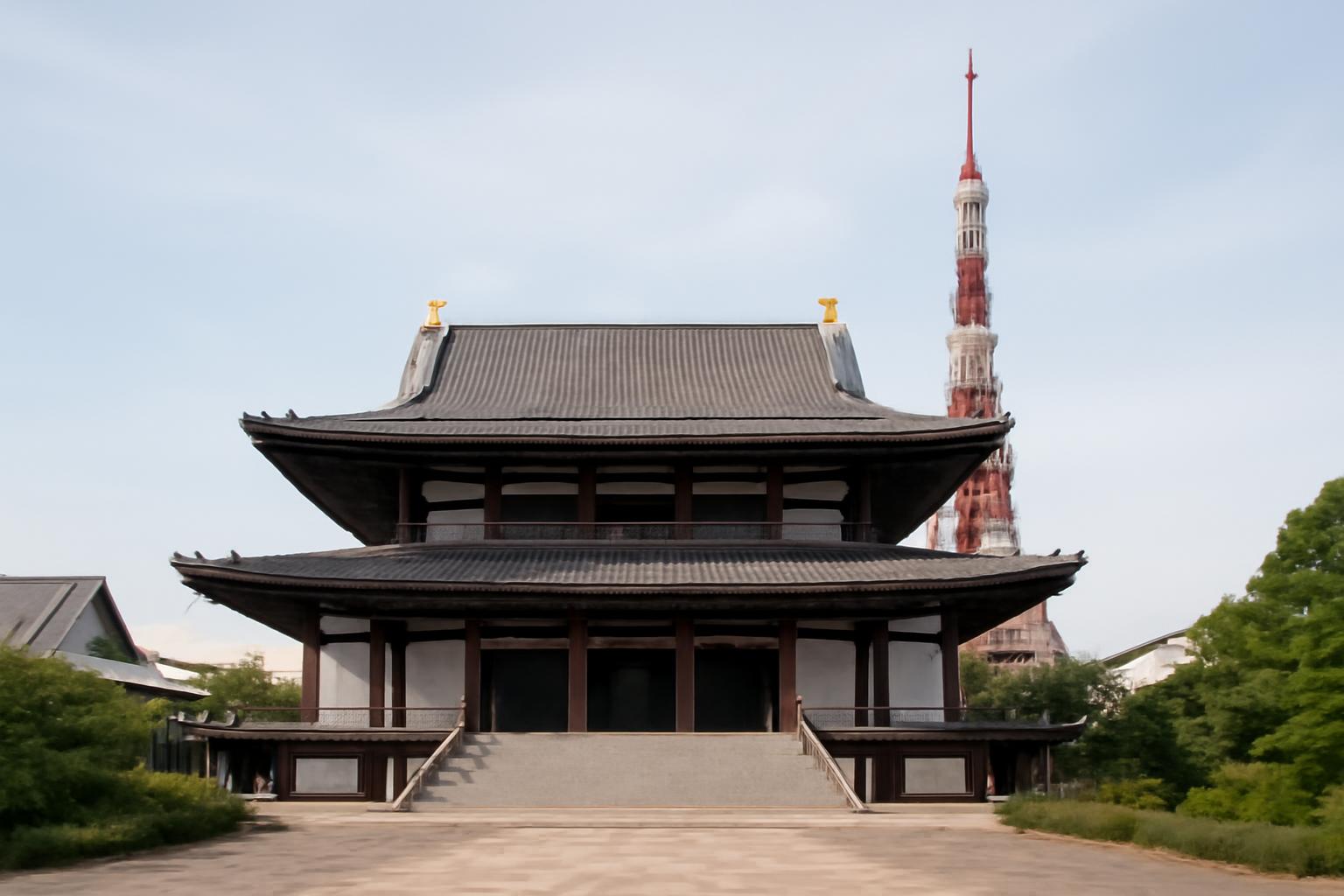
Senso-ji is strongest for a first visit. Choose Zojo-ji with Tokyo Tower or Gotokuji for tranquil historic grounds and its lucky-cat display.
Overview
For a first visit, Senso-ji is the strongest overall choice among the best temples in Tokyo. Choose Zojo-ji if Tokyo Tower is already on your itinerary, Gotokuji for tranquil historic grounds and its famous lucky-cat display, or a less prominent temple when ceremonies, pagodas, seasonal scenery, or quieter surroundings matter more.
Senso-ji is Tokyo’s largest and most famous Buddhist temple according to Jonelle Patrick’s Tokyo temple guide, while Travel? Yes Please! identifies it as Tokyo’s oldest, originally built in 645. Its importance does not guarantee a calm visit, however. The experience changes considerably with the time of day, so planning around the busiest period is more useful than simply adding it to a sightseeing list.
If you will also devote substantial time to temples elsewhere in Japan, you can reasonably keep the Tokyo portion selective. Prioritize Senso-ji for the major first-time experience, then add only the Tokyo temple whose setting or character best complements the rest of your trip. That approach leaves room for neighborhoods and attractions without treating every religious site as interchangeable.
The best Buddhist temples in Tokyo by experience
There is no single ranking that works for every itinerary. The most useful choice depends on whether you want a major historic landmark, peaceful grounds, a distinctive religious experience, seasonal interest, or an easy pairing with another Tokyo attraction.
The Tokyo Buddhist Temple Decision Matrix below uses only distinctions supported by the supplied sources. Current opening hours, admission arrangements, accessibility, worship-hall access, and the time needed for a visit still require confirmation from each temple’s official information.
| Buddhist temple | Best reason to choose it | Supported atmosphere or crowd tradeoff | Location or pairing | What still needs verification |
|---|---|---|---|---|
| Senso-ji | The strongest first-time priority and Tokyo’s most famous major Buddhist temple | Bustling and highly tourist-oriented during busy periods; calmer early or at night | Asakusa | Current hours, hall access, fees, accessibility, and photography rules |
| Zojo-ji | A substantial temple visit that fits naturally around another major sight | Described as large and popular; the evidence does not establish a quietest time | Beside the Tokyo Tower area | Current hours, access conditions, fees, and route details |
| Gotokuji | Historic grounds plus the concentrated display of lucky-cat figures | Tranquil overall, although the cat area can encourage a photo-stop style of visit | Setagaya Ward; accessible on foot from three nearby stations | Current opening conditions, accessibility, worship-area rules, and photography restrictions |
| Fukagawa Fudō-san | A more unusual visit associated with fire ceremonies and taiko drums | Ceremony-led rather than primarily architectural sightseeing | Confirm the current route before visiting | Ceremony schedule, entry conditions, photography, and accessibility |
| Ikegami Honmon-ji | Pagoda, seasonal interest, and a major October festival tradition | The experience may depend on season or event timing | Confirm current transport and event access | Festival dates, seasonal conditions, hours, restrictions, and accessibility |
Senso-ji remains the default recommendation because the evidence gives it the clearest combination of historical importance, scale, and visitor appeal. Truly Tokyo describes it as the spiritual heart of the city, while other accounts consistently identify its crowds as the main tradeoff.
The alternatives work best when selected for a specific reason. Zojo-ji reduces unnecessary movement if Tokyo Tower is already planned. Gotokuji rewards visitors interested in broader grounds rather than only a single photograph. Fukagawa Fudō-san and Ikegami Honmon-ji are stronger candidates when a ceremony, pagoda, seasonal feature, or festival is the point of the visit.
Gotokuji: lucky cats within a larger historic complex
Gotokuji is worth considering beyond its lucky-cat display, but only if you approach it as a historic temple complex rather than as a single novelty installation. The cats are visually prominent in travel coverage, yet they occupy only one corner of the grounds, according to Rakuten Travel’s guide.
That source describes Gotokuji as a tranquil temple in Tokyo’s Setagaya Ward and notes that it was designated a national historic site in 2008. It also identifies 13 buildings and features within grounds that preserve the layout of a typical Edo-era feudal lord cemetery. Those details give the temple a broader historical context than the lucky-cat imagery alone suggests.
The conflicting impressions of Gotokuji are therefore understandable. A visitor who goes directly to the cats, takes photographs, and leaves may experience it as a kitschy photo stop. Someone who pays attention to the wider grounds may instead encounter a quieter historic setting in which the cat display is only one component. Neither reaction fully describes every visitor’s experience, but the second better reflects the documented scale of the site.
The journey is also more specific than simply heading to “western Tokyo.” Rakuten Travel gives three approaches: a 12-minute walk from Gotokuji Station on the Odakyu Line, a four-minute walk from Miyanosaka Station on the Tokyu Setagaya Line, or an 11-minute walk from Yamashita Station on the same local line. Check current rail routing and temple access before departure, especially if mobility or step-free travel affects your choice.
Distinctive alternatives beyond the headline temples
The less obvious temples are most useful when you choose them for a defined experience rather than adding them simply to lengthen an itinerary. The supplied evidence supports several distinctive possibilities, although it does not document every operational detail consistently.
Favourite Shrines and Temples in Tokyo associates the alternative temple selection with several concrete draws:
- Fukagawa Fudō-san is linked with fire ceremonies accompanied by taiko drums.
- Ikegami Honmon-ji is associated with a five-story pagoda, autumn foliage, plum blossoms, and the Oeshiki procession or Festival of 10,000 Lanterns in October.
- Sengaku-ji and Gokoku-ji appear among the less conventional temple choices in the supplied corpus, but the available excerpts do not establish a sufficiently detailed visitor comparison for either.
These are reasons to investigate a temple, not a complete event calendar. For Ikegami Honmon-ji, the cited guide places plum blossoms in February, autumn foliage around mid-to-late November, and the Oeshiki event in October. Confirm the relevant year’s dates and access arrangements before building a trip around any seasonal display or ceremony.
The evidence for Sengaku-ji and Gokoku-ji is thinner. They may still suit a repeat visitor looking beyond the most prominent stops, but this article cannot responsibly assign them ideal visiting times, crowd levels, or a defining experience without stronger support. Treat them as research leads, then use official temple information to decide whether their current visitor offering matches your interests.
Crowds, illumination, and seasonal timing
Timing matters most clearly at Senso-ji, where the contrast between busy daytime sightseeing and quieter edge-of-day visits is documented across multiple travel accounts. The supplied evidence also identifies seasonal reasons to consider Ikegami Honmon-ji, but it does not support a complete calendar for every temple in the shortlist.
For a general Tokyo temple itinerary, start by separating fixed priorities from timing-dependent ones. A temple selected for its permanent setting, such as Gotokuji’s historic grounds, can fit where routing is convenient. A ceremony or festival-focused choice requires confirmation of the current schedule. A major visitor site such as Senso-ji benefits from deliberately avoiding the busiest part of the day.
Seasonal descriptions should also be treated as planning signals rather than guarantees. The cited guide associates Ikegami Honmon-ji with February plum blossoms, mid-to-late November foliage, and an October procession, but bloom and leaf conditions can vary. Event access, restrictions, and exact dates can also change. Verify those details close to your visit instead of assuming a recurring description is a current timetable.
Senso-ji before the crowds or after dark
Early morning and evening solve different problems at Senso-ji. Visit early if your priority is reduced crowd pressure and a clearer view of the grounds. Visit after dark if you want the visual effect of the illuminated buildings. Midday is the least attractive option for visitors who dislike dense sightseeing crowds.
The reason for the warning is straightforward. Always Pack Tissues calls Senso-ji the most crowded and tourist-oriented temple in its comparison and recommends early morning or night. That does not contradict the strong first-time recommendation. It shows that the site’s atmosphere depends heavily on when you arrive.
An early visit emphasizes space and calm, but some surrounding visitor-oriented activity may be limited compared with daytime. The evidence pack does not provide current shop, hall, or gate schedules, so do not assume every part of the experience operates at dawn.
Evening offers a different advantage. Travel? Yes Please! describes Senso-ji’s buildings as flooded in warm light after dark. Illumination can make the architecture visually striking while avoiding some of the daytime congestion. It is not the same experience as entering every worship space during operating hours, however.
If Senso-ji is your only Tokyo temple, choose early morning for a quieter religious-site visit or evening for atmosphere and photography from permitted areas. If your schedule allows, passing through Asakusa at two different times can reveal both sides of the temple without requiring a long midday stay.
How to fit the temples into a Tokyo itinerary
The simplest routing method is to choose one temple as the anchor for an area you already plan to visit. This reduces backtracking and avoids constructing a temple-only day from places spread across different parts of Tokyo.
Senso-ji is the natural anchor for Asakusa because the source corpus explicitly locates it there. Zojo-ji makes sense when Tokyo Tower is already part of the plan. Gotokuji requires a more deliberate Setagaya journey, although its three supported station approaches provide flexibility. Build around one of those anchors, then add another temple only when its defining experience justifies the extra travel.
Avoid treating nearby shrines as additional temples. The evidence establishes that a temple is a Buddhist place of worship while a shrine belongs to Shinto. A nearby shrine may still be a worthwhile itinerary addition, but it should be labeled separately and approached with the appropriate worship customs.
The supplied evidence does not support realistic half-day or full-day travel estimates. Tokyo transit time depends on your starting station, transfers, walking route, and current service. Before committing to several temples, check each journey in a current route planner, confirm the correct entrance or nearest station, and leave enough flexibility for the grounds and surrounding area. This produces a more reliable plan than assigning an unsupported standard visit length.
For travelers also visiting Kyoto, Kamakura, or Nikko for religious sites, a reduced Tokyo selection can be more balanced. Senso-ji plus either Zojo-ji or Gotokuji gives you contrasting experiences without forcing every named temple into the same trip.
Zojo-ji with Tokyo Tower
Zojo-ji is the clearest attraction pairing in the evidence pack. Truly Tokyo places the large, popular temple in the shadow of Tokyo Tower and recommends visiting it on the way to or from the tower.
That makes Zojo-ji particularly useful for an itinerary focused on efficient area grouping. You do not need to justify a separate cross-city temple trip, and the contrast between the temple setting and Tokyo Tower gives the stop a distinct visual identity. If you already intend to be in the tower area, Zojo-ji is likely a more practical addition than a temple requiring an unrelated journey.
The evidence does not establish the best station entrance, walking duration, current temple hours, or whether your preferred tower booking aligns with access to specific temple buildings. Confirm both attractions independently, then choose an order based on their current operating information. The supported advantage is the geographic pairing, not a guaranteed schedule.
Check current visitor details before you go
The shortlist supports choosing a temple by experience, but it does not provide verified, temple-by-temple operational information. Check the official temple or tourism source shortly before visiting, especially when a closure, restricted hall, or inaccessible route would undermine the day’s plan.
Confirm the following for each selected temple:
- Opening and worship-hall hours: Grounds, gates, halls, offices, and related facilities may not follow the same schedule.
- Admission charges: Do not assume that every area is free because some temples allow general entry without a fee.
- Closures and special access: Confirm temporary closures, religious observances, maintenance, and restricted areas.
- Reservations: Check whether ceremonies, special viewings, exhibitions, or group visits require advance arrangements.
- Step-free access: Look for official details about station approaches, slopes, stairs, thresholds, accessible entrances, and toilets.
- Photography rules: Verify where still photography, filming, flash, and tripods are allowed.
- Conduct inside worship areas: Check for shoe removal, silence, queueing, and areas that visitors may not enter.
This verification is particularly important for specialized visits. A Fukagawa Fudō-san trip centered on a fire ceremony depends on the current ceremony schedule. A seasonal visit to Ikegami Honmon-ji depends on current event information and conditions. At Senso-ji, visiting after dark for illumination does not prove that inner areas remain open.
General etiquette guidance cannot replace local signs. The Japan National Tourism Organization’s shrine and temple guide warns that shoes may need to be removed inside temple buildings and that photography can be prohibited indoors. If the official website is unclear, follow posted instructions and staff guidance when you arrive.
Buddhist temple etiquette and how it differs from shrine worship
A Buddhist temple and a Shinto shrine are not the same type of religious site. Spanish Nomad’s introductory comparison defines temples as Buddhist places of worship and shrines as Shinto places of worship. Keeping that distinction clear prevents the most common ritual mix-up: clapping at a Buddhist temple.
At a temple, calm conduct matters more than performing an elaborate sequence. The Japan National Tourism Organization advises visitors to behave respectfully, purify their hands and mouth if a water pavilion is provided, and join their hands in silent prayer. It specifically states that there is no need to clap.
A practical temple visit can follow this simple pattern:
- Enter quietly, follow signs, and avoid obstructing worshippers.
- If a purification basin is available for visitors, use it according to the posted procedure.
- At an incense burner, light incense only where permitted and extinguish the flame by waving your hand rather than blowing on it.
- At the worship area, make an offering if you choose, press your palms together, bow your head, and pray silently without clapping.
- Remove your shoes when signs or temple staff instruct you to do so.
- Keep cameras away when photography is prohibited or when someone is actively praying.
Shrine worship has a more structured bowing and clapping sequence. JNTO describes the shrine custom as two bows, two claps, prayer with the hands together, and one final bow. Do not transfer that sequence automatically to a Buddhist temple. The Aichi Now etiquette guide likewise says that clapping is not practiced at temples and recommends quiet prayer with the hands together.
Gate-bowing advice is less uniform. One supplied guide recommends bowing toward the main hall when entering and leaving, while another says there is no required bow at a Buddhist temple gate. The sensible response is not to treat either description as a universal rule. Pause respectfully, step over rather than on raised thresholds, and give priority to site-specific signs or instructions.
Purification is also conditional, not a requirement to search for a basin at every temple. Where a visitor basin is provided, JNTO describes rinsing the hands and mouth without touching the ladle directly to the mouth. If no facility or visitor instructions are present, continue calmly rather than improvising a ritual.
Incense should be handled with similar restraint. JNTO says some temples sell incense near the burner and instructs visitors to wave out the flame instead of blowing. Do not assume incense is available or permitted everywhere, and do not copy other visitors when signs indicate different procedures.
Finally, treat photography as secondary to worship. Aichi Now advises against photographing rituals, people praying at the offertory area, or anything that requires crossing between a worshipper and the altar. Rules for filming, tripods, halls, statues, and exhibitions vary by site, so posted restrictions take priority over general travel advice. The best temple visit is one that lets you appreciate the place without interrupting the people using it for its religious purpose.