
The Face Gate Gives Visitors No Faster Entry
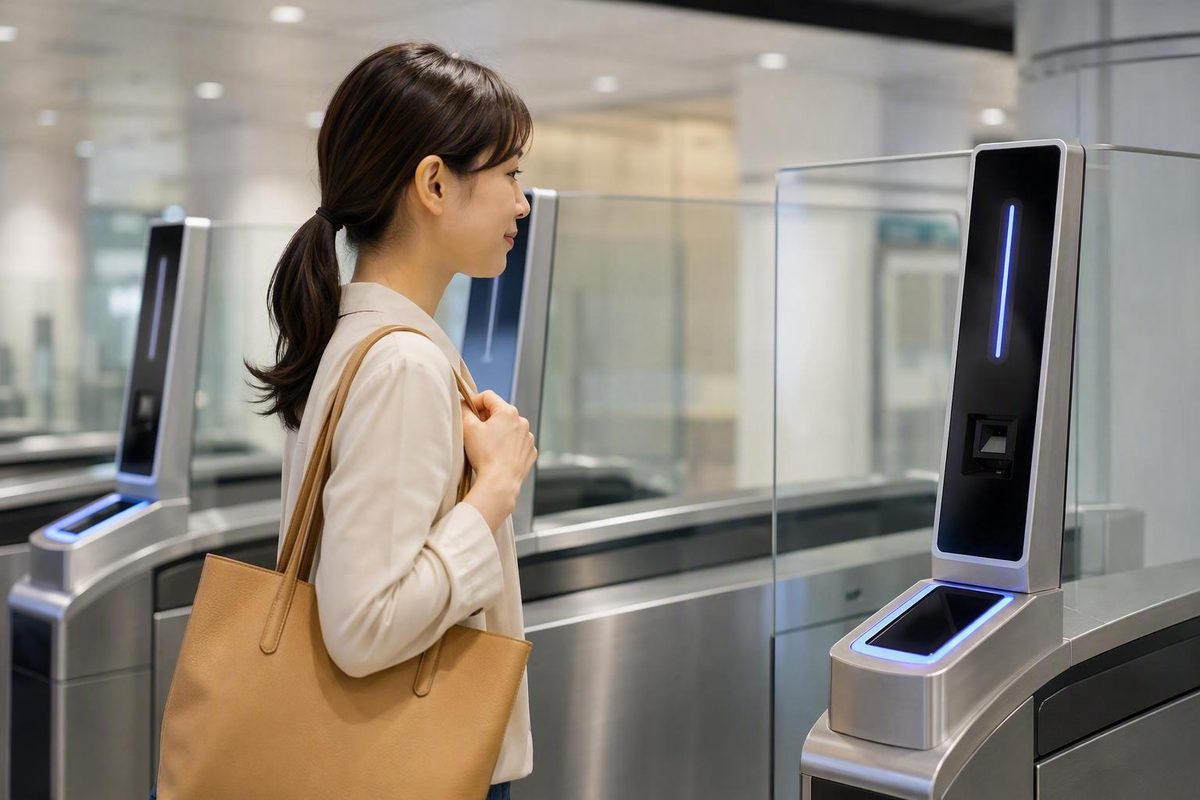
Tobu’s face-entry lane serves preregistered commuter-pass holders. Visitors should use the regular IC-card or ticket gate at Ikebukuro.
Tobu Railway’s Ikebukuro facial-recognition ticket gate gives a same-day or short-stay visitor no speed benefit. The service launched at Ikebukuro and Kami-Itabashi on July 15, 2026, but hands-free passage requires advance registration of both a facial image and eligible commuter-pass information. Everyone else still needs to tap an IC card or use a ticket at an ordinary gate (Adnkronos).
The practical lane choice is simple: follow signs for the Tobu Tojo Line, then use a standard IC-card lane if you are paying with stored value or a ticket-compatible lane if you have a paper ticket. Use the marked facial-recognition lane only if you completed the required registration and confirmed that your commuter pass and journey qualify. The supplied reporting does not give an entrance map or lane number, so check current signs or ask Tobu staff.
Choose your rider type and fare medium; the result shows which Ikebukuro gate to use.
Select the description that matches your trip. The default shows the practical result for a same-day visitor.
| Rider Setup | Face Lane? | Use Instead | Reason |
|---|---|---|---|
| Same-day or short-stay visitor | No | IC tap or ticket lane | No advance face + eligible commuter-pass registration |
| IC-card commuter, not face-registered | No | Ordinary IC lane | An IC card alone does not establish eligibility |
| Registered eligible pass holder; both endpoints compatible | Yes | Designated facial lane | Face and commuter-pass information registered in advance |
| Registered holder; endpoint unconfirmed or incompatible | Do not rely on it | Ordinary procedure or staff | Reporting says compatible facial facilities are needed at both ends |
Reported initial scope: one facial-recognition gate at each of Tobu Ikebukuro and Kami-Itabashi; exact entrance, lane number and service hours: —. Carry the linked credential and obey current station instructions.
Source: Jiji Press report republished by Adnkronos, July 15, 2026; Tuoi Tre News follow-up, August 20, 2026; detailed no-mixing rule from the independent, AI-translated account cited in the article.
Why The Headlines Sound More Universal
The favorable account of the rollout is reasonable within its actual scope. For an enrolled commuter, the camera can identify a preregistered face at a designated gate, removing the need to take out and present the linked fare medium at that moment. Coverage therefore describes the system as hands-free and emphasizes the convenience of walking through without scanning a ticket.
The project also matters beyond one lane. It was reported as the first implementation of this kind on a Tokyo railway, following deployment of the same system at Tobu Utsunomiya Station in May 2026. An August 20 follow-up said Tobu and Hitachi were pursuing wider use, potentially including payments at convenience stores (Tuoi Tre News).
That is the strongest version of the convenience claim, and it is correct for the qualifying commuter. The overreach comes when “no need to scan tickets” is read as a feature available to anyone passing through Ikebukuro. The reports say passengers must register their facial image and commuter-pass information in advance, and the initial service is limited to commuter-pass holders. Only one gate was installed at each station.
“Hands-free” describes one enrolled rider’s action at one designated barrier. It does not mean fare-free, registration-free or available across the Ikebukuro station complex.
Visitors Should Use The Ordinary Gate Lane
A traveler using an ordinary stored-value IC card should use a standard lane displaying the IC-card symbol and tap as usual. A traveler with a paper ticket should use a lane that accepts tickets and insert or scan it as instructed. The draft evidence does not specify which physical lanes accept each ticket format, so the signs on the gate take precedence.
Do not enter the facial-recognition lane merely because it has a camera. A camera does not enroll a passenger on the spot, and carrying PASMO or another IC card does not make its holder eligible. The reported service links a previously registered face to qualifying commuter-pass information.
The same rule applies to residents using stored value without a commuter pass. The system has not been reported as a general replacement for tapping an IC card.
| Your Fare Setup | Gate To Use | Action |
|---|---|---|
| Stored-value IC card | Ordinary IC lane | Tap the card or device |
| Paper ticket | Ticket-compatible lane | Insert or scan as shown |
| Registered eligible pass | Marked face lane | Follow facial-entry instructions |
| Eligibility uncertain | Ordinary gate or staff | Confirm before entering |
Ikebukuro is a multi-operator station. The available evidence concerns Tobu Railway’s Tobu Tojo Line facilities. It does not establish compatibility at JR East, Seibu Railway or Tokyo Metro gates, or at every Tobu entrance and lane.
Approaching from a department store, underground passage, street entrance or another operator’s platform may bring you to unrelated gate banks first. Follow Tobu Tojo Line signs rather than treating any gate marked “Ikebukuro” as part of the service. General guidance on navigating large Tokyo train stations can help with the wider complex, but only current signs and Tobu staff can identify the active face-entry lane.
The supplied reporting does not provide exact entrances, lane numbers, service hours or a guarantee of continuous availability. Confirm present operation with Tobu or station staff before depending on it for a time-sensitive trip.
Eligibility Requires A Registered Face And Commuter Pass
The consistently reported baseline has three parts:
- Register facial image data before traveling.
- Register eligible commuter-pass information.
- Hold a commuter pass covering a route that includes the Ikebukuro–Kami-Itabashi section.
That combination makes the gate primarily a commuter facility. It is not described as supporting single-journey tickets, ordinary stored-value IC travel, anonymous IC cards, tourist rail passes, child fares or occasional trips outside a pass’s coverage.
A detailed independent account identifies the credential as a PASMO commuter pass, but that account is not primary Tobu guidance and its English version carries an automated-translation warning. Treat the PASMO-specific detail as provisional rather than a definitive statement of current operator terms.
The evidence also does not settle whether every physical or mobile commuter-pass format works, how long registration takes, whether enrollment costs anything, or what happens when a pass is replaced. Obtain the current registration address and eligibility terms from Tobu rather than relying on an unverified enrollment link.
Before enrolling, confirm the accepted pass type, route coverage, compatible stations at both ends and the procedure if the face lane is unavailable. Also check whether renewing or replacing the pass requires registration again.
A Qualifying Trip Must Use Compatible Endpoints
For an eligible rider, the reported sequence is to register before travel, approach a designated camera-equipped gate and complete the journey through a compatible facility. The camera attempts to match the rider with the enrolled face, so the linked card need not be presented during successful passage.
One detailed independent analysis adds several operational rules: carry the linked PASMO commuter pass, use facial recognition at both ends, do not mix facial entry with an IC-card exit, and register again after renewing the pass. It also describes the initial facial gates as dedicated units that do not accept IC taps. These points should be checked against current Tobu instructions because the source is independent and AI-translated (independent analysis).
A qualifying Kami-Itabashi-to-Ikebukuro commuter could therefore use the designated facial gate at each end after registration. A rider heading to a station without confirmed compatibility should use the ordinary fare procedure instead. A Tobu face gate at Ikebukuro does not establish that JR East, Seibu or Tokyo Metro can recognize the same enrollment.
If a rider enters by face and then tries to exit by tapping the linked card, the independent account says the methods cannot be mixed. If recognition fails or a compatible exit is unavailable, stop and ask staff. The supplied evidence does not document the official correction process.
Carry the linked fare credential even when expecting hands-free passage. No longer presenting it at a successful gate is not the same as no longer needing the underlying commuter pass.
The Gate Changes Identification, Not Fare Entitlement
At an ordinary IC gate, the passenger presents a card or device. At the facial gate, a camera identifies an enrolled passenger whose qualifying fare entitlement is already linked. The change is how the rider is recognized at the barrier, not whether the rider needs a valid entitlement.
| Stage | Ordinary IC Journey | Facial Journey |
|---|---|---|
| Before travel | Maintain fare medium | Register face and eligible pass |
| Entry | Tap as instructed | Use designated face gate |
| During travel | Keep medium available | Carry linked credential |
| Exit | Tap as instructed | Use compatible face gate |
The reporting supplies no Ikebukuro measurements for throughput, queue reduction, false matches or false rejections. One independent article says processing speed is comparable, but it provides no station-level measurements sufficient to prove that claim. There is therefore no sourced basis for saying the lane is faster than an ordinary IC tap even for enrolled users; its demonstrated benefit is not having to take out the linked pass.
This is where the visitor claim must remain narrow. The gate gives an ordinary visitor no speed benefit because that visitor is ineligible for facial passage. It does not follow that the system offers no convenience to a registered commuter.
One Gate At Each Station Limits The Rollout
The reported initial locations are Tobu Ikebukuro and Kami-Itabashi on the Tobu Tojo Line, with one gate installed at each station. The launch was associated with Tobu Railway and Hitachi. Reporting also connects Panasonic Connect’s recognition technology and multiple ticket-gate manufacturers to the project.
A Jiji-based account says the system was developed with Panasonic Connect and three gate manufacturers, including Toshiba. Cameras and related equipment can reportedly be added to existing gates rather than requiring replacement of every gate structure (Adnkronos).
The independent analysis names Omron Social Solutions, Nippon Signal and Toshiba, but its lower-authority, translated status means that list should not be treated as definitive documentation of each company’s role. The supplied reporting gives no installation cost, engineering specifications or comparative rollout time.
A Panasonic Connect trial with JR East and JR East Mechatronics at Nagaoka and Niigata on the Joetsu Shinkansen was a separate project scheduled from November 2025 through March 2026, with an exclusion period (Panasonic Connect). It does not establish the operating rules or performance of Tobu’s Ikebukuro gate.
Facial Registration Creates Separate Privacy Questions
Enrollment requires facial data for biometric matching. Broader reporting on facial recognition in Japan notes concerns about tracking and the need for careful handling of personal information. It does not show that Tobu tracks people across unrelated settings, that this system has been misused or that it is unsafe (Tuoi Tre News).
The supplied evidence does not disclose whether Tobu stores an original image or a derived template, where information is stored, how long enrollment and passage records are retained, which security controls apply, or which employees, vendors and subcontractors can access the data. It also does not explain cancellation, deletion, handling after pass expiry or responsibility for a security incident.
Those gaps support neither reassurance nor accusation. Before enrolling, read the current terms for the organization responsible for the data, the records retained, the retention period, access by participating companies, and the processes for canceling participation and requesting deletion.
Future retail integration would add another issue: whether transit and purchase records are linked and whether that use requires separate consent. The August follow-up discusses eventual convenience-store payment integration, not a retail service that travelers can use now.
Wider Use Is Planned, Not Yet Interoperable
Tobu intends to introduce facial-recognition gates at more stations, and Hitachi and Tobu hope other railway operators will adopt the system. The stronger reports do not provide a confirmed station list or timetable. An ambition to expand is not evidence that a Tobu enrollment works with another operator today.
The same boundary applies to shopping near stations. Reports discuss possible future commercial payments, including convenience stores, but do not establish that an Ikebukuro passenger can currently charge a purchase through a railway facial profile.
A lower-authority independent analysis mentions face gates with IC compatibility during fiscal 2026 and broader deployment from fiscal 2027. Those dates are not confirmed by primary Tobu material in the supplied evidence and should not guide a journey. Even a future gate accepting both methods would not prove that riders can mix face entry and IC exit on the same trip.
For now, treat the system as a narrowly available Tobu Tojo Line option for preregistered, qualifying commuter-pass holders. Visitors and ordinary IC-card riders should take the standard lane; enrolled commuters should verify both endpoints, carry the linked credential and follow the displayed facial-gate instructions.