
A 4-Day Tokyo Itinerary With Sane Daily Routes
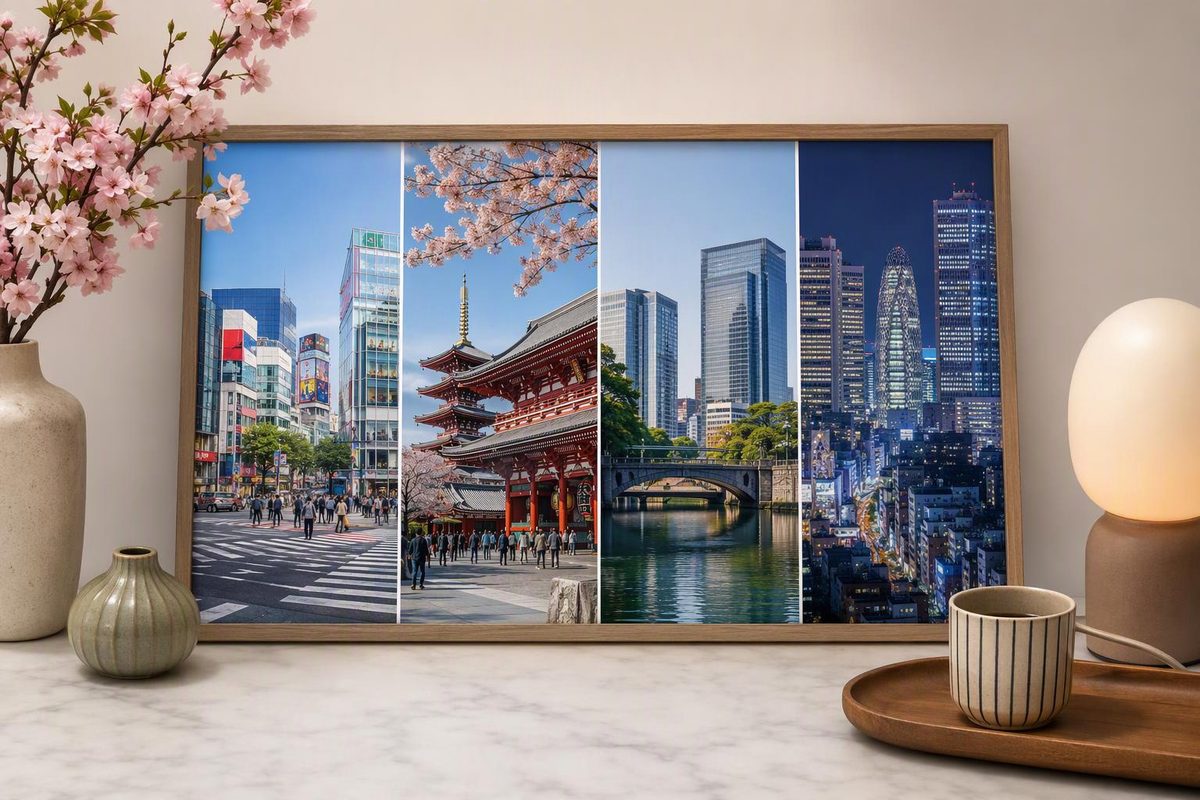
Plan four efficient Tokyo days around Harajuku and Shibuya, Asakusa and Ueno, Tsukiji and Marunouchi, then Shinjuku—with key closure checks.
This four-day Tokyo itinerary covers first-trip priorities without sending you across the city several times a day. Spend one day in Harajuku and Shibuya, one in Asakusa and Ueno, one around Tsukiji and Tokyo Station, and one in Shinjuku. Assign the days only after checking regular closures.
Choose the weekday your itinerary begins; the planner rearranges the four routes around regular weekly closures.
Four-Day Route Order
This uses regular weekly closures, not holiday exceptions or temporary closures.
Regular weekly closures are avoided for a Monday start.
| Day | Route | Fit |
|---|---|---|
| Mon · 1 | Harajuku–Shibuya | Flexible |
| Tue · 2 | Asakusa–Ueno | Museum open* |
| Wed · 3 | Tsukiji–Ginza | Gardens open* |
| Thu · 4 | Shinjuku | Garden open* |
Checks still required
*Holiday exceptions can shift closures. Check the Tokyo National Museum, Imperial Palace East Gardens and Shinjuku Gyoen for exact dates. Check Tsukiji’s calendar and individual shop hours separately.
Source: regular closure patterns published by the Tokyo National Museum, Imperial Household Agency and Shinjuku Gyoen; Tsukiji hours require a date-specific check.
| Day | Area | Main Stops | Finish |
|---|---|---|---|
| 1 | Harajuku and Shibuya | Meiji Jingu, Omotesando, Shibuya Crossing | Shibuya |
| 2 | Asakusa, Ueno and Akihabara | Senso-ji, Ueno Park, Tokyo National Museum | Akihabara |
| 3 | Tsukiji, Ginza and Marunouchi | Outer Market, East Gardens, Tokyo Station | Tokyo Station |
| 4 | Shinjuku | Shinjuku Gyoen, department stores, government observatory | West Shinjuku |
The sequence is flexible. The broader principle—keeping each day in one part of the city—is explained in how to plan Tokyo days by area.
Day 1: Meiji Jingu, Harajuku and Shibuya
9:00 — Start at Harajuku Station or Meiji-jingumae Station. Enter Meiji Jingu from the Harajuku side and allow 60–90 minutes for the forest approach, main sanctuary and return walk.
The shrine is free and opens at sunrise. Closing time changes by month, from 4:00 p.m. in December to 6:30 p.m. in June, and some inner facilities keep shorter hours. Check the Meiji Jingu visitor information for the month of your visit.
11:00 — Walk through Harajuku and Omotesando. Takeshita Street is the busy youth-fashion route. Cat Street provides a more direct diagonal walk toward Shibuya. Stop for lunch around Omotesando or Jingumae rather than waiting until the busiest blocks near Shibuya Crossing.
14:00 — Continue south to Shibuya. Use the crossing, Hachiko Square, Center-Gai and PARCO as a loose circuit. If you arrive by train instead, choose an exit for the landmark you want rather than surfacing at random. The compact Shibuya route explains the station sides.
Evening — Reserve Shibuya Sky or keep the view optional. Shibuya Sky is directly connected to Shibuya Station and, as of April 2026, opens 10:00–22:30 with last admission at 21:20. If adult tickets sell out online, they are also unavailable at the counter, so treat this as the itinerary’s main advance booking. Confirm the schedule and availability through GO TOKYO.
Without a reservation, remain at street level and have dinner in Shibuya rather than crossing the city for another viewpoint.
Day 2: Asakusa, Ueno and Akihabara
8:30 — Begin at Senso-ji. From Tokyo Metro’s Asakusa Station, follow signs toward Kaminarimon. Walk in one direction through Kaminarimon, Nakamise, Hozomon and the Main Hall.
Senso-ji instructs worshippers to place their hands together in the Buddhist prayer position; Kannon is the temple’s principal image. The temple provides further visitor information on the official Senso-ji site. Our Senso-ji route and etiquette guide covers the station approach in detail.
10:30 — Explore Asakusa, then take the Ginza Line to Ueno. It is a short direct ride, making these neighborhoods a practical pairing. Have an early lunch around Asakusa or Ueno before committing to a museum.
12:30 — Choose one Ueno anchor. For a first visit, make it the Tokyo National Museum rather than trying to sample every museum in the park. Two or three hours is a reasonable allocation for its Japanese Gallery.
In 2026, standard hours are 9:30 a.m.–5:00 p.m., with later closing on specified days. The museum normally closes Monday. When Monday is a holiday, it opens Monday and closes the following day. Check the Tokyo National Museum schedule against your exact date. If it is closed, use Ueno Park and Ameyoko instead.
16:30 — Finish in Akihabara. Take the JR Yamanote or Keihin-Tohoku Line one stop from Ueno to Akihabara and use the Electric Town Gate. Browse arcades, electronics retailers and specialist hobby stores, then eat in Akihabara or return to Ueno’s Ameyoko area.
Removing Akihabara is the easiest way to create a slower day. It leaves more museum time without changing the route’s geographic logic.
Day 3: Tsukiji, Ginza and Tokyo Station
9:00 — Arrive at Tsukiji Outer Market. Do not schedule the market as a late lunch stop. It identifies 6:00–9:00 as professional buyers’ hours and 9:00–14:00 as public hours, though each shop sets its own schedule.
Check the date-specific Tsukiji Outer Market calendar before assigning this day. Visitors are also asked to leave large luggage elsewhere and eat at the shop rather than while walking.
10:30 — Walk to Ginza. Start at Kabukiza in Higashi-Ginza, then follow Chuo-dori through the main shopping district. The route in our Ginza architecture and shopping walk keeps the station choices clear.
13:30 — Continue to the Imperial Palace East Gardens. Walk from Ginza or take the Marunouchi Line to Otemachi. Enter through Ote-mon Gate and allow 60–90 minutes for the guardhouses, Ninomaru Garden and base of the former Edo Castle keep.
Admission is free, but baggage inspection applies. The gardens close on Mondays and Fridays, subject to national-holiday exceptions, and seasonal closing times range from 4:00 to 6:00 p.m. Confirm the date through the Imperial Household Agency. On a closed day, spend the extra time in Marunouchi or Nihonbashi rather than adding a distant replacement.
16:00 — End at Tokyo Station. Approach from the Marunouchi side for the red-brick facade. Use Marunouchi exits for the palace side and Yaesu exits for the eastern shopping and bus side. That east–west distinction is the simplest way to orient yourself.
Have dinner in Marunouchi, GRANSTA or Yaesu instead of adding another neighborhood.
Day 4: Shinjuku Without Repeated Station Crossings
9:00 — Enter Shinjuku Gyoen. The lowest-friction approach is Shinjuku-Gyoemmae Station. Exit 1 is a five-minute walk from Shinjuku Gate, according to the official access guide.
The garden opens at 9:00, closing varies seasonally, and adult admission is ¥500. It normally closes Monday or the following weekday when Monday is a public holiday, except during specified spring and autumn periods. Check the official hours and closure schedule for your date.
11:30 — Work west through Shinjuku. Eat around Shinjuku-sanchome, browse the east-side department stores, then continue toward Nishi-Shinjuku. Follow signs for the west side or your named destination rather than choosing an unfamiliar numbered exit from memory.
Underground passages help in rain, but confirm the destination name before surfacing. This avoids emerging on the wrong side of the station and having to cross it again at street level.
15:30 — Visit the Tokyo Metropolitan Government Building. Follow signs for the government-building district. The observatories are free and reached by a dedicated elevator from the first floor of Main Building No. 1. Short-notice weather closures are possible, according to the Tokyo Metropolitan Government.
Check the current observatory schedule on the day because the two decks can keep different closure patterns. Finish with dinner around Nishi-Shinjuku or Omoide Yokocho. If you still want Kabukicho or Golden Gai, add one as the final stop rather than trying to cover both.
Assign the Routes Around Closures
The Tokyo National Museum normally closes Monday, with a following-day closure when Monday is a holiday. Shinjuku Gyoen also normally closes Monday or the following weekday when Monday is a public holiday, although specified spring and autumn periods are exceptions.
The Imperial Palace East Gardens generally close Monday and Friday, subject to national-holiday exceptions. Tsukiji requires a separate date check because the market calendar and individual shop schedules cannot be inferred from the weekday alone.
For rain, exchange the garden-heavy Shinjuku route with the more indoor-oriented Ginza and Tokyo Station route. If the East Gardens are closed, retain Tsukiji, Ginza and Marunouchi but omit the gardens. Recheck official venue pages shortly before the trip because holiday schedules, temporary closures and last-entry times can change.